

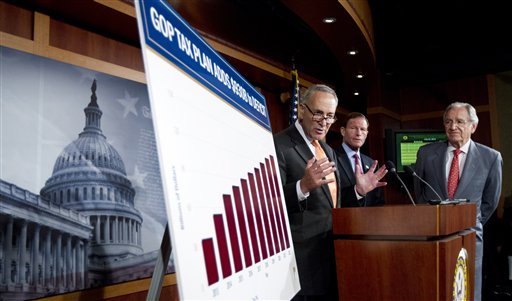
A package of tax cuts set to expire at year’s end has become the perfect political weapon for both Republicans and Democrats as they jockey for voter support ahead of the November election.
Senate Majority Leader Harry Reid, D-Nev., hopes to portray Republicans as insensitive to the middle class with a vote Wednesday on a measure that would extend the Bush-era tax breaks to families earning less than $250,000 and individuals earning less than $200,000.
Recommended Stories


Given that the bill needs 60 votes, it has virtually no chance of passing in a chamber where Democrats control just 53 votes.
The tax issue has become so politicized, it is not likely to be resolved until after the election, but that hasn’t stopped Reid from bringing the issue to the floor in various forms over the past several months, only to have it voted down.
Reid is hoping that if a simple majority of senators vote for the bill Wednesday, Democrats will be again be able to hammer home the message that Republican obstructionism is to blame for a looming tax hike on the lower and middle classes.
“Republicans claim to share Democrats’ commitment to keeping taxes low for the middle class,” Reid said Tuesday. “So it’s strange that they have repeatedly blocked votes on our proposal to cut taxes for 98 percent of American families.”
Republicans are also playing politics with the tax breaks, which must be renewed by year’s end.
They want to extend former President George W. Bush’s tax cuts for all taxpayers and are deriding the Democratic plan for raising taxes on small-business owners, who create the most jobs.
Republicans say the Democratic plan amounts to a $50.5 billion tax increase on families and small businesses earning more than $250,000, further damaging the nation’s fragile economy.
“Our friends on the other side are practicing what could best be described as Thelma and Louise economics,” Senate Minority Leader Mitch McConnell, R-Ky., said Tuesday. “Let’s just march the whole country right off the cliff and see how that works out.”
Republicans want to exploit a division within the Democratic Party over the tax cuts by forcing a floor vote on a proposal by President Obama.
Like Reid, Obama proposes extending tax breaks only for those making less than $250,000. But the president’s plan would also raise the estate tax to 45 percent for estates valued at more than $3.5 million. Democrats are deeply divided on the estate tax, so Reid left the provision out of the bill in hopes that it would win at least 51 Democratic votes.
“Our bill is focused on provisions that affect middle-class families up to $250,000 of income,” a Reid spokesman said.
The Republican-led House, meanwhile, is planning its own tax cut blitz next week, when it takes up a bill to extend the Bush cuts for all income brackets.
House Speaker John Boehner, R-Ohio, encouraged his rank and file in a private meeting on Tuesday to take the tax break issue onto the campaign trail.
“We have the high ground in this fight, and the Democrats know it,” Boehner told the group, according to a source in the room. “Let’s stay on offense.”
