
A federal eviction ban infringes on constitutional rights

Throughout the COVID-19 pandemic, federal and state governments have imposed multiple policies that infringe on constitutional rights in the name of protecting public health. Courts have routinely overlooked constitutional violations, deferring to government efforts to deal with the exigencies of the moment. Thankfully, judicial deference to state and federal diktats is ending.

In November, the Supreme Court in Roman Catholic Diocese of Brooklyn v. Cuomo shot down New York’s occupancy restrictions on in-person worship that were more severe than limits on secular activities because they “strike at the very heart of the First Amendment’s guarantee of religious liberty.” The court had twice declined to block similar state restrictions on religious worship.

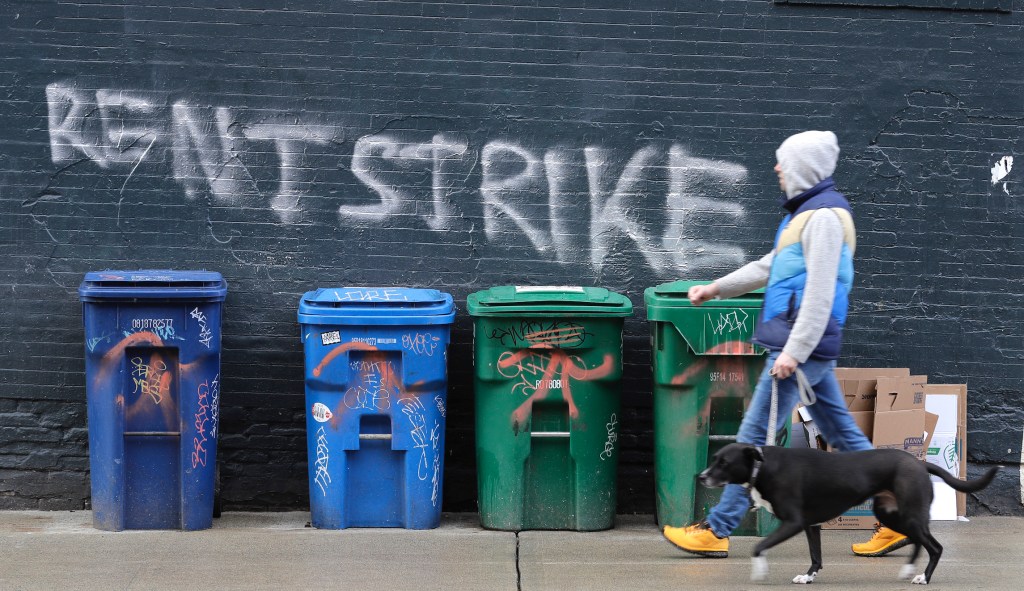
Last week, a federal district court in Texas, in Terkel v. Centers for Disease Control and Prevention, reined in federal constitutional overreach. The case deals with a September 2020 order from the CDC making it a crime, subject to a penalty of up to one year of imprisonment and a fine of up to $250,000, to evict certain tenants for not paying rent. A person is covered if they provide a written declaration to their landlord that they earn less than $99,000 a year, they are trying to but cannot pay their rent due to a loss of income or work or medical expenses, they sought government rental assistance, and that eviction would make them move into close quarters with others or render them homeless.

Two federal district courts, one in Louisiana and one in Georgia, rejected claims that the order exceeds the CDC’s statutory and regulatory authority. The plaintiff property owners in Terkel took a different approach. They argued that while states have constitutional police powers to issue eviction moratoria to protect the public health and welfare, as many states have done, the CDC moratorium exceeds the limited powers granted to the federal government by the Constitution.

The government claimed the CDC order was allowed under the legislative powers granted to Congress by the Constitution’s commerce clause to regulate activities that substantially affect interstate commerce, which could then be delegated to the CDC. The commerce clause was the same crutch the government unsuccessfully relied on to justify the Obamacare individual mandate.

The Texas court held that the government failed to establish that the regulation of local evictions has a substantial effect on interstate commerce. Property rights in buildings are “inherently local.” Evictions are not an economic activity involving the production or use of a commodity that is traded in an interstate market.

The CDC claimed public health benefits for the order, arguing that preventing evictions would protect tenants who have to move from infection or from infecting others. Yet, the order did not limit enforcement to evictions that have an impact on interstate commerce, and neither Congress nor the agency made findings that the regulation of interstate commerce would be undercut without the order.

Moreover, public health is “a quintessential concern” of states’ police powers, unrelated to federal regulation of interstate commerce. The federal government has never, even during the 1918 pandemic or the 1930s Great Depression, invoked its commerce power to impose a nationwide eviction moratorium. As Supreme Court Chief Justice John Roberts observed in the 2012 Obamacare case, NFIB v. Sebelius, “an expansion of federal power” cannot be justified as “necessary and proper” to regulate interstate commerce when the Constitution has not granted the federal government authority to regulate an economic activity that states traditionally regulate.

The federal government is appealing Terkel. The outcome may determine if property owners unable to collect rent this past year can regain their properties and stay afloat. The Biden administration extended the CDC order “until at least March 31” and will likely, unless ordered not to by the courts, extend it for many more months. Hopefully, courts will continue to preserve constitutional safeguards. As the Supreme Court noted in Roman Catholic Diocese, “even in a pandemic, the Constitution cannot be put away and forgotten.”

Joel M. Zinberg is a senior fellow with the Competitive Enterprise Institute and an associate clinical professor of surgery at the Mount Sinai Icahn School of Medicine. He was a senior economist and general counsel at the White House Council of Economic Advisers, 2017-2019.

Related Content