Dr. Stanley Goldfarb’s Doing Great Harm? isn’t another anti-woke broadside. It’s something rarer: a first-hand dispatch from a man who spent half a century inside the medical establishment, watched it lose its bearings, and decided to do something about it.
The story begins with his own cancellation at the University of Pennsylvania’s medical school and the online medical encyclopedia UpToDate, banished for the crime of asking whether lowering standards in the name of diversity might, in fact, harm patients. The fallout was predictable — what followed was not. Rather than retreat quietly, Goldfarb founded Do No Harm, a national network of physicians, nurses, and patients determined to push back against what he calls the “ideological capture” of medicine.
His argument throughout Doing Great Harm? is clear and compelling. The central ethic of medicine, “do no harm,” has been replaced by a political one: “do social justice.” Admissions committees now rank “lived experience” above academic preparation. Professors tell students that objectivity is a form of bias. The American Medical Association urges doctors to factor “equity” into treatment decisions, even if that means distributing care unequally. What was once a science of the individual has become an experiment in social engineering.

Goldfarb doesn’t rant about this — he lays it out like a clinician reading a lab result. Every hour a medical student spends on ideological indoctrination is an hour not spent mastering anatomy, pharmacology, or diagnostics. When political conformity replaces scientific rigor, the casualties aren’t theoretical — they’re patients. And yet, what makes the book persuasive even to skeptics is that Goldfarb never sounds like a partisan. He acknowledges that racism and inequity exist in healthcare. He simply insists that replacing one set of prejudices with another isn’t progress, it’s malpractice. His voice is weary, not angry, and it carries the moral authority of a doctor who’s seen what happens when truth becomes negotiable.
The book’s second half expands into Do No Harm’s campaign against pediatric gender medicine, and here Goldfarb’s clarity hardens into moral urgency. He describes how children presenting with anxiety, depression, autism, or trauma are being ushered toward irreversible interventions under the banner of “affirmation.” His group has helped draft and pass laws in 25 states banning puberty blockers, cross-sex hormones, and surgeries for minors, and built long-tail liability provisions so that detransitioners decades from now can sue the institutions and doctors who harmed them. Whatever one’s politics, it’s difficult to read these sections without feeling that something has gone badly wrong.
But Goldfarb draws a bright line at adulthood, arguing that once a person turns 18, the state should step aside. It’s the book’s only real inconsistency, and a significant one. He insists that informed consent requires stable judgment and full understanding of risk. Yet the very mental health challenges he so meticulously documents in adolescents, depression, self-harm, anxiety, autistic traits, and personality disorders, don’t magically disappear on a birthday. The ability to give meaningful consent to life-altering interventions depends not on age alone, but on stability, comprehension, and the absence of coercion, conditions often missing even in adults seeking transition.
Goldfarb’s deeper warning is not just about DEI or gender policy — it’s about what happens when medicine forgets its humility. The authority of the medical profession was built on the assumption that truth exists outside ideology and that a doctor’s first duty is to seek it on behalf of the patient in front of them. When schools prize “representation” over readiness, someone qualified is displaced by someone less prepared. When administrators pursue “equitable outcomes,” they quietly abandon equal treatment. When doctors are retrained to see patients as avatars of identity, medicine stops being personal and becomes political theater.
THE COMMONSENSE REVOLUTION AT THE KENNEDY CENTER
Doing Great Harm? is the work of a man who decided that complaining wasn’t enough. It’s more persuasive because it’s written without self-pity and without bombast. By the time you reach the end, even the most skeptical reader will concede that Goldfarb is fighting for something deeper than a culture war. He’s fighting for the soul of medicine, and he’s doing it the way doctors used to: with evidence, ethics, and the courage to tell uncomfortable truths.
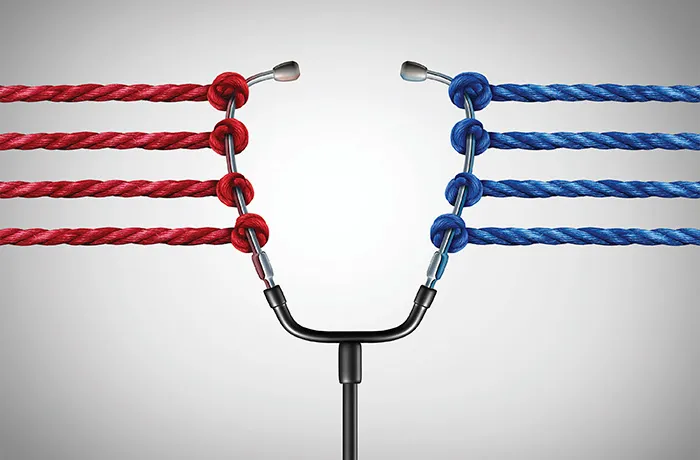
You don’t have to share Goldfarb’s outlook to recognize that something is breaking. The profession that once asked only “What’s wrong, and how do we fix it?” now asks, “Whose fault is it, and what does justice require?” The first question heals. The second divides.
Bethany Mandel (@bethanyshondark) is a homeschooling mother of six and a writer. She is the bestselling co-author of Stolen Youth: How Radicals Are Erasing Innocence and Indoctrinating a Generation.

