EXCLUSIVE — Anthropic‘s head of national security policy will testify before the Senate Committee on Foreign Relations on Tuesday about the importance of advanced artificial intelligence chips in the United State’s mission to dominate China in the AI race.
Tarun Chhabra, a former Biden official, believes the Biden administration did not act sufficiently to maintain the U.S.’s lead in global AI competition. He will share his testimony, obtained in advance by the Washington Examiner, before the Senate Subcommittee on East Asia, the Pacific, and International Cybersecurity Policy on Tuesday.
“We believe that the Biden administration did not take action that was decisive or rapid enough to maintain and extend America’s lead in AI. We must not repeat that mistake. If there is a single point I want you to take away from today’s hearing, it is this: access to advanced AI chips and the tools needed to manufacture them remains the single most significant, controllable factor that could allow the Chinese Communist Party to close the gap with the United States in AI,” Chhabra will say in his testimony.
Anthropic, an American AI company that owns the Claude AI assistant, issued a 13-page report in mid-November breaking down a cyberespionage campaign that targeted international companies and government institutions using primarily American AI platforms. The report assessed “with high confidence that it was conducted by a Chinese state-sponsored group.”
Following this news, the House Homeland Security Committee asked Anthropic CEO Dario Amodei to testify before the committee on Dec. 17 about the Chinese espionage campaign. On Tuesday, Chhabra’s testimony will provide insight into how the American AI startup is assessing the international race.
Chhabra plans on extending four key policy recommendations to the subcommittee — first, to “maintain and extend America’s compute advantage through stringent controls on AI Chips.” He touts the first Trump administration’s actions to restrict exports of semiconductor chips to China and its supply chain partners, as well as export controls placed on semiconductors under the Biden administration. He will testify that these controls “meaningfully constrained the CCP’s AI development” but “require constant vigilance, strengthening, and enforcement.”
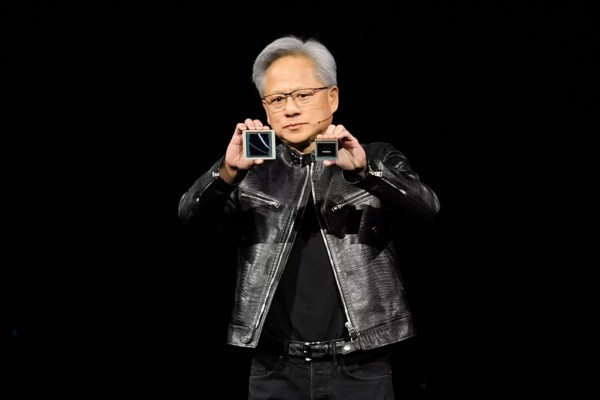
“The administration made a critical step forward by taking Blackwell-class chips off the table for export to China. It should further resist pressure to allow exports of chips close in performance to the Blackwell, such as H200-class chips manufactured by any company — or otherwise weaken AI chip export controls,” Chhabra will say in his testimony.
His second policy recommendation is to “maintain, strengthen, and close loopholes in U.S. and allied controls on semiconductor manufacturing equipment.” He will testify that the current controls are “working but not well enough” and will recommend that restrictions on chip manufacturing equipment be expanded to close loopholes.
“The Biden administration’s watershed efforts with the Netherlands, Japan, the Republic of Korea, and Taiwan did not go far enough or quickly enough to prevent stockpiling or keep up with the inevitable game of whack-a-mole as the CCP attempts to circumvent controls,” Chhabra will say in his testimony. “Allied controls must be strengthened to match U.S. restrictions.”
Chhabra will also recommend that the U.S. create a framework for “trusted AI development and deployment” and close loopholes in “insufficient” export controls of physical chips, saying they pose a national security threat.
“Nations subject to these controls can increasingly access AI capabilities and the computing power needed to train AI models remotely — through cloud computing services, API access to frontier models, or by establishing subsidiaries in third countries to circumvent geographic restrictions,” Chhabra will say in his testimony.
Chhabra will also discuss the national security implications of the widespread Chinese cyberattack Anthropic detected in September.
“I believe the cyber example is a harbinger, not an anomaly. The implications of the AI race will extend far beyond cybersecurity. AI will increasingly be central to the full spectrum of intelligence and military operations. A CCP that achieves parity or superiority in AI would have transformative advantages across the national security landscape,” Chhabra will say in his testimony.
The Trump administration has made winning the so-called AI race with China a paramount policy initiative, creating a plan on how to do so in July. The administration has also front-loaded diplomacy and national security in the policy discussions surrounding AI dominance.
This summer, the Trump administration released a playbook called “Winning the Race: America’s AI Action Plan,” with pillars based on accelerating innovation, building domestic infrastructure, and being an AI diplomatic leader. The plan was largely led by Michael Kratsios, assistant to the president for science and technology; David Sacks, White House special adviser for AI and crypto; and Secretary of State Marco Rubio.
In the wake of criticism from Trump administration officials such as Sacks, Anthropic has released several statements aligning itself with the administration’s AI policies. Sacks railed against the company in October on X for its stances on regulation.
After Sacks said Anthropic has an “agenda to backdoor Woke AI and other AI regulations through Blue states like California,” Amodei released a statement about the fact that AI is “a matter of policy over politics.”
HOUSE COMMITTEE INVITES ANTHROPIC CEO TO TESTIFY ON CHINESE AI CYBERATTACK
“I fully believe that Anthropic, the administration, and leaders across the political spectrum want the same thing: to ensure that powerful AI technology benefits the American people and that America advances and secures its lead in AI development,” Amodei wrote.
Chhabra is set to testify at 2:30 p.m. on Tuesday.