
Since its founding, the United States has championed personal liberty and the power of free markets. We chose private enterprise over central planning and competition over command, trusting that free people, acting in a free market, would drive progress. Our most dramatic leaps forward, from the rise of national railroads to the information age, came when the government set basic guardrails and then let innovators compete. That tradition is being tested again on two issues politicians love to claim only they can fix: drug prices and data access. In both cases, the market is quietly doing what Washington cannot.
The healthcare fight to lower prescription costs for American patients has raged for decades. For years, leaders on both sides of the aisle have floated “most favored nation” pricing, which would peg what Medicare pays for drugs to lower prices set by foreign governments. Though it makes for a strong political sound bite, it is a dangerous policy. Economic scholars, healthcare experts, and conservative voices alike have warned that blanket MFN schemes would gut investment in new medicines, endanger American jobs, and give countries such as China even more of a strategic edge as capital and research migrate overseas.

While the Trump administration initially revived the MFN approach, it acknowledged flaws in the proposal and moved forward on a different path. This fall, the White House announced new agreements with pharmaceutical manufacturers, including companies based in the U.S., that will dramatically cut the cost of a number of widely used drugs and ensure American patients can access the care they need.
The U.S. has long shouldered roughly three-quarters of burdensome global pharmaceutical development costs while our patients struggled and foreign countries reaped the benefits. These deals — and the creation of the TrumpRx initiative that connects patients directly with the best prices — will provide immediate financial relief to American patients and protect continued investment into lifesaving medical innovations without surrendering to the socialist price controls that would let other nations continue their free ride off America’s investments.
In exchange, the companies retain the freedom and incentive to keep investing in future treatments that will benefit Americans and other patients around the globe. All have committed to manufacturing products here in the U.S. and extending similar pricing to future products through contract, not statute. This negotiated outcome proves that affordability and innovation are not mutually exclusive when government engages constructively with industry rather than forcing through harmful mandates via congressional action or executive order.
The same pattern is playing out in financial services, where another supposed market failure turned out to need less regulation, not more.
For years, data aggregators — many backed by Silicon Valley billionaires — built their businesses by plugging into bank systems and pulling huge volumes of customer information, whenever they wanted, as often as they wanted, for free. If you linked a budgeting app to your checking account, a company you had never heard of might have been sending millions of data requests into your bank’s systems daily. The bank paid for the secure APIs, cybersecurity, and fraud monitoring. The aggregators exploited your private data and profited from it.
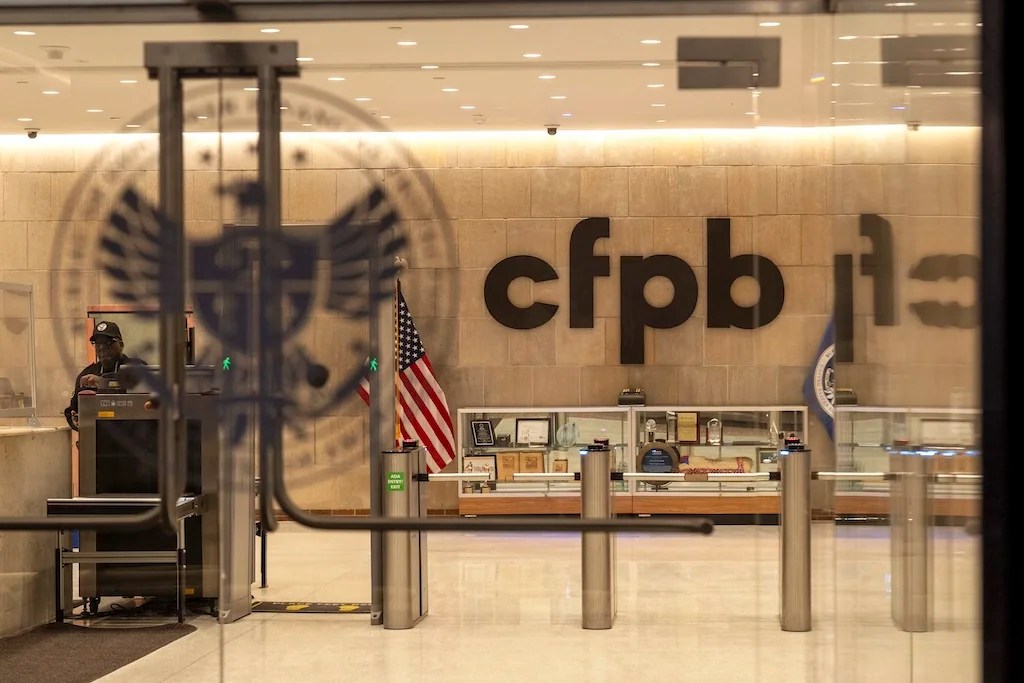
Instead of letting parties negotiate, the Biden administration tried to freeze that model in place back in 2024. Under Section 1033 of the Dodd-Frank Act, the Consumer Financial Protection Bureau pushed through an “open banking” rule that effectively required banks to provide data access at no cost. Banks warned that the rule exceeded the law, was locked in a cross-subsidy, and sued. This spring, under President Donald Trump, the CFPB did something rare: It stepped back to reconsider the rule and let stakeholders work this out themselves.
Within months, it worked. In September, JPMorganChase and Plaid announced a renewed data access agreement that preserves seamless access for customers, commits both companies to invest in faster and more secure connections, and, for the first time, includes pricing for the traffic flowing through JPMorgan’s systems. Plaid will now pay the bank fees for access to its secure infrastructure. And users will not see new fees.
The deals keep coming. JPMorganChase has now secured similar agreements with other financial tech companies such as Yodlee, Morningstar, and Akoya, which together account for the vast majority of consumer data requests. Consumers keep the apps they like, their data stays safe, and no new fees get passed on to them. The infrastructure behind those apps finally has a sustainable business model.
This is yet another example of how reducing government intervention allows companies to pursue free market solutions and achieve successful outcomes. There is a larger lesson here. Markets work best when government sets clear, limited guardrails and then allows companies to negotiate within them. That is what happened when price controls on airline tickets were dismantled. It is what happened when telecom monopolies gave way to competition and mobile phones.
The FDA will still decide which medicines are safe. The CFPB will still provide guardrails for the data-sharing ecosystem. But the details — how much Lilly charges Medicare for a GLP-1, how much Plaid pays JPMorgan for system access — are better worked out in contracts than dictated in the Federal Register.
COMPETITION, NOT PRICE CONTROLS, JUST SLASHED GLP-1 PRICES
In his first year back, Trump has delivered something conservatives have long claimed to want. He pulled back sweeping rules, let the courts put them on ice, and created space for private businesses to negotiate. The result has not been chaos, but record-breaking deals that cut costs for consumers, keep innovation moving, and recognize that infrastructure has value.
The free market worked. The only real question now is whether Washington will let it keep working.
Andrew Langer is president of Institute for Liberty.