Official Signalgate review is mixed bag for Hegseth

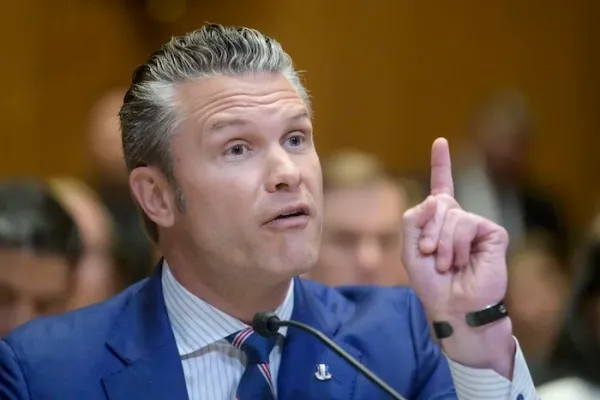
The War Department Office of Inspector General concluded that while War Secretary Pete Hegseth has the authority to declassify any piece of intelligence he chooses, he did not comply with the department’s policies regarding the use of his personal phone.

The OIG has spent roughly eight months investigating Hegseth’s use of Signal, an encrypted but non-government-approved communication app. In March, Hegseth shared details of impending military operations on the platform in a group chat with more than a dozen other Cabinet officials and one journalist, who was added to the chat without the other members’ knowledge.

Specifically, the OIG concluded that Hegseth “sent sensitive, nonpublic, operational information that he determined did not require classification over the Signal chat on his personal cell phone” and, in doing so, “did not comply with” War Department Instruction 8170.01.

Hegseth shared details of impending U.S. operations, including the quantity and strike times of crewed U.S. aircraft. The OIG said “using a personal cell phone to conduct official business and send nonpublic DoD information through Signal risks potential compromise of sensitive DoD information, which could cause harm to DoD personnel and mission objectives.”

Both the war secretary and several Pentagon officials have proclaimed since details of their findings started leaking on Tuesday that Hegseth has been “exonerated,” which has long been their stance.

“The Inspector General review is a TOTAL exoneration of Secretary Hegseth and proves what we knew all along — no classified information was shared. This matter is resolved, and the case is closed,” chief Pentagon spokesman Sean Parnell told the Washington Examiner.

Hegseth declined to sit for an interview with the OIG, although he did provide the OIG with a letter addressing its investigation. His letter was included in the office’s report, and in it, he said he shared “non-specific general details which I determined, in my sole discretion, were either not classified or that I could safely declassify, which I then typed into the Signal chat.”

In the chat, Hegseth gave a rundown of what the opening salvo against the Houthis would include.

“Just CONFIRMED w/ [U.S. Central Command] we are a GO for mission launch,” he texted the group about two hours before the strikes began. “1215et: F-18s LAUNCH (1st strike package). 1345: ‘Trigger Based’ F-18 1st Strike Window Starts (Target Terrorist is @ his Known Location so SHOULD BE ON TIME) — also, Strike Drones Launch (MQ-9s). 1410: More F-18s LAUNCH (2nd strike package). 1415 Strike Drones on Target (THIS IS WHEN THE FIRST BOMBS WILL DEFINITELY DROP, pending earlier ‘Trigger Based’ targets).”

On the day before and day of the operation, Gen. Michael Kurilla, then the CENTCOM commander, sent four classified emails to Hegseth and Adm. Christopher Grady, then the acting chairman of the Joint Chiefs of Staff.

The first email, sent the night before the operations commenced, included specific details about the targets, prepared weapons packages, and planned aircraft use. It was marked “SECRET // NOFORN,” the latter of which is an abbreviation for the government determination that prohibits its dissemination with foreign governments, though it did not contain the needed “portion markings identifying the level of classification of specific items in the email.”

He shared that information “approximately 2 to 4 hours before the execution of the strikes,” in the Signal group chat using his personal cellphone, risking “compromise of sensitive DoD information, which could cause harm to DoD personnel and mission objectives.”

SIGNALGATE REVIEW SHOWS HEGSETH’S ACTIONS COULD HAVE ENDANGERED SERVICE MEMBERS

Unbeknownst to Hegseth or the other members, the Atlantic’s editor-in-chief, Jeffrey Goldberg, had been added to the group chat. The outlet published details of the group chat more than a week after the first strikes Hegseth described had happened.

When the administration denied that Hegseth had shared classified information in the chat, the outlet published the contents of the group chat.

Related Content