

EXCLUSIVE — Bolivia has elected its first non-socialist government in decades, and the new administration has a very simple vision: less isolation, more cooperation with the United States, and a dismantled narco-state.
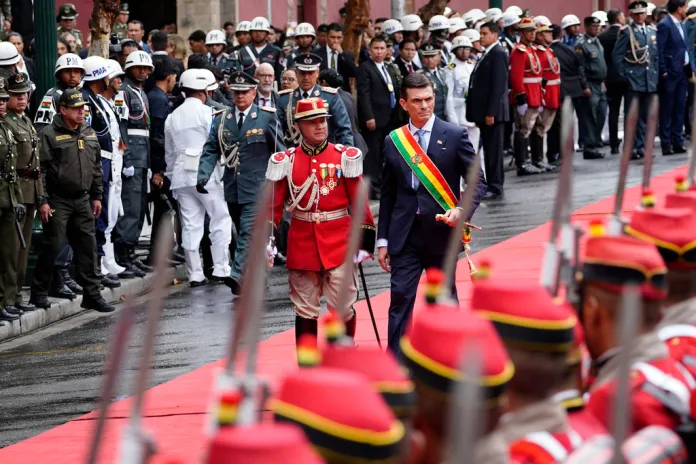
President Rodrigo Paz Pereira, leader of the Christian Democratic Party, took office on Nov. 8 after winning a landslide election in October. His rise ended rival party Movement for Socialism’s domination of the government since 2005.
Stay informed.Stay ahead.
Join Washington Examiner for unlimited access to the news, analysis, and commentary that matter most.
Already a member? Log in
The Washington Examiner spoke with newly appointed Foreign Minister Fernando Aramayo on Friday at the tail end of his first-ever trip to Washington, D.C. Bouncing from State Department meetings to media interviews, his message to the U.S. public is one of renewed friendship and shared opportunity.
“To the American people … our arms are open, and we extend our hand,” Aramayo told the Washington Examiner. “But that’s 50% of the relationship. We need to receive responses. U.S. citizens are welcome … not only to visit Bolivia as a tourist, but also to invest in Bolivia. And we need those kind of responses in the short term.”
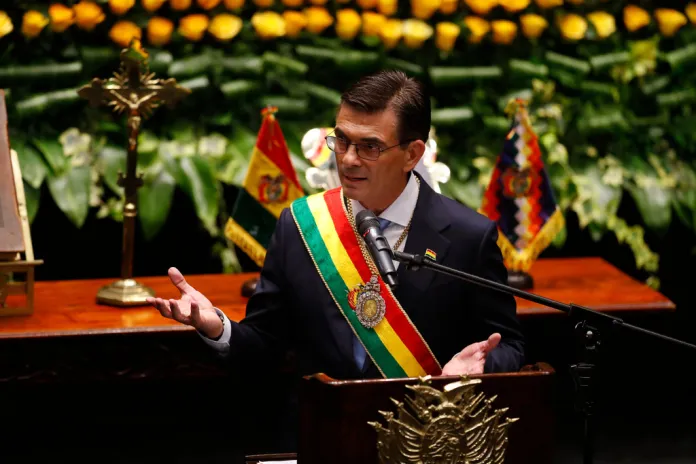
“You can feel confident that Bolivia will respect all the agreements that we are building right now,” he continued. “We need to show to the world that this alliance between Bolivia and U.S. has impact in the short term.”
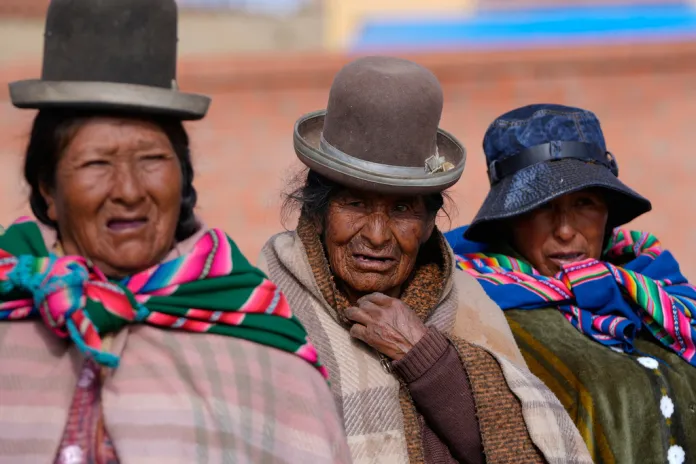
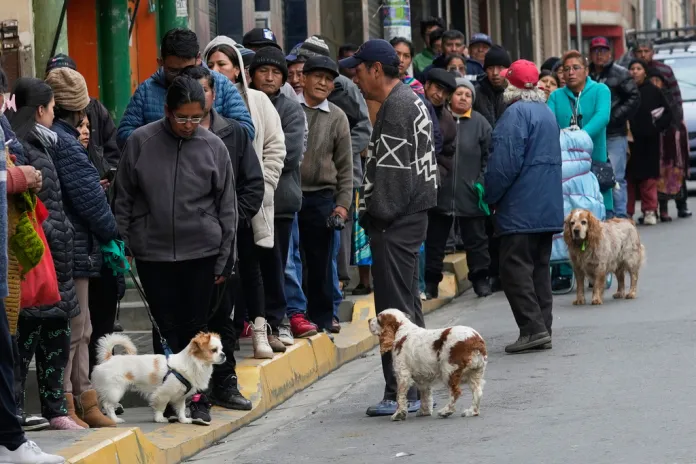
Bolivian officials have inherited a world-class disaster of an economy. Breadlines are common, the government has entangled itself in subsidies for critical products such as fuel, and the treasury is experiencing a crippling shortage of U.S. dollars.`
A slew of political oracles in the U.S. and elsewhere have tried to prognosticate the ideology the Paz administration will embrace in the post-socialist era. The freshly elected government has been variously characterized as centrist, reformist, and right-wing.
But according to Aramayo, the Bolivian government is avoiding ideological rigidity, which he believes created the deeply corrupt state they are inheriting, instead sticking to pragmatic “moral principles” for reviving the failed state.
President Donald Trump’s administration is seen as its most crucial partner in that effort. The White House released its updated National Security Strategy on Dec. 4, laying out a short, unambiguous vision for an alliance of self-interested governments joined in a transnational fight against organized crime, mass migration, and foreign influence.
The NSS pays particular attention to the Western Hemisphere, where its main goal moving forward is to “enlist and expand” with a “Trump Corollary” to the Monroe Doctrine of 1823.
“We will enlist established friends in the Hemisphere to control migration, stop drug flows, and strengthen stability and security on land and sea,” the document states. “We will expand by cultivating and strengthening new partners while bolstering our own nation’s appeal as the Hemisphere’s economic and security partner of choice.”
Bolivia is a prime candidate for U.S. support as the latest South American country to break away from the socialist status quo, and Aramayo is bullish on its future if a partnership with the U.S. focuses on commonsense goals.
“If you analyze the security strategy that U.S. has presented recently … we are a key player to implement that kind of strategy,” Aramayo told the Washington Examiner. “I think it’s a situation in which we share principles. It’s not possible to be in favor of corruption or cartels or illicit economies or organized crime.”
“In terms of Venezuela, for example, or in Nicaragua or other countries, we can be part of a coalition with other countries, including America, to strengthen the capacity that Venezuela would have to create conditions for democratic transition,” he continued. “We believe that dialogue and the possibility of mediat[ion] in that kind of situation is something that Bolivia can implement in a very, very strong way.”
Many foreign countries, particularly those in the European Union, have balked at the White House’s national security strategy as a heavy-handed encroachment on their sovereignty. Overtures from Trump calling for Europe to “regain its civilizational self-confidence” and “correct its current trajectory” are seen less as affectionate olive branches and more as a foot in the door to trans-Atlantic domination.
Bolivia, however, has suffered politically and economically by keeping the U.S. at a distance for over two decades. Successive socialist regimes have fluctuated from tepid friendship with the White House to outright hostility.
Since 2007, U.S. citizens wishing to visit Bolivia have required a visa, a situation that Aramayo called “an ideological position without content.” That visa restriction has now been lifted.
“If you add all the money that we have lost because of that kind of decisions … we lost something like $900,000,000 USD,” Aramayo lamented. “The U.S. is one of the most important economies in the planet. The relevance that U.S. has politically for South America and for all the planets is also something that is well known, so we are clear on that.”
The U.S. is not the only bilateral relationship ended by past administrations that Paz’s government is reactivating. The Bolivian foreign ministry reestablished diplomatic relations with Israel this week, drawing ire from some critics who consider it a betrayal of the socialists’ solidarity with Palestinians.
Aramayo thinks that’s absurd. “People are more concentrated now on emotional and overly ideological positions and not analyzing what is going on realistically,” he told the Washington Examiner. “We’re not supposed to interrupt our relationships with countries that represent values and share goals like Israel … We have these kind of relationships from a long time ago, and those relationships have been interrupted just under an ideological argument.”
Bilateral relations and increased presence on the global stage are a cornerstone of Bolivia’s comeback plan to “increase their capacity” and become a more self-confident negotiator.
Asked if this pan-global campaign to build friendships extends to rival powers such as China, Aramayo said he has already met with Chinese officials, and the administration is happy to have a “respectful dialogue,” but he’s wary of their track record.
“I’m an economist. And dramatically, if you see what China represents for the last 20 years in Bolivia, was a debt that represents 13% of our total bilateral debt,” Aramayo told the Washington Examiner. “So we can have better agreements with China … but at the present, China, they don’t represent for us benefits.”
COLOMBIAN PRESIDENT CLAIMS TRUMP’S VENEZUELA FIGHT IS ‘ABOUT OIL’ INSTEAD OF DRUGS
Aramayo hopes that the new era of Bolivian politics can inspire its neighbors to adopt similar reforms to lessen the influence of cartels and corruption on the continent more broadly.
“We could represent, in the short term, a laboratory of success — because we can prove to the region and to the world that to defeat 20 years of a narco-state is possible democratically,” he told the Washington Examiner.
