

Enough is enough. That isn’t a bad shorthand description of Japanese prime minister Shinzo Abe’s new economic policy. Enough of lost decades, enough of deflation, enough of an over-valued yen, enough of wage stagnation, enough of the Bank of Japan’s (BOJ) “timidity.” More printing of money, more driving down the yen, more pay for workers, more spending by government. Add in some fundamental long-term regulatory reforms, and even longer-term changes in the anti-risk, lifetime job culture, and you have the reason for the rebirth of optimism in Japan.
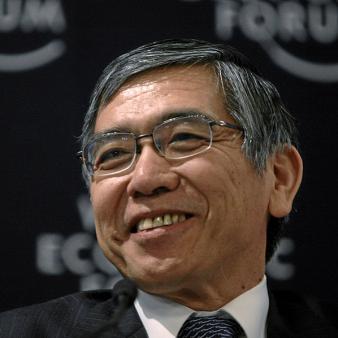
We don’t know yet whether the prime minister will be proved right in telling President Obama at their White House meeting that “Japan is back”—Abe himself later admitted some uncertainty—but we do know that share prices have soared by about 40 percent; the yen has plunged by about 25 percent; housing starts jumped 8.7 percent in February; and the outlook in the auto sector is improving. All because the new head of the BOJ, Haruhiko Kuroda, has announced that he will just about double purchases of Japanese government bonds to $75 billion every month and “take all the measures imaginable” to break deflationary expectations and get the inflation rate up to 2 percent, from its current level of -0.6 percent. Think of his plan as a series of twos—2 percent inflation, in 2 years, a 2-fold increase in the monetary base, a 2-fold increase in purchases of bonds, and a (more than) 2-fold increase in the duration of the BOJ’s bond holdings. And, finally, two times the rate of expansion of the balance sheet relative to GDP as Bernanke has dared.
Stay informed.Stay ahead.
Join Washington Examiner for unlimited access to the news, analysis, and commentary that matter most.
Already a member? Log in
