
Australia’s gun buyback is the wrong response to Bondi Beach massacre

Australian Prime Minister Anthony Albanese has called for a national “gun buyback” program in the wake of the Bondi Beach massacre. But additional restrictions on gun ownership aren’t the solution. Instead, they’ll distract from larger, more difficult problems to solve.

On December 19, Albanese announced that the Australian government will establish a “national gun buyback scheme.” The prime minister told reporters that he “expects hundreds of thousands of firearms will be collected and destroyed.” 

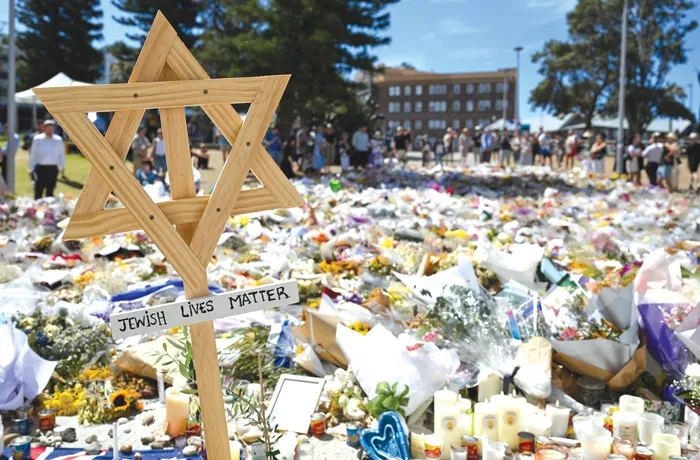
Albanese’s proposal came less than a week after the Bondi Beach massacre, in which two gunmen murdered 15 Jews and wounded at least 40 more at a Hanukkah celebration. Authorities say that Naveed Akram and his father Sajid Akram deliberately targeted Australia’s Jewish community. Australian officials have said that the attack was inspired by ISIS, noting “the presence of Islamic State flags in the vehicle that has been seized.”

NETANYAHU SAYS HE WARNED AUSTRALIA OF POLICIES FUELING ‘ANTISEMITIC FIRE’ MONTHS BEFORE SHOOTING

The Bondi Beach massacre highlights the dangers of both rising antisemitism and Islamic extremism. But more gun control won’t solve either. In fact, it may make things even worse. Australia already has highly restrictive laws on gun ownership.

In 1996, the country passed the National Firearms Agreement (NFA) prohibiting many commonly used rifles, shotguns, and other long guns. The NFA was enacted after the Port Arthur massacre, in which a mass murderer killed 35 people and wounded 23 others in the state of Tasmania.  Subsequently, licenses were required for all firearms purchases, and a minimum of a 28-day “cooling-off period” was also instituted. Concealed carry for citizens is prohibited and self-defense is not considered a “genuine reason” for owning a firearm. Many states also have restrictions on how many firearms an individual can possess. 

Australia has also pushed “buyback” schemes in recent years. A permanent “amnesty” has been in place since 2021, allowing unregistered firearms to be turned in without penalty. But these measures have failed. Estimates vary as to how many firearms remain in circulation in Australia, but most studies agree that a majority of firearms have not been turned in. This is unsurprising. 

By definition, criminals break laws. And gun legislation is no exception. Those who are about to murder, rob, or terrorize are unlikely to be concerned with defying a mere gun law. By criminalizing gun ownership, politicians target law-abiding citizens, depriving them of their ability to protect themselves. In the United States, many cities with the highest homicide rates, like Chicago, Washington, D.C., and New York City, have tight restrictions on gun ownership.

Nor do gun laws prevent massacres. For example, in November 2015, Islamic State terrorists carried out an attack at the Bataclan theatre in Paris, murdering 130 people and injuring 400 more. France, like many nations in Europe, has very tough gun laws. The AK-47 rifles used in the attack were prohibited. Terrorists acquired them anyway. But the type of weapon matters less than the ideology behind the person who is wielding it.

TRUMP ANNOUNCES DEALS WITH NINE MORE DRUG MANUFACTURERS

Indeed, the Bondi Beach terrorists seemingly used a shotgun and a bolt-action rifle, old designs that have long been out of date and would be considered archaic for any front-line law enforcement or military agency. Neither impeded them from murdering those who lacked the ability to defend themselves.

Ultimately, blaming guns distracts from dealing with problems with less tangible solutions, like countering violent extremism and dangerous ideologies. It provides the government with the illusion of doing something meaningful instead of tackling more politically fraught problems.

The writer is a Washington D.C.-based foreign affairs analyst.

Related Content