

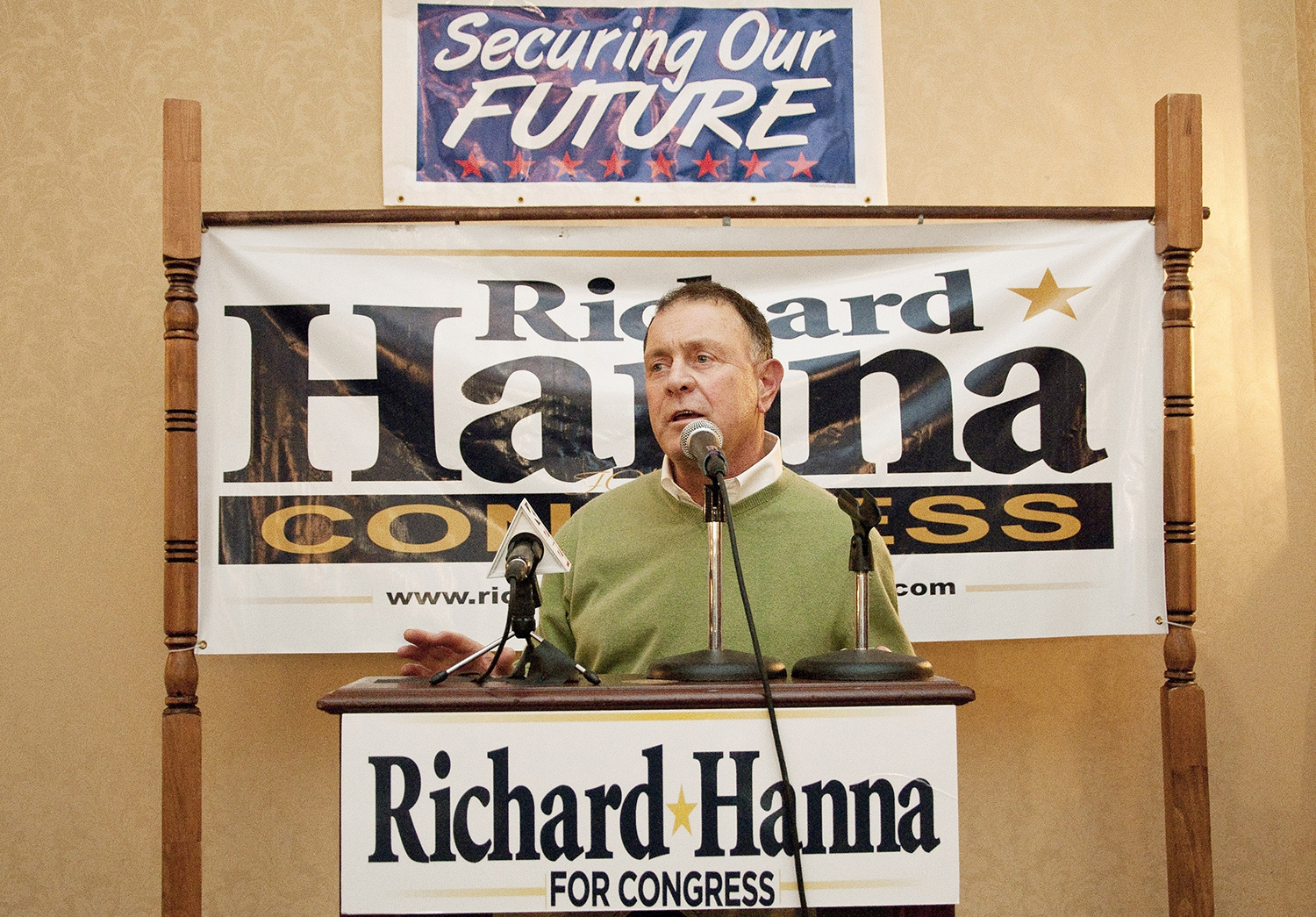
Rep. Richard Hanna will break from his Republican Party to vote for Democratic nominee Hillary Clinton in this November’s general election.
Hanna, a New York congressman since 2011, will become the first Republican member of Congress to cross party lines in order to avoid casting a vote for Donald Trump.
Recommended Stories



“For me, it is not enough to simply denounce his comments: He is unfit to serve our party and cannot lead this country,” Hanna wrote in an op-ed for Syracuse.com on Tuesday.
Hanna, who said in March he wouldn’t vote for Trump even if he were to become the nominee, wrote Tuesday that electing the billionaire businessman will “only make this [issues facing the U.S.] worse, much worse.”
“I never expect to agree with whoever is president, but at a minimum the president needs to consistently display those qualities I have preached to my two children: kindness, honesty, dignity, compassion and respect,” Hanna explained. “I find Trump deeply flawed in endless ways.”
Hanna also warned that the Republican Party is “becoming increasingly less capable of nominating a person who is electable as president.”
“The primary process is so geared toward the party’s political base, which ignores the fact that we have largely alienated women, Hispanics, the LGBT community, young voters and many others in general,” he explained.
While noting that he disagrees with her “on many issues,” Hanna concluded that: “I will vote for Mrs. Clinton.”
“I will be hopeful and resolute in my belief that being a good American who loves his country is far more important than parties or winning and losing. I trust she can lead,” Hanna wrote. “All Republicans may not like the direction, but they can live to win or lose another day with a real candidate. Our response to the public’s anger and the need to rebuild requires complex solutions, experience, knowledge and balance. Not bumper sticker slogans that pander to our disappointment, fear and hate.”
Hanna is not likely to face any fallout for his vote in Congress. In December, Hanna announced he will retire at the end of his term after serving three-terms representing Central New York.
