

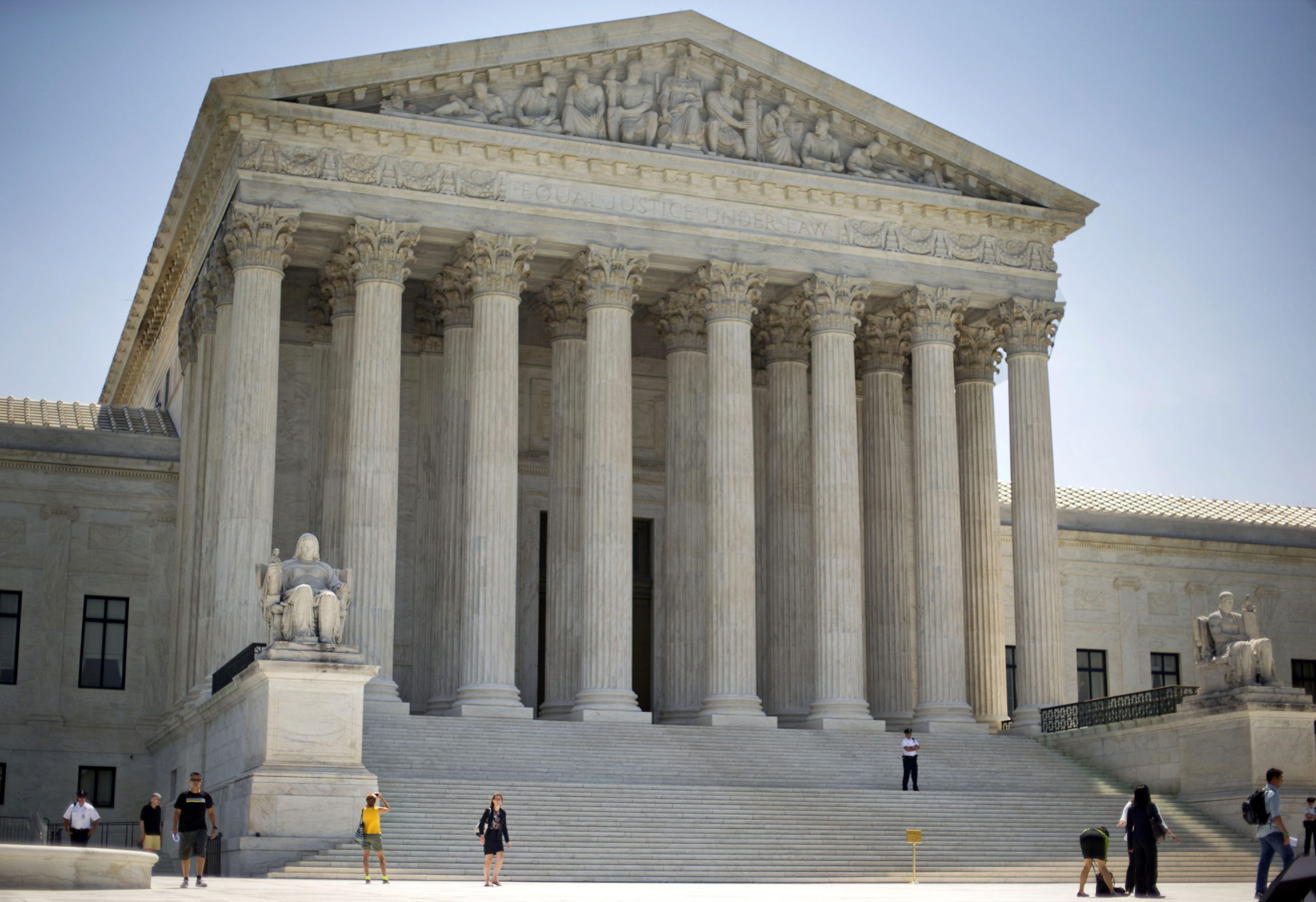
The Supreme Court ruled against a California church that was seeking to overturn the state’s limits on attendance.
The court ruled 5-4 against the South Bay United Pentecostal Church in Chula Vista, California, with Chief Justice John Roberts joining the four liberal Justices.
Recommended Stories


The church, which says it has crowds of 200 to 300 people, argued that the limitation placed on how many people can attend its services violates its constitutional rights protecting religious freedom. It specifically made an emergency appeal so that it would have a ruling before services were scheduled to be held on Sunday.
“Although California’s guidelines place restrictions on places of worship, those restrictions appear consistent with the free exercise clause of the First Amendment,” Roberts wrote in an opinion.
“Similar or more severe restrictions apply to comparable secular gatherings, including lectures, concerts, movie showings, spectator sports and theatrical performances, where large groups of people gather in close proximity for extended periods of time,” the chief justice added. “And the order exempts or treats more leniently only dissimilar activities, such as operating grocery stores, banks and laundromats, in which people neither congregate in large groups nor remain in close proximity for extended periods.”
Justices Clarence Thomas, Samuel Alito, Neil Gorsuch, and Brett Kavanaugh noted dissents.
Kavanaugh, who wrote an opinion joined by Thomas and Gorsuch, argued that churches “simply want to be treated equally to comparable secular businesses.”
“The state cannot assume the worst when people go to worship but assume the best when people go to work or go about the rest of their daily lives in permitted social settings,” he wrote, referencing a quote from an appeals court decision in a different case.
The brief, which was filed last week, sought to have the justices block a ruling from a divided three-judge panel of the U.S. Court of Appeals for the 9th Circuit, in San Francisco. It ruled that the shutdown orders did not single out houses of worship for unfavorable treatment, with the majority saying that state officials had struck an appropriate balance.
The Supreme Court’s ruling came after President Trump declared the operation of houses of worship ‘essential’ earlier this month. He threatened executive action to allow the public to attend worship services, which would require litigation, if governors didn’t agree.
Three days later, Democratic California Gov. Gavin Newsom issued additional guidance for houses of worship, requiring them to “limit attendance to 25 percent of building capacity or a maximum of 100 attendees, whichever is lower.”
