US pledges $2 billion toward UN humanitarian aid

The United States pledged $2 billion Monday toward United Nations humanitarian aid.

The move comes as the administration remains averse to foreign aid and has warned U.N. agencies to “adapt, shrink or die” in the wake of lost funding.

President Donald Trump’s administration instituted a 90-day pause on foreign funding earlier this year, eventually shuttering the U.S. Agency for International Development and provoking grant recipients. An appeals court upheld the administration’s decision to cut billions in funding earlier this year.

The $2 billion comes as part of a deal with the U.N. Office for the Coordination of Humanitarian Affairs.

The pledge will create an umbrella fund from which money will be distributed to different aid organizations by the OCHA and British head Tom Fletcher. While the money is far short of what the U.S. has offered the U.N. in the past — in some years it totaled $17 billion — it helps keep the nation in line as one of the largest humanitarian donors in the world.

“At a moment of immense global strain, the United States is demonstrating that it is a humanitarian superpower, offering hope to people who have lost everything,” Fletcher said in a statement.

The administration wants the OCHA to reflect its government efficiency model. The U.S. wants to see “more consolidated leadership authority” in U.N. aid delivery systems, a senior State Department official told the Associated Press.

Fletcher and the OCHA “are going to control the spigot” on where and how much money is distributed.

U.S. Ambassador to the United Nations Michael Waltz said he believes it will create “more focused” assistance.

“This humanitarian reset at the United Nations should deliver more aid with fewer tax dollars — providing more focused, results-driven assistance aligned with U.S foreign policy,” he said.

Other countries, such as Britain, France, Germany, and Japan, have cut their aid allotments as the U.S. seeks efficiency in foreign aid. Much of the initiative to cut back on foreign aid originated with the work of the Department of Government Efficiency, under Elon Musk at the time. Musk advised Trump to strip the federal government of nonessential parts earlier this year, including all of USAID.

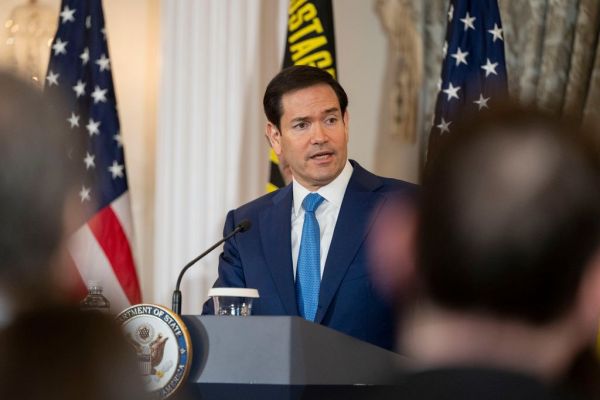
State Department personnel say the agreement balances the U.S. commitment to foreign aid with the administration’s efficiency agenda.

“The agreement requires the U.N. to consolidate humanitarian functions to reduce bureaucratic overhead, unnecessary duplication, and ideological creep,” a State Department spokesperson said in a statement. “Individual U.N. agencies will need to adapt, shrink, or die.”

“Nowhere is reform more important than the humanitarian agencies, which perform some of the U.N.’s most critical work,” the statement continues. “Today’s agreement is a critical step in those reform efforts, balancing President Trump’s commitment to remaining the world’s most generous nation, with the imperative to bring reform to the way we fund, oversee, and integrate with U.N. humanitarian efforts.”

Seventeen countries, including Ukraine, Syria, and Haiti, will be targeted with funding initially. Afghanistan and Gaza are not included, as Trump officials say the latter area will be covered by Trump’s peace plan.

But it is not likely the new aid will quiet detractors, who have criticized the administration of lessening aid during times of famine, war, and need.

RAMAPHOSA ACCUSES TRUMP OF MAKING ‘PUNITIVE’ DECISIONS ON ‘MISINFORMATION’ AND DISTORTIONS

The Supreme Court allowed the Trump administration to withhold $4 billion in congressionally approved aid in September, despite protests from international aid groups. A plaintiff in the case, the AIDS Vaccine Advocacy Coalition, said the administration’s pause of foreign aid has resulted in thousands of deaths.

“Since foreign aid was frozen on the first day of this Administration, we have seen thousands of clinics close, hundreds of thousands of communities lose access to essential services and medications, and thousands of lives lost,” said Mitchell Warren, executive director of AVAC. “This ruling will translate into further devastation, put future global health responses at risk, and set a dangerous precedent that undermines Congress’ constitutional power of the purse.”

Related Content