In Focus delivers deeper coverage of the political, cultural, and ideological issues shaping America. Published daily by senior writers and experts, these in-depth pieces go beyond the headlines to give readers the full picture. You can find our full list of In Focus pieces here.
“I know you’re a conservative, but you’re a good kid,” Helen Thomas once said to me in the 1980s when I was interning for the grande dame of the White House press corps. I took it as the compliment it was — Thomas, whatever her politics, was a good mentor and treated me kindly.
Still, I chuckled at the “but” and shook my head inwardly, for it clearly meant that “conservative” and “good” seldom intersected in her lexicon.
Interning at the White House for Thomas also let me know early the lay of the land. Which helps me understand that the battle over what Bari Weiss is trying to do at CBS is much larger than just Weiss’s fate, and that much depends on her success.
If the forces of the old order win and they destroy Weiss, the legacy media may completely die, either petering out further into irrelevance or by sudden death.
The CBS staff rebelling against Weiss are used to getting their way. I experienced this reality firsthand again and again as I entered the profession in the 1980s after graduating from “the premier institution devoted to communication and the arts,” Emerson College in Boston.
The National Journalism Center brought me to Washington from Beantown in 1986 and pegged me early as a wire-service guy, so they placed me at the old United Press International, then beginning its decline. After serving with Thomas, I did a stint in the main UPI newsroom, and it was while working the congressional midterm elections that I got my next lesson.
As results were coming in showing that the Democrats would retake the Senate, an editor three or four decades my senior, suddenly and completely out of the blue, let me have it in an expletive-filled tirade. The man, whom I hadn’t met before, but who clearly had been bird-dogging me, was very happy that “your side is getting its butt kicked tonight.”
The old guy then spat out at a young, insignificant intern, “Your Reagan Revolution is over.” I understood instantly how much life must have been hard for this poor man since the Reagan Revolution began to work in 1982, and it was morning in America again. I also understood how much my very presence in the newsroom was a personal affront to him.
After my internship, I was lucky enough to get a job at another global news service. It was great for my career, for within 18 months, I was traveling the world and reporting from such hot spots as Panama, Afghanistan, South Korea, and Cyprus.
But in my first few weeks there, another senior editor let me know he would have preferred to have no conservatives in the newsroom.
I had said something about how the Contras in Nicaragua may not be the murdering villains he was making them out to be, countering the prevailing view there. He stopped typing, looked at me, and asked, “Are you a conservative?” I assented, and he replied in exasperation, “Why do we need to have a conservative butthead in the newsroom?”
He didn’t say butthead.
I could go on and on, as I ended up spending nearly two decades in the profession. I noticed that many who went in harboring some conservative ideas at some point began to gravitate leftward, or they went silent and developed doublespeak, sometimes letting me know of their views in hushed tones by the coffee station. Many others simply left the profession, further view-cleansing it. Most people prefer to go along to get along.
I chose to dig in and stayed for nearly 20 years, never hiding my positions but arguing genially with colleagues and developing a tough epidermis, though admittedly half of those years were spent working overseas for the conservative pages of the Wall Street Journal.
This is the world Weiss has likely encountered her entire professional life. Liberals took over journalism decades ago and have run it like their own fiefdom.
And I do mean liberals. Yes, in the past decade, and especially since the 2020 BLM summer of hate, journalism has additionally gone “woke,” along with museums, houses of the arts, and the other industries that create meaning.
Journalism has been liberal much longer than that — liberal as in advocating higher taxes and more regulation, disparaging any warning about the evils of communism, supporting the Democratic Party over the Republicans, and hating the very sight of the affable man who was our 40th president. Journalists have slanted their stories according to these biases, selecting and omitting stories according to these biases, etc., and have felt entitled to do so.
Small wonder that when the great woke revolt of the past decade came along, and everything under the sun became about race, sex, and sexual orientation, journalists gladly jumped in with both feet, lustfully embracing the nonsensical notion that America was systemically racist and oppressive.
This acceptance that America was sick at heart convinced them that it was OK to even shed any pretense of objectivity.
That became clear when, on June 10, 2020, not two weeks after George Floyd’s death, I received a mass email from Steve Coll, then the dean of the Columbia Journalism School, and Sheila Coronel, dean of academic affairs and director of the Toni Stabile Center for Investigative Journalism. Columbia’s journalism school is supposed to be the gold standard of journalism schools, so what Coll and Coronel had to say was important.
“In recent days, we have seen the calls for racial justice and accountability extend to major newsrooms and journalism institutions. Failures of minority representation in our profession’s workforce and leadership have long been glaring,” they wrote, getting to the point in the next sentence: “This is becoming a change moment for journalism itself, as journalists of color and their allies ask core questions about the relevance and impact of inherited shibboleths such as ‘objectivity’.”
Objectivity in BLM’s summer of revolution became an old “shibboleth,” and inside scare quotes, something to gladly discard and no longer even pretend to engage in.
Liberals had weakened journalism’s corpus of work for decades and left it vulnerable to complete takeover by the woke mind virus. But these exigencies to abandon even the pretense of objectivity became such a clear violation of what journalism had pretended to stand for that it became clear to some that a medical intervention was needed.
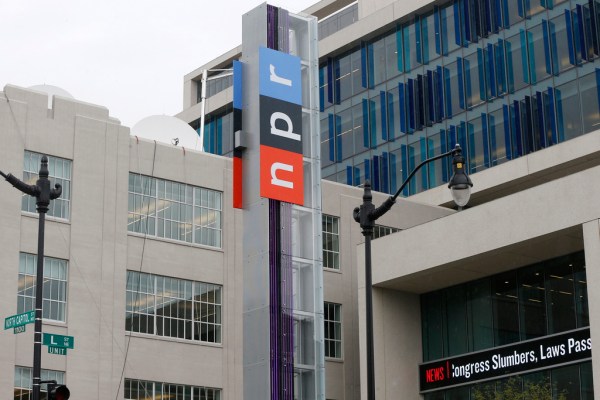
Uri Berliner, a veteran of many years at NPR, tried to give the profession what was, in retrospect, the first immunizing shot with an essay in 2024. Yes, the ground for his essay to succeed was cleared when Elon Musk bought Twitter in 2022, removing censorship from that key platform. That was another key event that has led us to at least hope that truth can be saved. But it’s hard to overestimate the impact of Berliner’s assessment. NPR, PBS, and other legacy outlets had abdicated their responsibility to save the country from the hysteria that accompanied the Floyd riots, he wrote.
“We happen to have a very powerful tool for answering such questions: journalism. Journalism that lets evidence lead the way,” he wrote with passion. “But the message from the top [at NPR] was very different. America’s infestation with systemic racism was declared loud and clear: it was a given. Our mission was to change it.”
Berliner’s essay was an indictment of the direction taken not just by public media, but by most legacy media outlets. It opened a floodgate of reevaluations of public media’s work, for while CBS pays for itself through ad revenue and other commercial ventures, we all pay for NPR and PBS through taxes.
Or used to. After a catastrophic performance by NPR CEO Katherine Maher at a congressional hearing, in which I also had the honor of testifying, Congress stripped the Corporation for Public Broadcasting of public funding.
Berliner’s essay ran in the Free Press, the media empire Weiss started on the Substack platform on Jan. 12, 2021, and which became an instant success. It is difficult to see Berliner’s article having the same type of impact, or maybe even seeing the light of day, had Weiss not started the Free Press. And, of course, Weiss would not have founded it had she not been forced to flee from the New York Times. She worked there until July 14, 2020, when she resigned because she was being bullied for her views by its staffers, and management did nothing about it.
Three months ago, Paramount Skydance bought the Free Press for $125 million and installed Weiss as editor-in-chief of CBS News, which it owns. This month, Weiss had the temerity to hold a story on a Salvadoran prison the administration is sending illegal immigrants to from being aired on 60 Minutes because she wanted more reporting on it, including the administration’s justification. For that, for conducting journalism, she is being pilloried.
Weiss, incidentally, is a liberal lesbian who is married to another woman. She is being pilloried, however, because she supports Israel, saw wokeism’s excesses as going too far, and disagrees with her alma mater, Columbia, that objectivity is an old shibboleth to be discarded.
If those doing the pillorying get another scalp, it may be a sign that journalism, as it exists today, cannot be saved.