

When House Speaker Nancy Pelosi, a lifelong Catholic, was questioned on how she could support compelling the Little Sisters of the Poor to violate their consciences by forcing them to provide birth control coverage, she gave a revealing answer: “I do my religion on Sundays.”
Former President Barack Obama, on occasion, made a similar slip. When speaking of the First Amendment, Obama said, “Freedom of worship.”
Recommended Stories


SUPREME COURT RULES FOR CATHOLIC FOSTER CARE AGENCY IN GAY DISCRIMINATION DISPUTE
There is, of course, no mention of “freedom of worship” in the Constitution. Instead, the First Amendment protects the free exercise of religion.
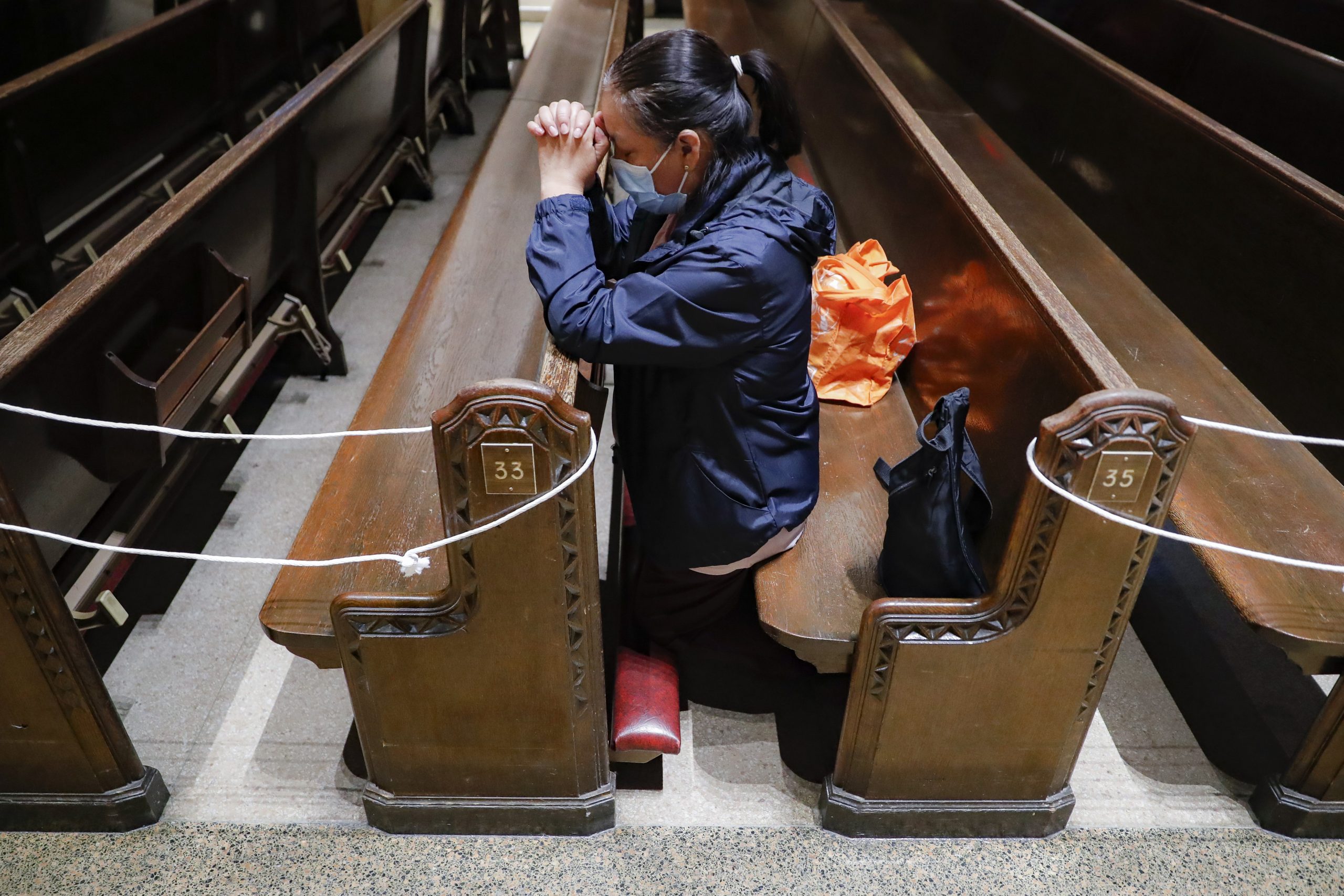
The exercise of Christianity, Judaism, Islam, Hinduism, or any religion is not something you can simply do one day a week, nor is it something that can be kept behind church doors or in the privacy of your own home.
Catholic teaching, for instance, says the faith compels them to feed the hungry and care for orphans and widows. These are the “corporal works of mercy” in Catholic lingo. Jesus told his followers to love their neighbors and that “whatever you did for one of the least of these brothers and sisters of mine, you did for me.”
That’s why Catholic Social Services operates a foster care agency in Philadelphia. Pairing children with foster parents is part of how these Philly Catholics exercised their religion. And it goes without saying that CSS would do its corporal works of mercy according to Catholic teaching, meaning they can’t lie, they can’t counsel abortion, and they cannot participate in building families around things other than traditional marriage.
That’s why the city of Philadelphia cut off CSS — Catholic moral teaching on marriage clashed with the city government’s moral teaching on marriage. So, the city said, “You must choose our morality over your conscience.”
In Fulton v. Philadelphia, the Supreme Court ruled unanimously that Philadelphia had infringed on CSS’s exercise of religion. That finding is obviously true and good.
It’s unfortunate that the opinion did not go further, as the court’s conservative wing would have done, and explicitly scrap the precedent set by Employment Division v. Smith. That precedent holds that governments may abridge the free exercise of religion if the abridgment is caused by a facially neutral law.
It was Antonin Scalia who wrote that decision, and it was a grave error. Simply because a government has a compelling reason for a law, Smith holds, it can infringe on the free exercise of religion.
CLICK HERE TO READ MORE FROM THE WASHINGTON EXAMINER
The 9-0 majority in Fulton found that the city of Philadelphia discriminated against a Catholic organization. That’s true, and it’s good that anti-religious discrimination is still barred by the liberals on the Supreme Court. But the Constitution, rightly understood, demands more from our governments. Cities, states, and the federal government owe more than equal treatment to religion — they owe deference.
The Supreme Court ought to recognize that.
