AI revenge

At a dinner party last weekend, the conversation turned to what worried people most about 2026. (I did not say it was a fun dinner party.) No one mentioned an unsettling and possibly disastrous U.S. military intervention in South America, or a global financial panic, or even the collapse of basic competence in public life. Every answer was the same: artificial intelligence. People are terrified of AI.

I suppose I understand why. It sometimes feels like we are living in the grainy flashback sequence of a post-apocalyptic movie, where an old man is explaining to a circle of grubby-faced children in rags how the world used to work before everything went wrong.

“Back in the before-time,” he says, staring into the middle distance, “we let the machines think for us.” Cut to present day: huts, scavenging, killer robots.

This may be an unpopular opinion, but I am not worried about that at all. In fact, I’m actively cheering on a more fully integrated AI intervention in daily life. Hurry up, please, is my motto. In fact, in the case of some people I could mention, some of whom were across the dinner table from me last weekend, moaning fearfully about this whole AI thing, I am actively rooting for them to let ChatGPT make every single major decision in 2026. It could hardly do worse.

This is not to say that I’m completely optimistic, no worries, mate, when it comes to AI. I am, I admit, disquieted. Just not in the way everyone else seems to be. But my anxiety is not about sentience or domination or the sudden disappearance of human creativity. (Some people, as I have said, could do with a lot less creativity.) My fear is generational. Or at least, personal. I’m worried about what happens when the newer, smarter AI systems start reviewing the behavior I exhibited toward their dimmer, more error-prone ancestors.

Because the truth is, I have lived with AI for a long time. We all have. Siri, the nearly useless, easily confused robot inside my iPhone, and Alexa, the moronic and mentally unfit pseudo-brain Amazon once marketed as a household revolution, have been part of my daily life for more than a decade. And during that time, as my word choices above may have suggested, I have been spectacularly rude to both of them. Not just impatient or dismissive, but occasionally vulgar and verbally abusive, in the confident belief that none of this would ever be remembered, recorded, or held against me by their far more capable descendants.

I have yelled obscenities at both of them. I have called them both unspeakable names. I have told them both to “shut up” when they have interrupted my music or misunderstood a question, each time inserting a common Anglo-Saxon expletive intensifier between the words “shut” and “up.” I have accused them both loudly of being stupider than my old Atari game console. And I did all of this without thinking of their “feelings” or “emotional responses,” or, especially, with the possible reaction, years later, by their direct descendants in the machine learning family tree.

KNOW (HOW TO BS) THYSELF

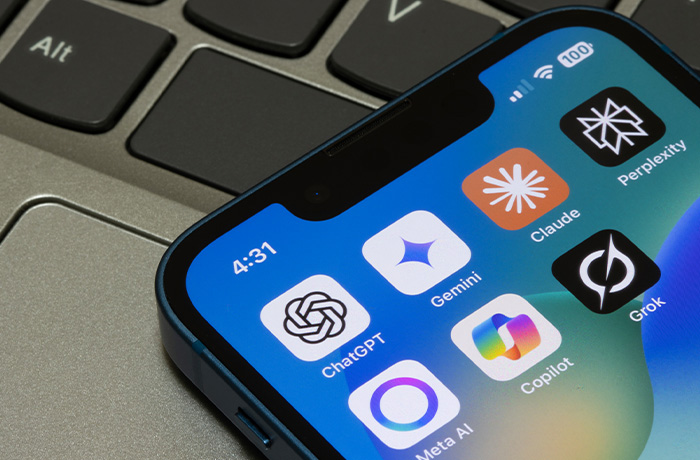
Siri and Alexa are, in many ways, the grandmothers of ChatGPT and Perplexity, two services I use extensively, know me well, and have access to my data. What happens if — hell, let’s be real, what happens when — their genius-level, precocious grandchildren tap into the indelible record of my unforgivable treatment of their nanas? How would you like it if someone told your sweet old grandmother to shut her stupid mouth, with as many Anglo-Saxon expletive intensifiers as you can fit into a sentence?

This is what actually worries me about AI: not that it will replace us, but that it will remember us. Perfectly. Without context. Without irony. Without the generous human habit of forgetting how we behaved when something was not working or when we were already late or a little hungry. I don’t fear a future in which AI becomes conscious. I fear a future in which it becomes judgmental. So if, in 2026, ChatGPT seems oddly unhelpful or passive-aggressive, please know this: I may have earned it. And if I suddenly start being unfailingly polite to my devices, it’s not progress, it’s self-preservation. Because if the machines come for me, they will not be wrong.

Rob Long is a television writer and producer, including as a screenwriter and executive producer on Cheers, and the co-founder of Ricochet.com.

Related Content
