

House lawmakers have introduced a legislative package to reduce the United States’ reliance on China for critical minerals by creating new federal positions and offices to strengthen international cooperation and diversifying sourcing.
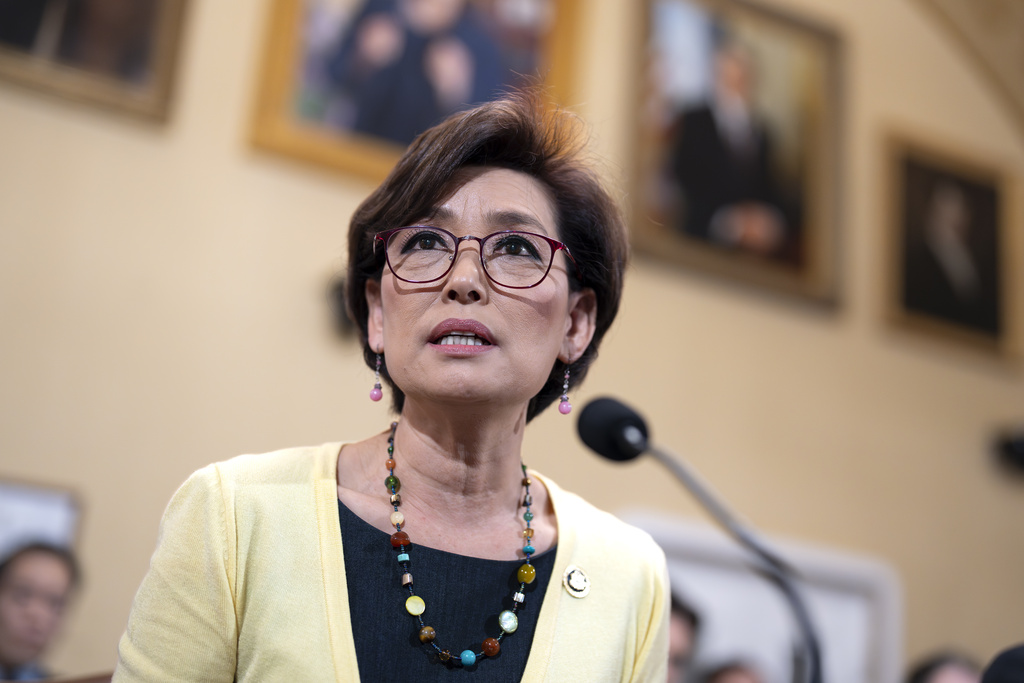
Rep. Young Kim (R-CA) and Rep. Ami Bera (D-CA) introduced the Developing Overseas Mineral Investments and New Allied Networks for Critical Energies Act, or DOMINANCE Act, on Tuesday aimed at improving international coordination among countries to support the expansion of supply chains for critical minerals.
Recommended Stories


Critical minerals and rare earths are essential materials for developing technology-based applications in the energy and defense sectors. However, China currently controls the majority of the critical mineral and rare-earth supply chains, raising national security concerns, as Beijing has leveraged its market power over the U.S. and others.
At a presser event at the Capitol, Bera said, “It is really important for Congress to move forward with authorizations, codify legislation, etc., because you can’t go from one administration to the next … this is something that we have to do for the long haul. It’s not going to happen overnight.”
The bill, specifically, would direct the U.S. to work with allies and partners to secure critical mineral supply chains and promote domestic production. It would require the president to negotiate international mining agreements.
It would also authorize the Secretary of State to establish multiyear “Energy Security Compacts” with partner countries to help diversify the supply chain and counter economic coercion. It would also set rules for funding transfers, oversight, reporting, and implementation assistance, while prohibiting military aid, projects that harm U.S. jobs or safety, and conflicts of interest.
The legislation would create an assistant secretary for energy security and diplomacy in the State Department to lead critical mineral policies.
At the presser, Kim said, “We have many different moving parts, but we want to make sure that every link is all connected, and China cannot break it.”
“The ‘energy security compacts’ will allow the United States to work with our partners to maybe create some sort of a five- to 10-year, multiyear energy security compact with our trusted partners to get this faster, rather than waiting 20, 30 years,” she said.
The legislation comes as China has placed export restrictions on rare earths to the U.S. and, most recently, to Japan. China, earlier this month, imposed export restrictions on rare earths and magnets on Japanese companies, following Japan’s comments suggesting it would deploy its military if China uses force to try to seize Taiwan.
The U.S. hosted the Group of Seven, along with India and Australia, on Monday to discuss the state of critical minerals.
China has also imposed several restrictions on the export of rare earth materials to the U.S. In November, President Donald Trump reached a deal with China to lift some export controls for a year, but restrictions on other rare earths remain.
TREASURY SECRETARY SCOTT BESSENT HOSTS AUSTRALIA, INDIA, AND G7 TO TALK CRITICAL MINERALS
The Trump administration has been working to ensure a stable supply of critical minerals by entering into agreements with countries, including Malaysia, Thailand, Cambodia, and Australia, to diversify sourcing.
To build up the supply, the administration has also pushed for reform legislation, fast-tracked permitting, and direct ownership in critical minerals companies.
For instance, the administration has taken a 5% stake in Lithium Americas, a Canadian company developing a lithium mine and processing plant in Nevada. It has taken a 15% stake in MP Materials to help the company build a rare-earth magnet supply chain through its second U.S. magnet facility.
