
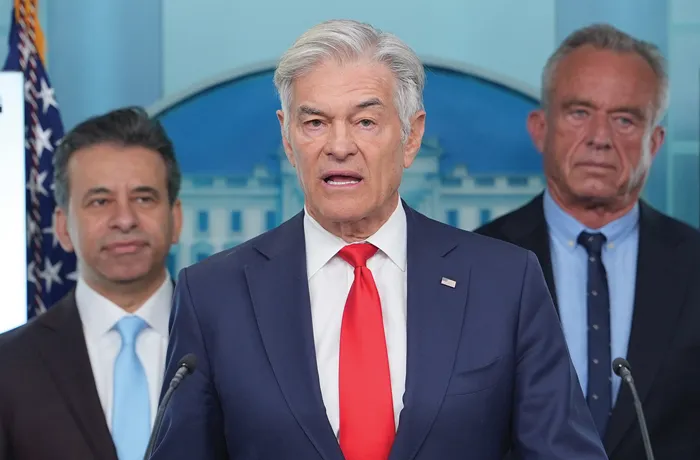
Dr. Mehmet Oz — one of the few members of President Donald Trump’s second administration who might once have rivaled him for network television fame — played to that very strength in early January while introducing the Department of Health and Human Services’s new alcohol consumption guidelines. Defending the Trump administration’s decision to ditch long-standing advice that drinkers limit themselves to two tipples per day for men and one for women, Oz offered reporters a pithy sound bite by way of personal advice: “Don’t have it for breakfast.”
While the official report sounds a note of caution, in his remarks, Oz offered an unexpected, garbled defense of drinking in the face of trends toward sobriety (just 54% of Americans reported drinking at all in the most recent polling from Gallup, the lowest rate recorded since its polling began in 1939). “Alcohol is a social lubricant that brings people together,” he said, adding that while “in the best-case scenario, I don’t think you should drink alcohol,” it provides “an excuse to bond and socialize, and there’s probably nothing healthier than having a good time with friends in a safe way.” Subtext: Amid mounting concern over Americans’ psychological isolation — the death of civic life, declining marriage and birth rates, the anecdotal but undeniable growth of antisocial public behavior — alcohol has some role to play in encouraging conviviality.