
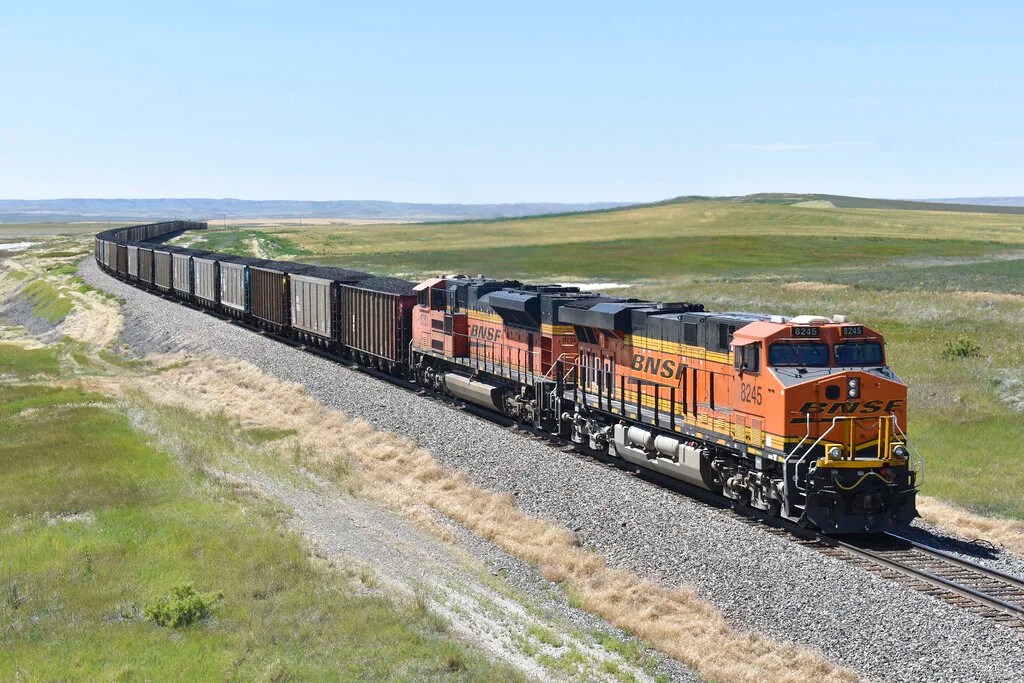
The United States marks its 250th anniversary this year — a milestone that invites reflection not just on our founding ideals but on the practical systems that turned a young nation into the world’s most dynamic economy. Next year will mark another quieter but historically consequential anniversary: 200 years since the first American railroad began operating.
Together, those anniversaries tell a shared story about how the United States builds — through innovation, investment, and public policy that focuses on results rather than rhetoric.
From the earliest days of the country, railroads helped bind a sprawling country together. They enabled westward expansion, connected farms to markets and factories to ports, and laid the foundation for America’s rise as a global economic power. Long before the public contemplated the story behind an Amazon delivery, freight rail became the nation’s original supply-chain backbone — moving goods efficiently, affordably, and at a scale unmatched anywhere in the world.
That network still underpins America’s supply chain today, but its success was not inevitable. After decades of overregulation left railroads struggling, Congress enacted bipartisan partial economic deregulation in the late 1970s, preserving oversight while enabling market-based investment and service. The result was massive private reinvestment, improved safety and reliability, lower shipping costs, and a freight rail system capable of investing at scale today.
Modern railroads are no longer defined by steel and diesel alone. They are technology companies operating physical networks. Railroads are deploying tech-enabled inspection systems, analyzing terabytes of data to deploy predictive analytics. Digital tools and real-time data improve safety, reliability, and environmental performance every day.
Critically, this innovation assists the railroads’ highly trained and dedicated employees. Rail remains a workforce-driven industry, where skilled employees use better tools to do safer, more efficient work.
As policymakers turn toward a large transportation bill this year, history offers a clear lesson: what matters most is preserving the conditions that allow innovation and investment to flourish.
First, we must preserve the market-based rail model that delivers national results. Freight railroads own, finance, and maintain their infrastructure with private capital, not ongoing federal operating subsidies, while supporting economic growth across every region. Disrupting that framework would weaken supply chains, increase costs for shippers and consumers, and slow needed modernization nationwide.
Second, we must modernize oversight by prioritizing outcomes over process. Federal safety policy should reward measurable performance — fewer incidents, faster detection, greater resilience — rather than locking in prescriptive mandates. Allowing proven technologies and operating practices to scale nationally strengthens safety while supporting innovation.
Third, we must protect a truly national system with clear federal leadership. Freight rail operates as an integrated interstate network, and consistent national standards are essential to efficiency, accountability, and reliability. Strong federal preemption avoids fragmentation and ensures that railroads can serve customers seamlessly across state lines.
Finally, we must provide certainty through predictable permitting. Most rail investment occurs within long-established rights-of-way, where delays add cost without improving outcomes. Streamlined, timely reviews — paired with strong environmental stewardship — enable faster deployment of safety upgrades, capacity improvements, and congestion relief that benefit communities and the broader economy.
Freight rail supports more than 700,000 public jobs and generates over $230 billion in economic output each year. It plays a central role in North American trade and serves as a real-time barometer of supply-chain health and consumer demand. Few sectors deliver such broad national benefit with so little reliance on public funding.
THE HUMAN NATURE LESSON OF ALDRICH AMES
For 200 years, railroads have helped build America’s economy, evolving alongside the nation itself. As the country nears its 250th anniversary, the priority for Congress is to ensure policies continue to support innovation, investment, and data-driven growth so freight rail can power the next chapter of economic progress.
Jefferies is president and CEO of the Association of American Railroads.


