

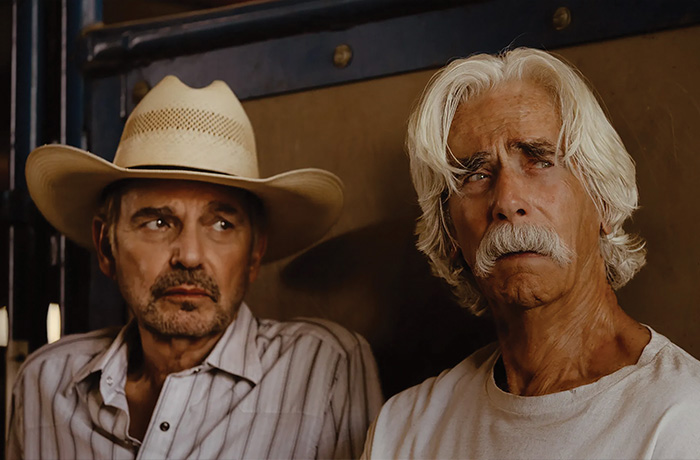
As Landman concluded a riveting second season, it offered a reminder of why it was the most popular show on television in 2025.
For those unfamiliar with Landman, created by Taylor Sheridan of Yellowstone fame, it stars Billy Bob Thornton as Tommy Norris, a crisis manager navigating the modern oil patch in Midland, Texas. If your tastes run to shows about wealth, power, ambition, and a dysfunctional family at the center, this show is for you. Think Dallas meets The Sopranos (with a twist of Nip-Tuck).
Recommended Stories


The weaknesses are familiar. Some of the writing recalls the weaker stretches of Aaron Sorkin: long monologues that are clever but don’t sound like real people talk. Critics have also taken aim at the show’s depiction of women. They’re not entirely wrong, as several female characters are exaggerated to the point of caricature, particularly Tommy’s ex-wife and daughter. But this is not what Landman is really about.
HOCHUL INTRODUCES BILL TO CURB LOCAL AND FEDERAL LAW ENFORCEMENT AGREEMENTS
One of the things that sets the show apart — and makes it worth discussing — is its grasp of economics.
The economist Thomas Sowell once observed that there are no solutions in life, only tradeoffs. Landman understands this idea and returns to it repeatedly.
The clearest example comes when Tommy explains to the company’s new hotshot lawyer, Rebecca Falcone (Kayla Wallace), that M-Tex Oil powers off-grid wells using wind energy. She seems puzzled and a little angry by this, and asks Tommy why M-Tex would use “clean” energy to produce oil.
“They use alternative energy,” Tommy says. “There’s nothing clean about this.”
When Falcone scoffs, Tommy walks her through the inputs required to build and maintain wind turbines: diesel, steel, concrete, transport, lubrication, and winterization. He goes on to explain that even if the world wanted to go fully electric overnight, the transmission infrastructure doesn’t exist. It would take decades to build. Meanwhile, society rests on a petroleum-based foundation that touches nearly every product imaginable — from roads and cars to plastics, medicines, and consumer goods.
DOJ SAYS NO EPSTEIN FILES WERE REDACTED FOR NATIONAL SECURITY REASONS
Fact-checkers pounced on the scene, contending that wind turbines typically offset their carbon footprint within a few years, not decades. But focusing on that claim misses the larger point.
Tommy is not arguing that renewables are useless. He’s pointing out that scaling any energy system comes with costs — material, financial, and environmental. Turbine blades are difficult to dispose of. Solar panels generate tons of toxic waste. Mining and processing raw materials consume vast amounts of resources. Capital spent on these projects cannot be spent elsewhere. These are opportunity costs, and they are real.
Every energy choice has consequences, Landman tells us — oil included.
“Getting oil out of the ground is the most dangerous job on earth,” Tommy says. “We don’t do it because we like it. We do it because we run out of options.”
Tommy is not wrong about this. Fossil fuels like oil keep the world’s lights on.
Meanwhile, real-world examples show the “green” energies favored by Ms. Falcone are not the panacea many believe them to be. Countries such as Germany have poured hundreds of billions of dollars into alternative energies. Yes, this has resulted in fewer CO2 emissions. And yes, Germany is producing the bulk of its electricity from renewable sources.
REP. ERIC BURLISON: CONGRESS NEEDS TO GO BIG OR GO HOME
But Germany is also producing less electricity than it was in 1990 and has the fifth-highest household electricity prices in the world.
Landman is not just a show about wealth and power. It’s a show about the costs of wealth and power, and the costs apply to rig workers and executives alike.
Early in the series, three workers are killed on the job. The work is brutal and dangerous, but it pays. As one character puts it, it’s one of the few ways an immigrant with no education can earn a six-figure income. The company must then decide how to compensate the families, raising hard ethical questions. But the show makes another point as well: the risks are not confined to the bottom of the hierarchy.
SMASH THE IRANIAN TERROR STATE
In the season finale of Season One, Tommy’s boss, Monty Miller (John Hamm), dies. Monty is the CEO of M-Tex, wealthy and powerful, but crushed by the stress of running a multibillion-dollar company. His health fails, and viewers learn that despite his success, he leaves his widow (Demi Moore) in precarious financial shape.
Even dream jobs have opportunity costs. Landman isn’t fantastic, but it’s honest and fearless, poking fun at sacred cows in ways that will make some people laugh and others uncomfortable. While the show doesn’t romanticize fossil fuels, it does help viewers understand why “quitting” them is not a realistic option and offers the most important lesson in economics: Everything has a cost.