Why America’s 250th misses the point

The United States is preparing to commemorate her semiquincentennial on July 4.

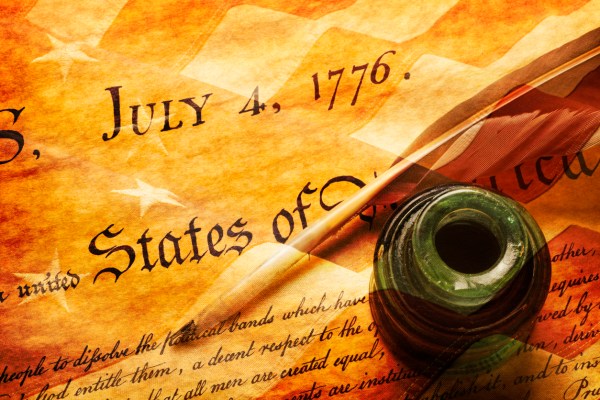
For those challenged by history, this date will be 250 years since the Declaration of Independence was proclaimed. Fireworks will burst, speeches will be delivered, and messaging will tell Americans that the nation sprang fully formed from Philadelphia in the summer of 1776.

That account is tidy. It’s also historically incorrect.

The Declaration of Independence didn’t create the U.S. War did. And the republic that emerged from that war didn’t acquire durability until years later. By compressing the founding into a single moment, the semiquincentennial or America 250, because nobody can say semiquincentennial, misunderstands not only when the U.S. began, but how it survived.

The U.S. exists because 13 colonies won a prolonged, uncertain, and extraordinary revolution against the greatest power of the age. They then undertook the more difficult task of constructing a governing order.

The American Revolution began in 1775. It concluded diplomatically in 1783. Even then, the experiment remained fragile. The Articles of Confederation failed. Congress proved impotent. It wasn’t until the 1787 Constitutional Convention and the election of George Washington as president in 1789 that the revolution was secured.

Seen honestly, the founding was a process. A serious semiquincentennial would reflect that extended arc. Instead, the U.S. Semiquincentennial Commission has chosen symbolism.

Before President Donald Trump’s return, the commission was a political hot potato. Today, it appears to be something worse: An entity with no output. Its leader, Rosie Rios, a Democrat and pre-Trump holdover, survived calls for removal.

That survival invites a simple and unavoidable question: What exactly has the commission accomplished? It hasn’t funded interpretive programming at scale. It hasn’t supported museums, historic sites or reenactors. It hasn’t offered a coherent narrative of the revolution. Unlike the bicentennial that culminated in 1976, there’s no sense of immersive participation.

Into this vacuum step surrogates. The much-lauded Ken Burns documentary deserves praise. It was beautifully produced and serious in intent, yet it also warrants criticism.

Burns’ documentary bowed to DEI orthodoxy by elevating identity categories over proportional historical weight. Indians and enslaved blacks were given prominence that exceeded their role in the conflict. One need not deny their presence to recognize the imbalance.

More striking is what the broader commemorative effort neglects entirely: The Loyalists.

At least one-third of colonial Americans remained loyal to the crown. They weren’t marginal figures. They were farmers, merchants, Church of England clergy, and government functionaries. Their reward was often brutal. Homes were burned, property was confiscated, civil rights were revoked, and families were driven into exile. At least 100,000 Loyalists fled.

The same voices that speak of reparations for slavery never acknowledge the mass dispossession inflicted by the revolutionary cause itself. If the U.S. owes reparations, the descendants of Loyalists present the best claim.

I say all this as someone who, despite being the very definition of an old-stock white Anglo-Saxon Protestant — an Episcopalian to boot — has no ancestral stake in the cause. My family didn’t arrive on these shores until just before the turn of the last century.

I won’t apologize for what Washington and his contemporaries did or didn’t do. Historical analysis doesn’t require inherited guilt, nor does it require inherited absolution. It does require honesty.

The American Revolution was a civil war.

GREENLAND FANTASY IS HURTING REPUBLICANS AND HARMING AMERICA

The Declaration of Independence deserves celebration, but it shouldn’t stand alone. Independence was not merely proclaimed into existence. It was fought for, secured, and then constructed.

If the semiquincentennial cannot convey that truth in full, it will not merely fall short. It will fail its most basic responsibility.

Dennis Lennox is a travel columnist, public affairs consultant, and political commentator. Follow @dennislennox on X.

Related Content