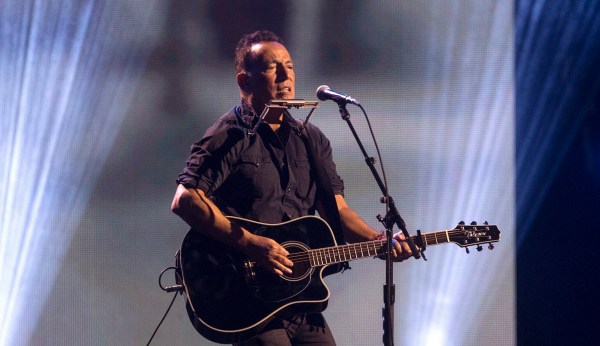
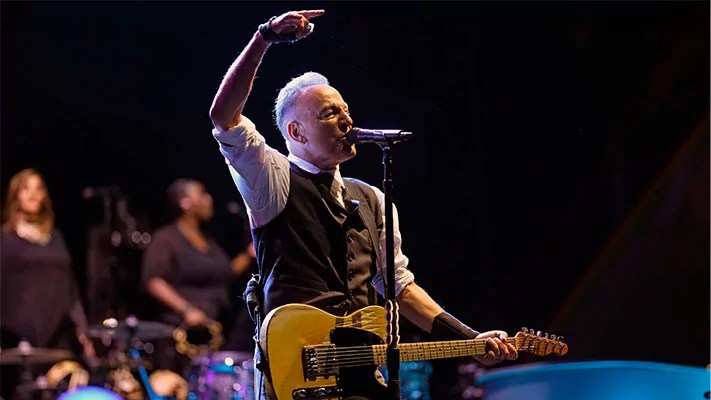
American rock-and-roll icon Bruce Springsteen released a new single this week, his first original material since 2020’s Letter to You. Inspired by the recent clashes in Minneapolis between federal immigration authorities and left-wing agitators, Springsteen has perfunctorily titled his latest protest ballad “Streets of Minneapolis” — recycling his 1993 “Streets of Philadelphia,” a far better song.
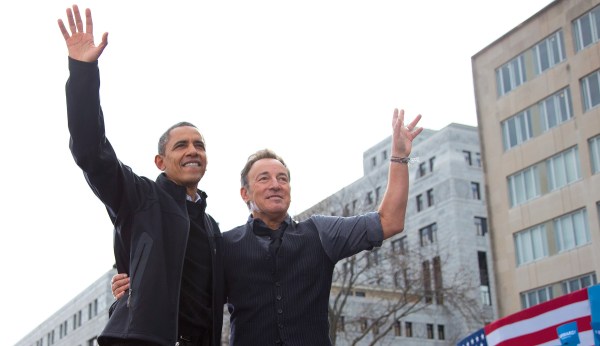
Springsteen has long worn his political penchants on his sleeve. From the bruised working-class vignettes of Nebraska to campaigning for the Clintons and cohosting a podcast with Barack Obama, his career has long fused art with civic commentary. Yet his ventures into overt political songwriting have yielded uneven results — and this latest effort may well represent a new nadir.
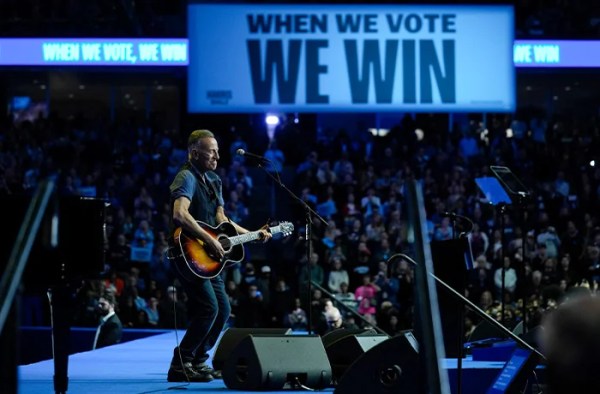
The opening verse unfolds as a monotonous, folksy dirge, with Springsteen lamenting “King Trump’s private army” and the Department of Homeland Security imposing “occupier’s boots” upon Minneapolis’s citizenry. His vocal delivery feels strangely perfunctory, while the lyrics — seemingly culled from New York Times headlines and MSNBC chyrons — are set to a generic I–IV–V progression that trudges forward without variation.
In an accompanying statement, Springsteen remarked, “I wrote this song on Saturday, recorded it yesterday and released it to you today.” Such haste may lend the song topical urgency, but it also renders it maladroit, forgettable, and curiously inert. I say this as an avowed Springsteen admirer: “Streets of Minneapolis” feels glaringly fallow, both melodically and lyrically.
As the arrangement expands, drums deepen the sonic palette, yet Springsteen continues without much subtlety or evocative imagery, invoking immigration officials Stephen Miller and Kristi Noem while warning of “dirty lies.” One is tempted to ask: did Springsteen forget how to write songs?
For contrast, consider “Johnny 99.” Influenced by Steinbeck’s “The Grapes of Wrath,” Springsteen’s early-1980s critique of Reagan-era economics unfolds through the harrowing story of a desperate unemployed man driven to crime. Whether one shares Springsteen’s politics is beside the point; the song stands on vertiginous artistic merit. It does not resort to naming and castigating policymakers but instead trusts narrative to convey deeper ideas and carry moral weight.
It is, of course, possible to write a protest anthem about a specific contemporary event — it simply requires restraint and craft. Neil Young’s “Ohio,” written in response to the Kent State shootings, accomplishes more in its opening invocation of Nixon’s “tin soldiers” than Springsteen manages across this entire contemporary screed. Young evokes law enforcement as mechanized instruments of power rather than caricatures, while the song’s roaring guitar motif secures its place in the canon.
Springsteen himself has demonstrated similar mastery. “American Skin (41 Shots),” his haunting meditation on a 2001 police shooting, was animated by palpable conviction, a beautiful melodic spine, and a devastating refrain: “Is it a knife? / Is it a wallet? / This is your life / You can get killed just for living in your American skin.” Rather than prescribing outrage, Springsteen recreates the fatal uncertainty of the encounter itself, suspending the listener inside the split second where perception eludes judgment. It is brilliant songwriting and a reminder of what Springsteen is capable of.
Compare that to the blunt literalism of “Streets of Minneapolis,” in which Springsteen writes, “If your skin is black or brown, my friend / You can be questioned or deported on sight.” I generally recoil at the notion of artists deferring to generative artificial intelligence for ideas or inspiration, but in Springsteen’s case it might have spared him this embarrassing debacle.
Even misguided protest songs can endure when the music transcends the message. Bob Dylan’s “Hurricane,” despite its dubious moral framing, remains electrifying because the songwriting overwhelms the polemic. No such salvation arrives here; Springsteen misfires both musically and lyrically.
There are fleeting moments when the arrangement improves — notably when the E Street backing vocals swell on the chorus — but even this flourish cannot escape the song’s lyrical puerility. The ill-advised decision to synchronize Springsteen’s chant of “ICE out now” with a crowd of protesters is an act of pedestrian and performative theatrics one would expect from Reddit moderators, not the architect of “Born to Run.”
Good intentions, however fervent, do not automatically yield good songs. Protest music demands discipline, metaphor, and musical conviction — qualities that define Springsteen at his best. “Streets of Minneapolis” instead inhabits the lesser realm of sloganeering, offering only fodder for sycophants. We should expect more from our rock stars — especially those who have already proven they are capable of giving it.
Harry Khachatrian (@Harry1T6) is a film critic for the Washington Examiner’s Beltway Confidential blog. He is a software engineer, holds a master’s degree from the University of Toronto, and writes about wine at BetweenBottles.com.