

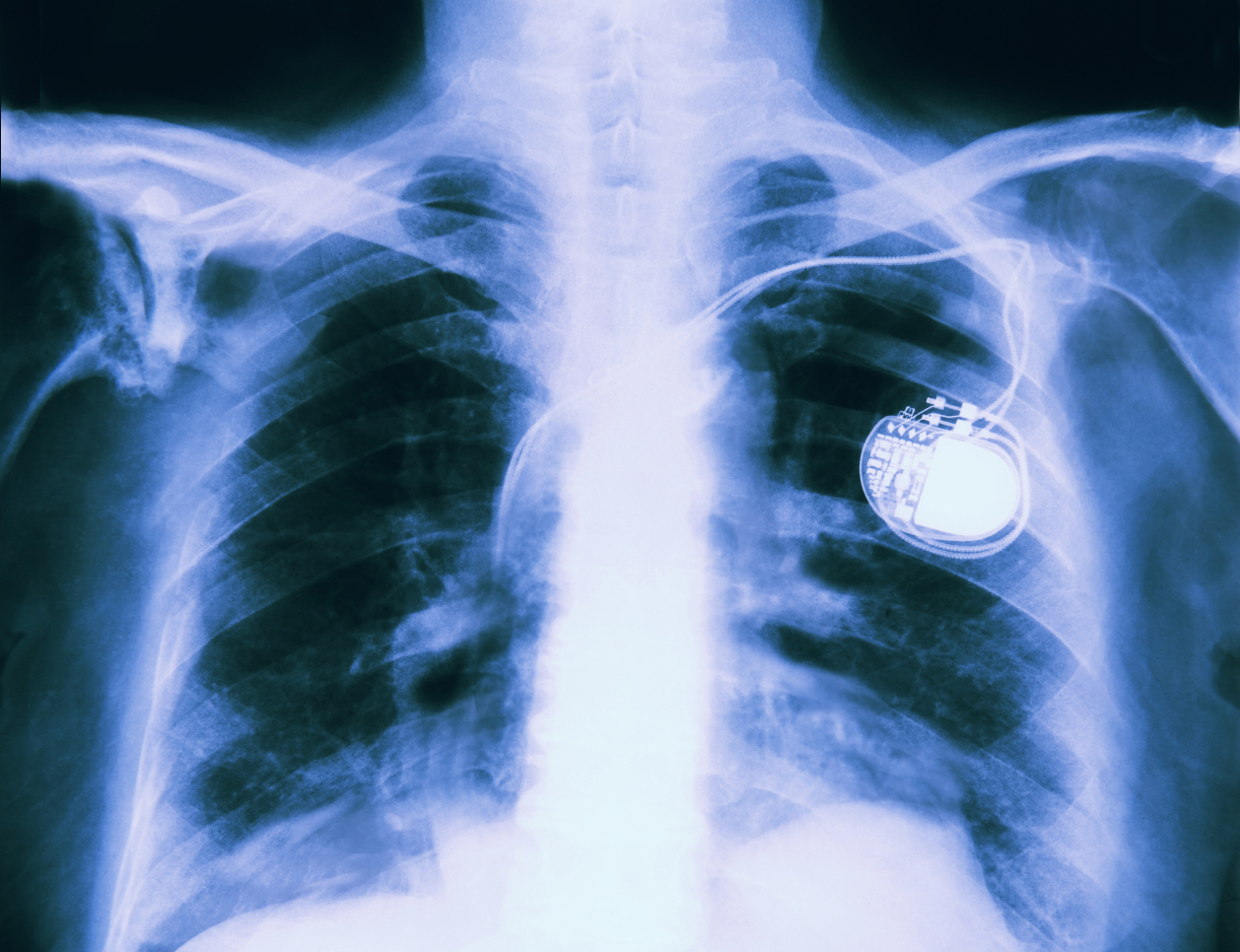
Pacemakers and privacy
Cory Doctorow for the Electronic Frontier Foundation: As networked computers disappear into our bodies, working their way into hearing aids, pacemakers and prostheses, information security has never been more urgent — or personal. A networked body needs its computers to work well and fail even better.
Real journalism.Trusted by millions.
Unlimited access to in-depth reporting, expert analysis, and the stories that shape our country.
Already a member? Log in
Graceful failure is the design goal of all critical systems. Nothing will ever work perfectly, so when things go wrong, you want to be sure that the damage is contained and that the public has a chance to learn from past mistakes. …
Manufacturers who use digital locks to restrict the configurations of their devices get a lot of commercial benefit. They can force doctor’s offices to pay recurring license fees for the diagnostic software that works with these gadgets.
They can restrict access to service and even consumables — why allow just anyone’s insulin to be installed on your pump when the inkjet printer people have demonstrated a way to charge vintage champagne prices for something that costs pennies a gallon?
But a profit motive that might conflict with users’ best interests isn’t the worst problem. The great danger is safety. Medical implants are increasingly equipped with wireless interfaces, because they’re cheap and it’s hard to attach a USB cable to a device that has been implanted in your chest cavity.
That means that bugs in medical implants can be exploited over their wireless interfaces, too. For example: lethal shocks from implanted pacemakers and defibrillators. It was not for nothing that former Vice President Dick Cheney had the wireless interface on his pacemaker deactivated.
However you feel about copyright law, everyone should be able to agree that copyright shouldn’t get in the way of testing the software in your hearing aid, pacemaker, insulin pump or prosthetic limb to look for safety risks — or privacy risks, for that matter. Implantees need to know the truth about the reliability of the technology they trust their lives to.
Going high tech on gun crime
Jillian Carr and Jennifer Doleac for the Brookings Institution: High-tech surveillance data could be a game-changer.
A new paper from Brookings describes a new source of data on gun violence, from a widely used surveillance tool called ShotSpotter. It compares the ShotSpotter data with the best available data on gun violence from traditional sources — data on reported crimes and 911 calls — and uses them to consider the degree of crime underreporting, as well as the value of the ShotSpotter data for policy analyses.
Using data from the District of Columbia and Oakland, Calif., we find evidence of severe underreporting of gun violence. An individual gunfire incident provides an exogenous shock to the likelihood of a 911 call or crime report, allowing us to estimate the effect of gunfire on reporting.
In D.C., only 12.4 percent of gunfire incidents result in a 911 call to report shots fired. Any time a gun is fired with the intent to injure someone, or to threaten someone, an assault with a dangerous weapon has been committed. However, only 2.3 percent of gunfire incidents in D.C. and 6.4 percent of gunfire incidents in Oakland result in a reported assault with a dangerous weapon.
Unless the remaining 93-98 percent of gunfire in these cities is not intended to be threatening, which seems highly unlikely, this type of crime is reported at extremely low rates.
E-cigs show U.K. promise
Edward Anselm for the R Street Institute: The United Kingdom’s Royal College of Physicians issued a groundbreaking report recently on electronic cigarettes that concludes that encouraging smokers to switch to e-cigarettes is likely to be beneficial to U.K. public health. Smokers can therefore be reassured and encouraged to use them, and the public can be reassured that e-cigarettes are much safer than smoking.
The 200-page report reviewed recent evidence on e-cigarettes and came to the following conclusions:
E-cigarettes are not a gateway to smoking. In the United Kingdom, use of e-cigarettes is limited almost entirely to those who already use, or have used, tobacco.
E-cigarettes do not result in normalization of smoking. There is no evidence that either nicotine replacement therapy or e-cigarette use has resulted in renormalization of smoking. None of these products has attracted significant use among adult never-smokers or demonstrated evidence of significant gateway progression into smoking among young people.
E-cigarettes help smokers to quit. Among smokers, e-cigarette use is likely to lead to quit attempts that would not otherwise have happened and, in a proportion of these, to successful cessation. In this way, e-cigarettes can act as a gateway from smoking.
E-cigarettes cause much less long-term harm. The possibility of some harm from long-term e-cigarette use cannot be dismissed, due to inhalation of the ingredients other than nicotine, but is likely to be very small, and substantially smaller than that arising from tobacco smoking. …
There can be little question that a subset of adult smokers in both the United Kingdom and the United States are able to quit smoking or reduce their smoking substantially by using e-cigarettes.
Compiled by Joseph Lawler from reports published by the various think tanks.
