

It’s not incredibly newsworthy when some left-wing interest group complains that a new pop culture phenomenon is problematic for violating the Rules of Woke. It’s a tad more so when the complainant in question is the gun control organization, March for Our Lives, and the subject of its ire is an ostensible romantic comedy.
There is no way to discuss the manufactured outrage over A24’s The Drama without spoiling the plot twist that launched a thousand think pieces, so if you haven’t seen the film starring Zendaya and Robert Pattinson, proceed with caution.
Recommended Stories



Though trailers and previews made clear that The Drama centered on some sort of conflict leading up to the nuptials of Emma (Zendaya) and Charlie (Pattinson), only in the immediate lead-up to its national debut did the press leak that the eponymous drama comes when Emma, Charlie, and their two married friends reveal the worst things they’ve ever done. In the film’s first act, Charlie giggles as he reveals he cyberbullied a classmate so severely that his family was forced to move away, and their friend Rachel (Alana Haim) gleefully divulges that she locked a special needs neighbor in a closet in an abandoned RV, leaving him stranded and missing overnight. But the mic drop comes when a mournful Emma confesses that as a depressed, bullied, and lonely 15-year old, she planned to commit a school shooting.
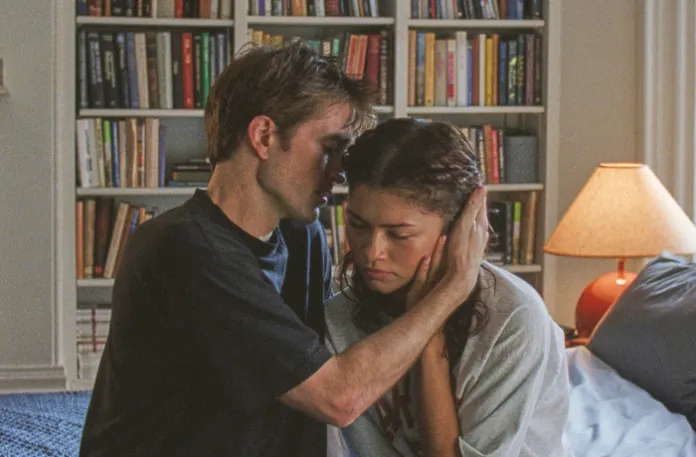
Unlike her fiancé and friends, Emma is demonstrably remorseful, not just in the current moment, but as evidenced by flashbacks showing she becomes an anti-gun violence activist not unlike the Parkland students who started March for Our Lives. She didn’t actually go through with the shooting. After her computer crashes while she tries and fails to film her manifesto to be found after the fact, a teenage Emma is jolted back into reality after a separate shooting at a mall kills one of her classmates and subsumes her school in grief.
What follows is a comically absurd version of the universal tension at the heart of all decisions to marry: Can you commit to sharing a life with a person who will never stop surprising you, and can you forgive them rather than judge them based on their worst moments? A film oddly fit for Easter weekend, The Drama meanders into infidelity, explosive fighting, and an utter disaster of a wedding, only to conclude with the happy ending contingent on two beautiful young people who understand they can only be stronger together with forgiveness and, perhaps, a little bit of Christian grace.
Naturally, the loudest critics loathed the film.
The New Yorker‘s film critic deemed The Drama “one long troll,” designed “solely to stimulate discourse” with a script that is “less of a narrative when an addictive algorithm.” New York magazine has published nearly a dozen articles since the movie’s release, including a diatribe from its film critic that argues The Drama “is too cowardly to commit to its provocative premise” because it lacks “the conviction and curiosity to look at the Black womanhood of this character, despite the fact that it is her identity that allows for his premise to come across as provocative in the first place.” A Bloomberg guest column similarly lamented that Emma “is deracialized altogether, leaving little sense of Black interiority — of how Emma understands or processes the racial dynamics shaping her life.” While the Washington Post’s film critic didn’t hate the film itself, she excoriated A24’s request that critics not publish spoilers before the release date as “a dirty trick” because it deals with one of “a few sacred topics” that audiences should not “accidentally encounter without warning.”
THE DRAMA SKEWERS A CULTURE OF MANUFACTURED OUTRAGE
The Drama is about gun violence, the way Anna Karenina is about trains, or The Lord of the Rings is about jewelry, which is to say it’s not really. Gun violence is a plot device to tell a much more interesting story about the nature of forgiveness in marriage, especially in a post-digital era that radicalizes children and eases their ability to make life-ruining decisions faster than ever before. To the extent that it does discuss gun violence, it’s fairly apolitical and inoffensive (violence is never the answer, not even to unjust bullying). And while the film absolutely issues smart racial commentary in Rachel’s patronizing comments to both her black husband, who she incorrectly says “grew up around guns,” and Emma, it’s a far more interesting film precisely because it refuses to smack its audience over the head with that subtext.
Although two ideally become one for life in a marriage, your spouse will never, ever lose the ability to surprise you. The Drama asks how shocking a surprise can be for a spouse to forgive that surprise, and the answer it chooses is genuinely counter-cultural in a time when going no-contact is all the rage. That makes it a much more creative story than what political lesson the Left wishes it were instead.
