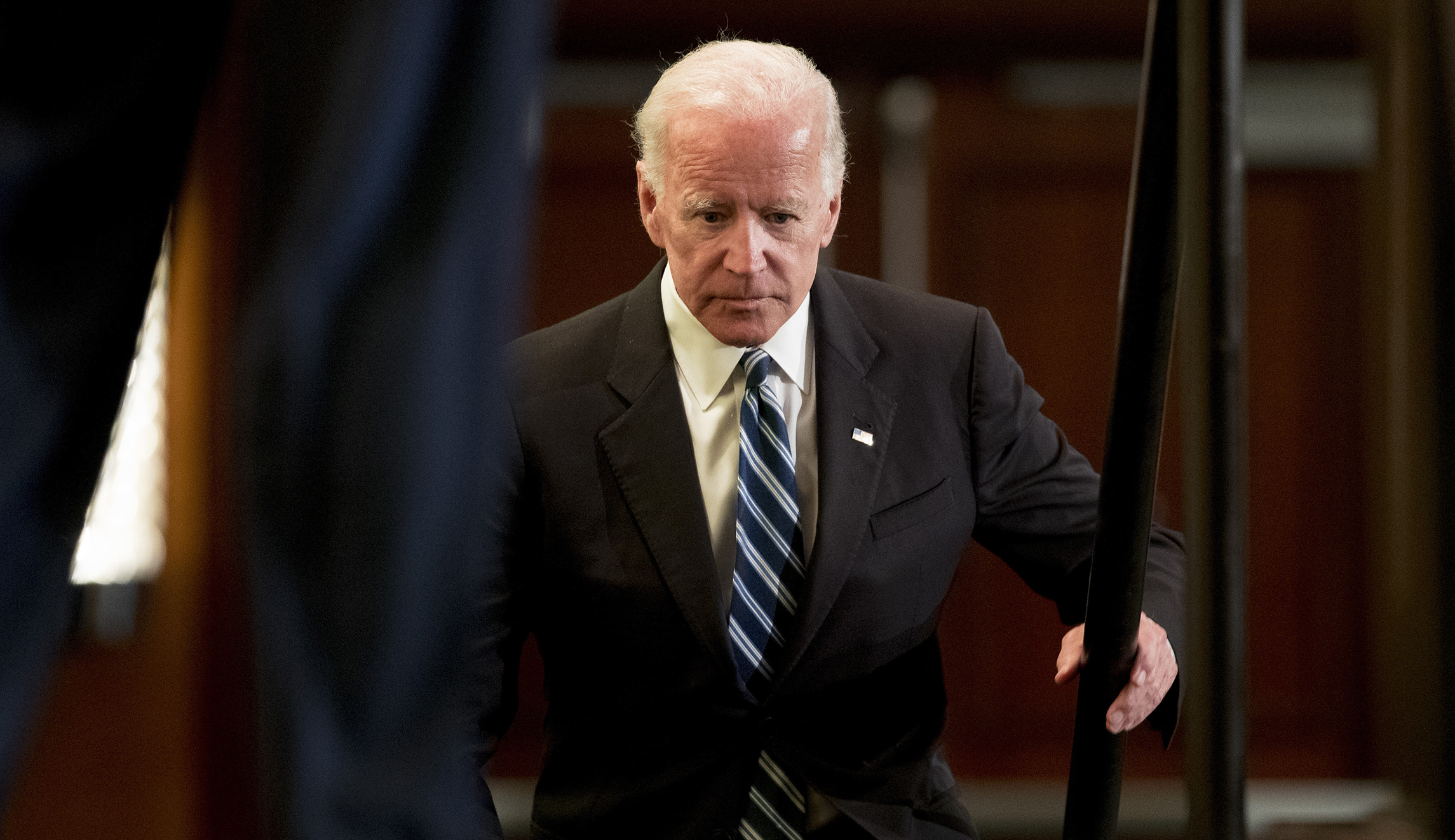
The polls show Joe Biden leading President Trump in the presidential race. Looking at the last 10 surveys in the RealClearPolitics average of polls matching Trump versus Biden, Biden is leading in every one of them — by anywhere from 3 to 10 points. Biden’s average lead in those 10 polls is 5.5 points.
The results echo polls from this point in 2016, when the general election matchup was Trump versus Hillary Clinton. Taking 10 polls from this time in the last campaign, Clinton led in every one of them — by anywhere from 6 to 18 points. Her average lead in those 10 polls was 10.5 points.
There’s not much of a lesson in all those numbers except to say that polls in April do not predict how an election will turn out in November. But they do say that Trump, running for reelection in 2020, is a bit better off competitively at this moment than candidate Trump was at the same time in 2016.
Based on the 2016 experience, the most passionate Trump supporters are fond of dismissing all polls — they’re skewed, biased, fake. But polls do represent a snapshot in time. And April before a November election is a time when voters use polls to express general opinions on events and personalities without the pressure of actually having to choose candidate A over candidate B. Today’s polls reflect a different frame of mind than polls taken while voting is actually underway. At that time, as the saying goes, the stuff gets real.
So if the polls are a snapshot, then why is Biden’s lead today smaller than Clinton’s was at a comparable time in the last campaign?
Some might point to the coronavirus crisis and the tendency of voters to rally around a leader against a common threat. Trump’s job approval rating has indeed gone up during the crisis. It currently stands at a 47% approval and 49.8% disapproval in the RealClearPolitics average. Before the virus crisis, Trump had never in his entire presidency risen above 46% approval. In other words, his rating was never very high. That is part of Trump’s unique relationship with the electorate: His approval has never skyrocketed for any reason, but it has also never sunk to the floor. In the last few days, the rating has been ticking down a bit, but it will likely stay among the highest of Trump’s presidency, at least for a while.
Biden’s lead over Trump has been fairly stable, somewhere in the 4-6 point range, since last December. Before that, in late fall 2019, it rose as high as 10 points. But it has been in the same place since before the coronavirus crisis began and does not seem to have been affected by the outbreak.
Others might point to the continued candidacy of Bernie Sanders as a reason for Biden’s relative weakness. The Vermont senator is indeed still in the race, ignoring calls to drop out. But he is far behind Biden — 22.7 points behind in the RealClearPolitics average.
At this time in 2016, Hillary Clinton had a much bigger Sanders problem than Biden does today. After having a substantial lead over Sanders in March 2016, Clinton’s margin shrank to a single point in April. Then, as now, Sanders refused to get out of the race; he finally surrendered in July.
So the Sanders factor is probably not the explanation. But perhaps there are other factors that explain Biden’s relatively weaker position compared to Clinton in 2016. For one thing, Biden is running against an incumbent president, which is hard to do. In 2016, Clinton and Trump were pursuing an open seat.
Or there could just be something about Biden that voters are not particularly thrilled about. It might be persistent doubts about his physical stamina to hold the world’s most demanding job starting at age 78. Or related to that, a feeling that Biden, who first entered the Senate in 1973, nearly a half-century ago, is a man of the past.
Whatever the case, it appears that voters have mixed feelings about electing Biden president. In a recent Washington Post poll, 74% of respondents who supported Biden said they were enthusiastic about it, while 86% of Trump supporters expressed enthusiasm.
Of course, the Trump candidacy has its own problems. Even before the coronavirus hit, the president’s time in office has been a roller coaster that has left some voters enraged, some disappointed, and others simply exhausted. But a sitting president has a lot of advantages in the race for reelection. A challenger has to be particularly strong to overcome them. It’s not clear that Biden has that strength.
