Artemis II reminds us to never stop looking up

Published April 9, 2026 6:00am EST | Updated April 8, 2026 6:09pm EST


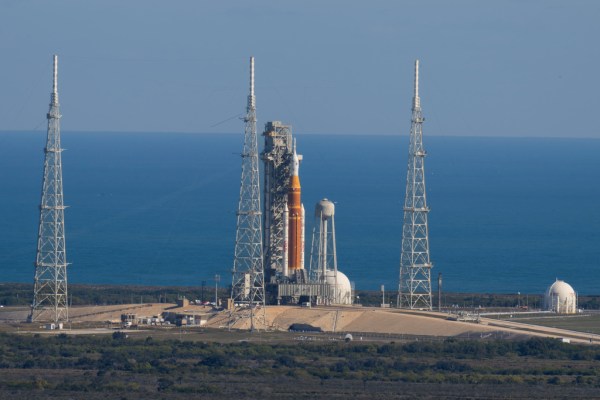
The Artemis II mission, launched on April 1 from the Kennedy Space Center, is already making history. Among other things, the 10-day mission has set the record for the farthest distance traveled by humans in spaceflight. This surpassed the distance set by Apollo 13 back in 1970. Facts and figures aside, the Artemis II mission is doing something else entirely: affecting everyday Americans. 

It’s not as if spaceflight is new to us. The United States is the leader in outer space. NASA has been a force for decades. But there’s something about this mission that touches a nerve, and in a positive way. I’m not sure if it’s the historic nature of the entire thing, the exuberance of the crew and support team, or the way modern technology is letting us come along for the journey. We are fascinated and moved by it in ways I haven’t seen before. 
What’s apparent is that we needed this type of refresh. If only to give us some much-needed perspective. 

Needless to say, there is quite a lot happening on planet Earth at the moment. We are dealing with economic and other domestic woes, a U.S.-Israel war in the Middle East, increasing antisemitism, and cultural upheaval, among many other things. If we’re not careful, we become numb to the wonders around us. These wonders are our fellow human beings as well as the natural world.  

It’s difficult to understand why some are unmoved by our space program or even critical of NASA. The money allocated to NASA is approximately 0.33% of the budget, a very small fraction of all U.S. spending. And the budget for fiscal 2027 includes cuts to the agency. These cuts are supported by NASA Administrator Jared Isaacman. In a recent television appearance, Isaacman said, “I think the American public and the taxpayers should be judging NASA based on outcomes, and not how quickly we can spend money every year.” The agency’s goals include the launch of Artemis III in 2027. 

In this image provided by NASA, The Artemis II crew captured from lunar orbit, the Moon eclipses the Sun on Monday, April 6, 2026. (NASA via AP)

The Artemis II mission is a window into a world few humans have traveled. It’s an environment that’s dangerous, vast, and still largely unknown. The journey into space and to our lunar neighbor is no small feat, even if we’ve done it before. Getting a glimpse of our planet from the outside looking in should take our breath away. We should always be easily awed by God’s creation. We are a fragile people on the only life-sustaining planet that we know of. Heading into space on a voyage of discovery is a marvel of teamwork and human ingenuity. And NASA and the astronauts have been so gracious to make this a beautiful, collective human experience. 

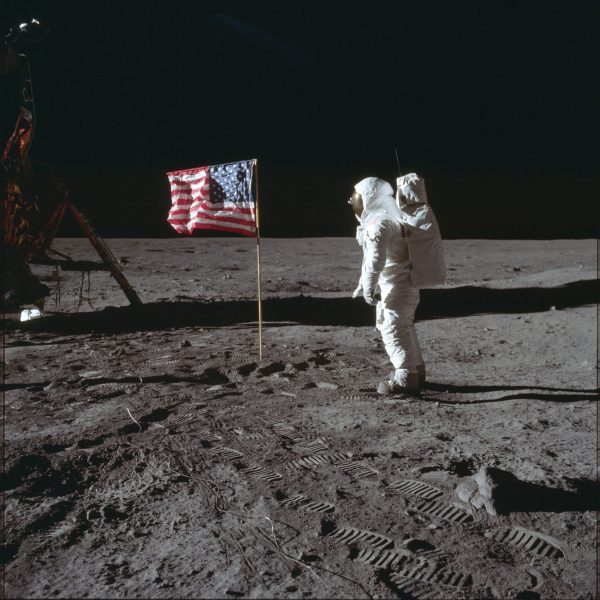
The last time a crewed spacecraft went to the moon was December 1972 with Apollo 17, the final Apollo mission. The decades since have not erased the thrill of or need for scientific discovery. There is an entirely new, now adult generation born after that time that has never witnessed humans walking on or going near the moon. For us, Artemis is akin to what our parents experienced during the years of Apollo. Spaceflight should never be taken for granted. 

PHOTOS: ARTEMIS II MISSION CREW SENDS MARVELOUS PICTURES

Beyond equipment checks, data, science, and exploration is the very human need to be reminded of what we have. This is no simple task. The pictures from Artemis II showing the lunar surface and our beautiful, blue planet are the result of decades of hard work. But in an instant, we are struck by the beauty of the heavens. We are reminded that we all, as diverse and troubled peoples, inhabit this place. We are astonished at our privilege. No, it doesn’t fix our problems or serve as a compromise to conflicts, but it functions as a sort of warm admonition. We should be filled with both thankfulness and wonderment. 

This image provided by NASA, astronaut and Artemis II mission specialist Christina Koch peers out of one of the Orion spacecraft's main cabin windows, looking back at Earth, as the crew travels towards the Moon on Thursday, April 2, 2026. (NASA via AP)
This image provided by NASA, astronaut and Artemis II mission specialist Christina Koch peers out of one of the Orion spacecraft’s main cabin windows, looking back at Earth, as the crew travels towards the Moon on Thursday, April 2, 2026. (NASA via AP)

In a 2016 video interview, Astronaut Reid Wiseman was asked, “What’s your favorite planet?” He answered, “It used to be Saturn, until I saw Earth from space.” If anything, Artemis II and other missions excite us for a future in space while reminding us how great we have it here, back at our shared home.