Now boarding Government Airlines

Published April 24, 2026 6:00am ET


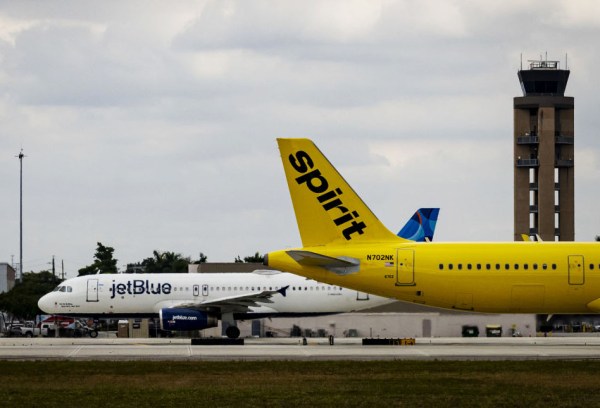
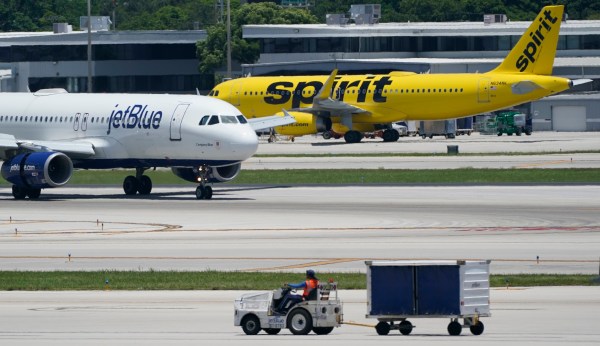
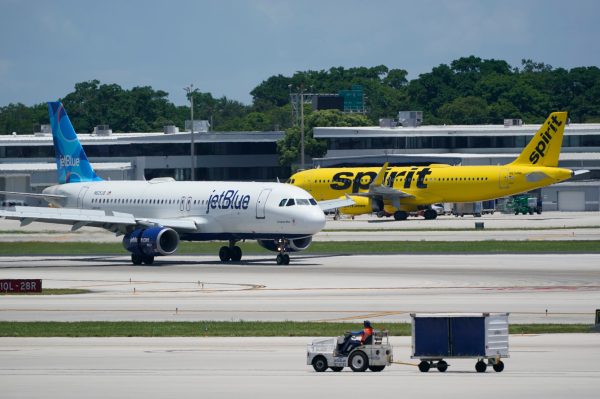
Only in Washington could one administration kill an airline just for the next administration to buy it. The Biden administration blocked JetBlue from buying struggling Spirit Airlines in the name of “consumer protection.” Now, the Trump administration is considering a massive bailout for the airline’s creditors along with nationalization. 

Four years ago, JetBlue offered to buy Spirit Airlines for $3.8 billion in cash, or $33.50 per share. The deal would have created the fifth-largest airline in the country, still smaller than Delta, United, American, and Southwest. The Biden administration still killed the deal. 

The threat to competition by this proposed merger was illusory. The judge deciding the case conceded that a merged JetBlue-Spirit “would likely place stronger competitive pressure on the larger airlines in the country.” Yet he agreed with the Biden administration’s decision on the grounds that Spirit’s ultra-low-cost customers would face higher fares. 

Denied the merger lifeline, Spirit filed for bankruptcy twice since 2024, and its stock collapsed from $33.50 to under $2, wiping out billions in shareholder wealth. 

Government airlines air travel infrastructure
(Washington Examiner illustration; Getty Images)

The Biden administration always opposed market competition, and a dead company can’t be competitive. 

Now, after running against socialism, the Trump administration is orchestrating a rumored deal to hand Spirit $500 million in financing in exchange for warrants that could give the federal government up to a 90% post-bankruptcy equity stake. This bailout loan is more than 10 times Spirit’s current market cap. 

The federal government could end up owning a discount airline whose own management admits “substantial doubt” about its ability to survive. Rising jet fuel prices this year further undermined Spirit’s financial position. But United Airlines CEO Scott Kirby put it bluntly, saying that Spirit’s business model was “fundamentally flawed” long before rising fuel costs. In 2024, Spirit lost 19 cents for every $1 of revenue. 

If Washington’s track record of running transportation enterprises is any guide, nationalization will only make things worse. The Post Office lost $9.5 billion in fiscal 2024 and is now warning Congress it will run out of cash within a year. Amtrak, the government-run rail system, has never turned a profit without federal subsidies in its 50 years of existence. 

A government-run airline will likely arrive at the same destination. 

The Spirit bailout marks a dangerous new precedent for arbitrary government intervention. The financial system is not hanging on a knife’s edge, nor is the American airline industry facing impending doom that supposedly merits government saving the day.

The Trump administration should be reminded that taking taxpayer dollars to bail out wealthy investors during a previous Republican administration fueled the Tea Party’s rise as millions of people demanded a return to the U.S.’s founding principles: limited government and free markets. 

Let’s not forget who the clear winners are here: the creditors and hedge funds that snapped up Spirit’s bonds trading below 45 cents on the dollar as bankruptcy loomed, now set to be bailed out at or near par on the taxpayer’s dime. Or even worse for public trust: those who bought shares of Spirit Airlines before reports sent the then-penny stock soaring past a dollar.

The JetBlue-Spirit block was the direct product of Lina Khan’s deliberate rejection of the consumer welfare standard that allows mergers unless likely to actually raise prices or harm consumers. Her ideologically driven framework grants regulators enormous discretion to block deals. 

The Spirit debacle is a direct result of Khan’s flawed approach to antitrust law. In the airline sector, mergers allow companies to operate more efficiently, maintaining solvency while continuing the trend of lower ticket prices. Investors and consumers benefit when the government stays out of the way.

The free-market solution isn’t complicated. Let Spirit fail. Other airlines will absorb the routes, employees, and aircraft. They won’t disappear into thin air but rather be bought up and put to good use. 

A massive stake in Spirit Airlines continues the Trump administration’s troubling embrace of state-owned enterprises. Since taking office, President Donald Trump has taken stakes in at least a dozen companies ranging from semiconductors to minerals to steel, including a “golden share” of U.S. Steel. 

FAKE SCIENCE ON BIOLOGICAL SEX IS MAKING REAL LAW

The Biden administration robbed shareholders by killing Spirit Airlines. Now the Trump administration wants to resurrect the failing airline at taxpayers’ expense. The hedge funds that bought Spirit’s debt at a discount cash out at par. Meanwhile, everyday Americans foot the bill. 

Conservatives have never supported state ownership of private companies, and we shouldn’t start now.

Marc Short is the board chairman of Advancing American Freedom Foundation. Joel Griffith is a senior fellow at the Plymouth Institute for Free Enterprise at Advancing American Freedom Foundation.