

The Food and Drug Administration announced on Friday a series of actions intended to accelerate the use of psychedelic treatments for serious mental illness, including fast-tracking research for approval to bring new drugs to market.
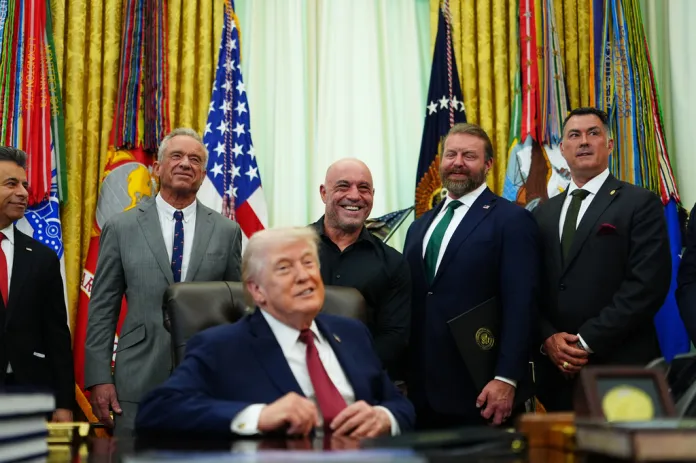
The move from the FDA comes just six days after President Donald Trump signed an executive order on Saturday directing federal agencies to expand access to emerging psychedelic therapies in an attempt to tackle growing rates of depression, anxiety, post-traumatic stress disorder, and other serious mental health conditions.
Recommended Stories


Health and Human Services Secretary Robert F. Kennedy Jr. said in a press release that the agency’s actions are a step in the right direction “to confront our nation’s mental health crisis head-on, especially for our veterans.”
“The FDA will prioritize therapies with Breakthrough Therapy designation, where early evidence shows meaningful improvement over existing options for serious mental illness,” Kennedy said.
The agency said it is issuing national priority vouchers for three companies to begin studying the psychedelic drugs psilocybin for treatment-resistant depression and major depressive disorder, as well as for methylone for PTSD.
FDA Commissioner Dr. Marty Makary created the national priority voucher program last summer to reduce drug approval times for new products intended to fix an “unmet public health need” or address a national security priority.
HHS did not specify which companies had received the priority vouchers to accelerate their psychedelics research programs, and the department did not respond to the Washington Examiner’s request for clarification.
Major depression is one of the most common mental health conditions in the United States, with roughly 20% of Americans having received treatment for depression in their lifetimes, according to the National Institute of Mental Health
To fit the criteria for major depressive disorder, a person must experience a period of at least two weeks of depressed mood, loss of interest in daily activities, and problems with concentration or self-worth. At least 21 million Americans experienced a major depressive episode within the past year.
PTSD affects a smaller portion of the population, roughly 4% each year. People who experience PTSD may have persistent, frightening thoughts and memories of the triggering event, sleep problems, and other disturbances that can affect their ability to function.
The FDA also announced an early-phase clinical study of noribogaine hydrochloride as a possible treatment for alcohol addiction, which affects 1 in 10 Americans over the age of 12, according to the National Institute on Alcohol Abuse and Alcoholism.
Makary said in the press release that we “owe it to our nation’s veterans and all Americans who are suffering from these conditions to evaluate these potential therapies with urgency.”
US FERTILITY RATE HITS RECORD LOW
“These medications have the potential to address the nation’s mental health crisis, including conditions like treatment-resistant depression, alcoholism and other serious mental health and substance abuse conditions,” Makary said. “As this field moves forward, it is critical that their development is grounded in sound science and rigorous clinical evidence.”
The press release stressed that none of the actions denote full FDA approval or that the drugs have been found to be safe or effective, but rather that the companies developing the drugs for the commercial market will be working closely with the FDA to review clinical testing developments.
