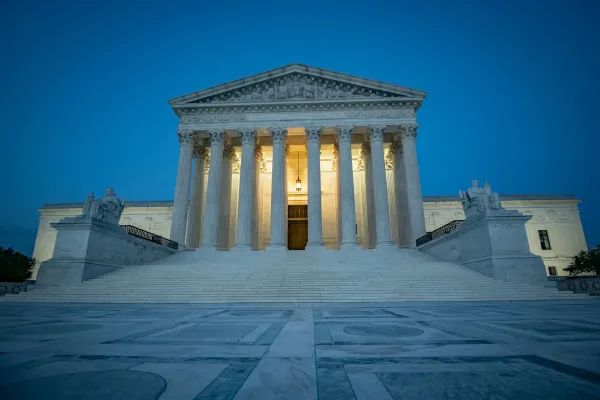
The text of the Voting Rights Act specifically says minority populations have no collective right to representation equal to their share of the population. After 40 years of bad precedent, the Supreme Court finally returned to the original meaning of that text on Wednesday, bringing an end to an era of legalized racial gerrymandering.
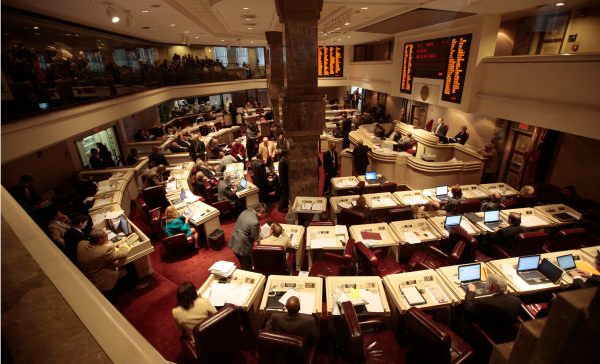
Before the 2020 census, Louisiana’s congressional map included six seats: five held by Republicans and one held by a Democrat. After the census, the Louisiana legislature produced a new map reflecting population changes within the state. The new map produced the same partisan breakdown: five seats with Republican majorities and one seat with a Democratic majority.
Recommended Stories
Democratic Party activists then sued in federal court, claiming the new map violated Section 2 of the Voting Rights Act because black residents made up 33% of Louisiana’s population, but only 16% of the state’s congressional districts had black majorities. Relying on a convoluted three-part test established in the Supreme Court’s 1986 Thornburg v. Gingles decision, a federal judge agreed and ordered Louisiana to add a second majority-black district so that the proportion of black-majority congressional districts matched the proportion of black voters in the state.
Before Gingles, the Supreme Court held in Mobile v. Bolden in 1980 that plaintiffs had to show redistricting decisions were “motivated by a discriminatory purpose” to prove a violation of the Voting Rights Act. Democrats who controlled the House of Representatives were outraged by that decision and tried to amend the Voting Rights Act so that any redistricting decision that merely “affected” minority representation, regardless of racist intent, would violate the law.
The Republican-controlled Senate explicitly rejected that language, insisting instead on new language allowing courts to consider “the totality of circumstances” surrounding a redistricted map. But it also added that “nothing in this section establishes a right to have members of a protected class elected in numbers equal to their proportion in the population.”
When the Supreme Court decided Gingles just four years later, the liberal majority ignored that part of the statute. As Justice Samuel Alito wryly observed in his majority opinion on Wednesday, “Gingles was decided at a time when this Court often paid insufficient attention to the language of statutory provisions, and Justice Brennan’s opinion for the Court followed this pattern.” In other words, Gingles ignored the text of the statute and was wrongly decided as a result, and Alito is correcting that error now.
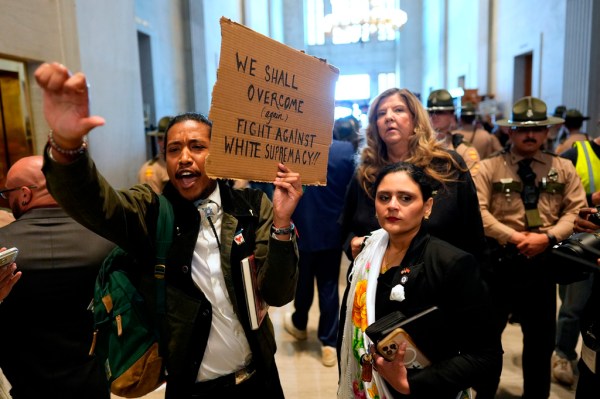
Tellingly, in her hysterical dissent, in which she claims the majority “eviscerated” the Voting Rights Act, Justice Elena Kagan does not acknowledge, let alone address, the plain text of the statute denying the creation of a right to proportional representation. Contra Kagan, the Supreme Court did not overturn the Voting Rights Act on Wednesday. It returned the law to its true purpose: ensuring that all voters are afforded an equal right to vote regardless of the color of their skin.
THE LEFT’S EMBRACE OF POLITICAL VIOLENCE
Literacy tests, poll taxes, property qualifications, and voter intimidation are all still illegal under the Voting Rights Act. None of that has changed. What has changed is that the Democratic Party can no longer use the Voting Rights Act as a reverse partisan gerrymander on purely racial grounds. Wednesday’s decision in Louisiana v. Callais opens the door for significant Republican gains in the House.
Unencumbered by court-enforced racial gerrymandering, Republican-controlled legislatures could add up to a dozen majority-Republican House seats compared to today’s maps. Whether they choose to do so now, as the Democratic states of California and Virginia have chosen to do, or wait until the next census, as Indiana chose to do, a windfall of representation is soon coming Republicans’ way.