

The negotiations between the United States and Iran appear to have reached an impasse, and it’s not clear President Donald Trump has any easy options out of it.
The Iranian response to a recent U.S. proposal was “TOTALLY UNACCEPTABLE,” Trump said on Sunday. And on Monday, he warned the fragile ceasefire between the two countries, which Iran violated several times last week, is on “life support.”
Recommended Stories


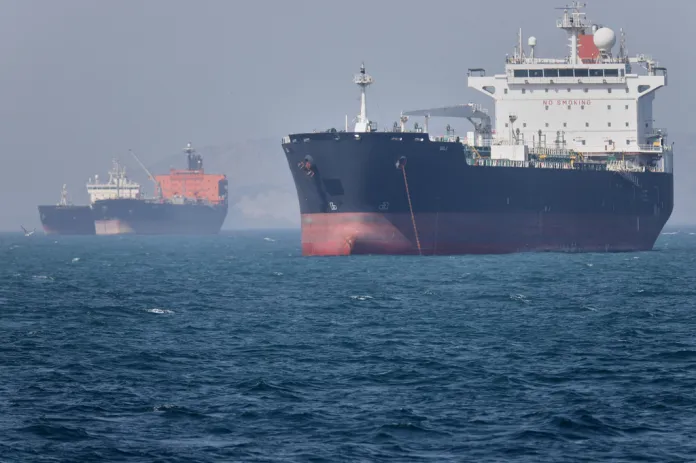
The ceasefire seemingly only blocks the U.S. from carrying out offensive operations in Iran and has not had an impact in the Strait of Hormuz — which has effectively become the new battlefield — even though it was the one condition connected to the ceasefire agreement initially.
Aaron David Miller, a former longtime State Department Middle East official, told the Washington Examiner: “We really are at something that I would think right now is a strategic impasse. It’s a cul-de-sac, and I cannot imagine right now any conclusion to this that the United States would consider to be a strategic win.”
Time is on Iran’s side
As the war and subsequent stalemate continue without a clear end in sight, it’s the American president who will likely feel the pressure before the Iranian regime, according to experts.
The U.S. economy has taken a hit due to the war. With the midterm elections about six months away, and summer driving season even closer, Americans will continue to face the effects of the closure of the strait at the gas pump for the near future.
The national average gas price was $4.52 a gallon as of Monday, according to AAA, which is significantly higher than before the war began, when gas cost $2.98 a gallon. A year ago, the national average for a gallon of gas was $3.14.
Conversely, the hard-liners within the Islamic Revolutionary Guard Corps have not only consolidated power in Iran but have demonstrated their resilience in both withstanding the military’s onslaught during more than a month of near constant U.S. and Israeli bombardment, as well as the U.S.-driven economic pressure known as Operation Economic Fury.
Kelly Grieco, a Middle East expert with the Stimson Center, told the Washington Examiner: “I think from Tehran’s perspective, it’s feeling quite confident because it’s been under pressure militarily, with the blockade being added to it, and it’s still been able to survive it. It’s shown its resilience. From their perspective, time favors Iran, and when they look at Donald Trump’s position, they see quite the opposite. They see that he’s under great pressure domestically with midterm elections coming up, and under pressure globally for the Strait of Hormuz to be open.”
The president’s actions have shown he does not want to restart offensive military operations, though he has still threatened to do so.
The Iranians have not complied with the one requirement of the ceasefire, which Trump announced on April 7, and that was ending its attacks on commercial vessels transiting the waterways off their coasts.
The Iranians also carried out retaliatory attacks with missiles and drones following Trump’s planned “Project Freedom,” which was an effort to guide commercial vessels through the strait that was paused by the president after just two days.
The Iranians launched attacks on U.S. Navy vessels, commercial vessels, and the United Arab Emirates in the last week or so in response to Project Freedom. But the administration maintains none of those actions has resulted in an end to the ceasefire, even as U.S. troops took defensive actions, both against small boats and on Iranian soil, to defend against those attacks.
If the U.S. were to restart offensive military operations against Iran, Tehran would presumably retaliate as it did last week. It could include attacks on Gulf countries, which have largely not come under attack since the April 7 ceasefire announcement.
The U.S. also has to face questions about its diminished stockpile of critical munitions that it has used in the war for offensive and defensive purposes.
Secretary of War Pete Hegseth said in late April it would take months and years to replace the spent munitions, though he noted, “The president has charged [us] with not just replacing anything, but filling it up, as he might say to the tippy top, make sure that the remainder of this term and future presidents have all the munitions they need for any level of contingencies, especially considering the dangerous world we live in.”
Prior to the war, Iran did not exert control over the Strait of Hormuz, even though the geography of the region suggested it was always a possibility. Now the administration is trying to return to the status quo that predated the war, where Iran did not exert that power or threaten shipping in the Arabian Sea or the strait. It is also now a proven method for Iran to affect the world economy at a time of its choosing.
Nuclear Demands
One of the thorniest issues between the U.S. and Iran is Tehran’s nuclear program, and the looming questions about its deeply buried stockpile of highly enriched uranium.
The U.S. wants Iran to cease uranium enrichment for 20 years, while Iran’s latest counterproposal didn’t address the issue directly, according to the Wall Street Journal. Instead, Iran called for an end to the fighting, a gradual opening of the Strait of Hormuz to commercial traffic, the U.S. to lift its blockade on Iranian ships and ports, and then the two sides would begin negotiations on the nuclear program in the following 30 days.
THE LONG UNANSWERED QUESTION OF THE WAR POWER ACT’S CONSTITUTIONALITY
Miller, now a senior fellow at the Carnegie Endowment for International Peace, said there’s a possibility for a “narrow deal,” though it’s unclear if either side would agree to it. It could include Iran reopening the strait, the U.S. ending its blockade of Iran’s ports, the Iranians getting billions of dollars in unfrozen assets and sanctions relief, and the nuclear issue punted down the road for later.
Iran’s nuclear program was the reason the war began, though so, too, was its missile and drone capacity because, as Hegseth has articulated, its non-nuclear arsenal was growing to such a degree that it would have been harder to stop its nuclear program if they waited.
“North Korea is the lesson. Everybody thought North Korea shouldn’t have a weapon,” Hegseth said during a congressional hearing last month. “Under the Clinton administration, they gathered so many ballistic missiles that their ballistic missile shield allowed them to blackmail the region and the world [and] to say, ‘We’re going to get a nuke, and you can’t do anything about it.'”
