Cuba has completely run out of fuel due to US sanctions: ‘There’s absolutely nothing’

Published May 14, 2026 11:42am ET | Updated May 14, 2026 11:42am ET


Cuban officials said Wednesday that the island has completely run out of fuel needed to keep much of it running, blaming a monthslong U.S. sanctions campaign that has sharply restricted fuel imports and pushed the country deeper into an already severe energy crisis. 

Energy Minister Vicente de la O Levy said that the country has “absolutely nothing” left in diesel fuel and oil reserves, leaving Cuba’s fragile power grid reliant on limited domestic crude production, natural gas, and renewable energy sources that have struggled to meet demand. 

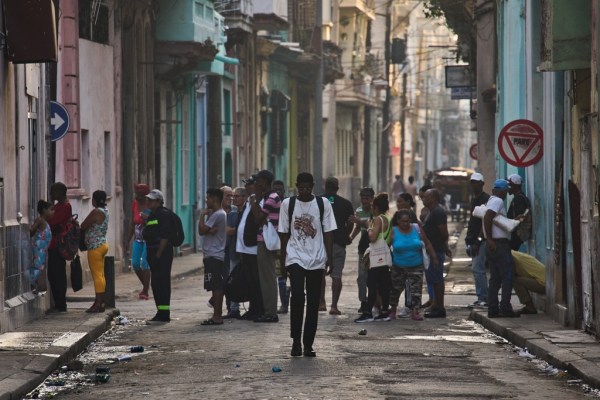
Authorities and media outlets said blackouts in some parts of Havana and across the island have stretched as long as 20 to 22 hours a day. 

The announcement marks a dramatic escalation in Cuba’s worsening economic and humanitarian crisis, which has intensified since President Donald Trump’s administration moved earlier this year to tighten sanctions and pressure foreign governments and companies against shipping oil to the island. The measure effectively cut off traditional suppliers, including Venezuela and Mexico

Cuban President Miguel Diaz-Canel detailed the state of the island’s energy system, explaining there is a deficit of more than 2,000 megawatts during the peak energy demand periods. Diaz-Canel blamed Trump for the country’s situation. 

“This dramatic worsening has a single cause: the genocidal energy blockade to which the United States subjects our country, threatening irrational tariffs against any nation that supplies us with fuel,” he said. 

Diaz-Canel gave an example of Cuba making the most with the resources it has received. He said that with the arrival of one fuel tanker, much less than the eight needed each month, energy blackouts were mitigated and the fuel deficit was reduced. 

Diaz-Canel said the U.S. sanctions are “a perverse design whose main objective is the suffering of the entire people, to hold them hostage and turn them against the Government.” 

He added that easing sanctions in the past has “clearly demonstrated, without a shadow of a doubt” how Cuba benefits from the “draconian” policy being lifted. 

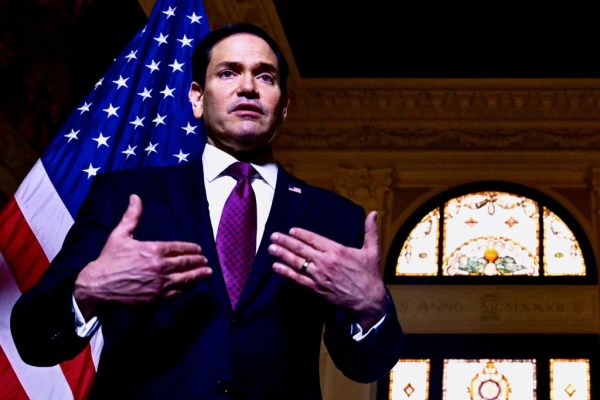
The U.S. State Department on Wednesday said Secretary Marco Rubio has made several private offers to the Cuban regime to provide assistance, including support for satellite internet and $100 million in humanitarian assistance.

The State Department said the regime “refused to allow” U.S. assistance on the island.

“Today, the Department of State is publicly restating the United States’ generous offer to provide an additional $100 million in direct humanitarian assistance to the Cuban people that would be distributed in coordination with the Catholic Church and other reliable independent humanitarian organizations,” the agency said. “The decision rests with the Cuban regime to accept our offer of assistance or deny critical living-saving aid and ultimately be accountable to the Cuban people for standing in the way of critical assistance.”

Public frustration spilled into the streets on Wednesday following the fuel supply announcement, Bloomberg reported. Several neighborhoods in Havana saw protests where residents demanded electricity and relief from prolonged outages. 

MAGAZINE: IS CUBA NEXT ON TRUMP’S REGIME-CHANGE AGENDA?

The Trump administration has defended the sanctions as pressure aimed at the Cuban government rather than ordinary citizens. Rubio backed new restrictions targeting military-linked businesses and foreign entities that continue operating in Cuba, arguing the measures are intended to weaken the communist government’s grip on the economy. 

The United Nations and humanitarian agencies have criticized the tightening restrictions, warning that the fuel shortage is threatening food supplies, water access, and medical care for millions of Cubans.