
Ukraine turns up the heat on Moscow

Published May 18, 2026 2:09pm ET | Updated May 18, 2026 2:09pm ET


Over the weekend, Ukraine launched its largest drone assault on Moscow since the start of the war in February 2022. It deployed more than 500 drones in coordinated waves that kept Russian air defenses firing through the night and into the morning. Targets included military-industrial plants and fuel infrastructure across Moscow Oblast. The strikes hit a semiconductor plant, a sanctioned facility supplying components to Russia’s war machine, along with the Moscow Oil Refinery and two fuel pumping stations.

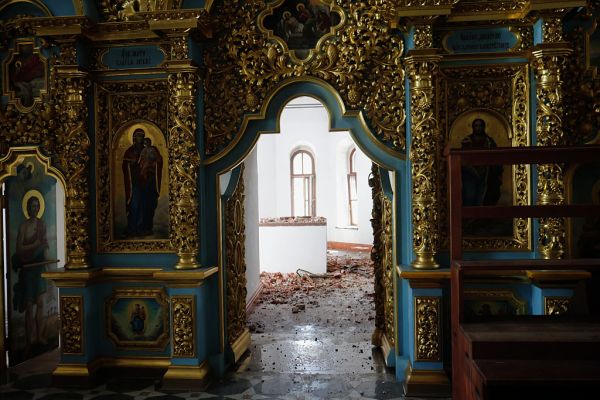
The scale of this attack was also apparent in the debris from drones that Russian forces were able to shut down. This debris landed across multiple residential districts, killing at least three people in the Moscow region. Sheremetyevo Airport, Russia’s busiest air hub, reported debris on its grounds, while around 200 flights were delayed or canceled.
This is a big victory for Ukraine.

For more than four years, Russia has broadly kept its population insulated from the consequences of Vladimir Putin’s decisions. At the same time, Ukrainian cities such as Kyiv, Kharkiv, Dnipro, Odesa, have all absorbed heavy missile and drone barrages that kill civilians in their apartments, destroy energy infrastructure through winters, and keep entire populations in a state of perpetual crisis. As long as Moscow’s population experienced this war as something distant, the Kremlin was confident it would face only limited domestic pressure to seek a genuine settlement. Ukraine’s latest attacks will help change those calculations.

The Moscow operation proves that Ukraine’s military can project force at a significant range with precision, and that Kyiv’s war capabilities have advanced dramatically over the course of 4.5 years of war. Russian air defense networks have been unable to keep up with Ukrainian drone advances. Still, it should be noted that Ukraine maintains discipline in target selection. This distinguishes it from the Russian strikes, which have repeatedly hit hospitals, apartment blocks, and civilian markets. Civilian deaths may be inevitable, but civilians should never be a target.

RESISTANCE TO DATA CENTERS GROWS NATIONWIDE

All of this comes as Ukraine is also claiming success on the battlefield. Last month, Russian forces recorded a net territorial loss for the first time since 2024, with Moscow losing control of roughly 113 square kilometers over the previous month and continuing to retreat farther, according to the latest analysis.

The tide of war has turned against Moscow. Kyiv has shown it can both endure and raise costs for Russia. That should not go unnoticed in Washington.