The Trump administration announced on Sunday that China agreed to a sweeping soybean deal, appearing to mark an amicable end to a trade conflict between the countries.
The White House said Chinese President Xi Jinping would purchase at least $17 billion a year of U.S. agricultural products in 2026, 2027, and 2028, in addition to the soybean purchase commitments Beijing made in October 2025. Xi made the commitment during his recent meeting with President Donald Trump, following months of pressure from Washington.
Recommended Stories
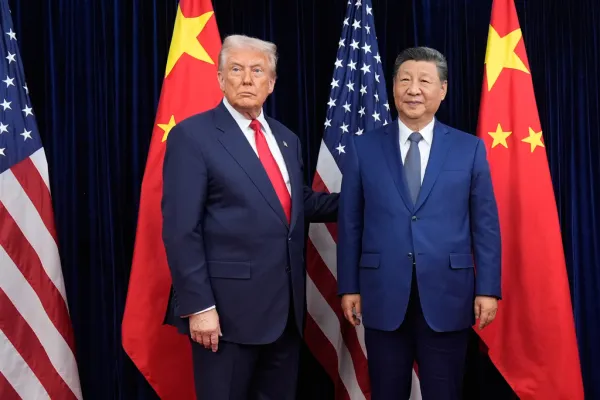
“President Trump and President Xi agreed that the United States and China should build a constructive relationship of strategic stability on the basis of fairness and reciprocity,” the White House said, adding that China also restored market access for U.S. beef by renewing expired listings of more than 400 U.S. beef facilities and adding new listings, and working with U.S. regulators to lift all suspensions.
The development comes after Trump’s tariffs on China last year triggered a trade war between Beijing and Washington, impacting the soybean market among other sectors. China pulled out of soybean agreements it had with U.S. farmers in retaliation for Trump’s “Liberation Day” tariffs last April, effectively boycotting the industry. The move left farmers ailing and sparked Trump’s outrage.
“I believe that China purposefully not buying our Soybeans, and causing difficulty for our Soybean Farmers, is an Economically Hostile Act,” he said in a post to Truth Social. “We are considering terminating business with China having to do with Cooking Oil, and other elements of Trade, as retribution. As an example, we can easily produce Cooking Oil ourselves, we don’t need to purchase it from China.”
After increasing its shipments of soybeans from Argentina and other South American countries for months to undercut Washington, China last October agreed to resume purchasing U.S. soybeans.
Sunday’s announcement from the White House marks an expansion of that deal, and a boost for the Trump administration’s effort to renegotiate trade deals it deems more favorable to the U.S.
US HAS ‘FLIPPED THE COST CURVE’ IN COUNTERING IRANIAN DRONES: ADM. BRAD COOPER
Though they’ve found some relief, soybean farmers continue to be affected by Washington policy, particularly due to the Strait of Hormuz’s closure throughout the conflict with Iran.
“Maritime freight disruptions from the ongoing conflict in Iran pose significant consequences to food security here at home and around the world,” the American Soybean Association and other major agriculture groups wrote in a letter to Trump on March 19. “This combination of sustained market pressures, weather-related challenges, and geopolitical uncertainty poses a serious threat to the upcoming growing season and the long-term viability of U.S. agriculture.”