

Allegations that President Donald Trump called for the easing of restrictions on vaping after campaign donations from tobacco companies are straining the fragile relationship between the administration and the Make America Healthy Again movement.
MAHA activists expressed displeasure with the Trump administration on Thursday following reports that the tobacco company Reynolds American donated $5 million to a super PAC backed by Trump roughly one week before the administration rolled back regulations on certain vaping products, including flavored vapes for children.
Recommended Stories


The Food and Drug Administration rolled back various restrictions on electronic cigarette products May 5, less than a week after the super PAC MAGA Inc., named after Trump’s MAGA slogan, received a major donation from Reynolds.
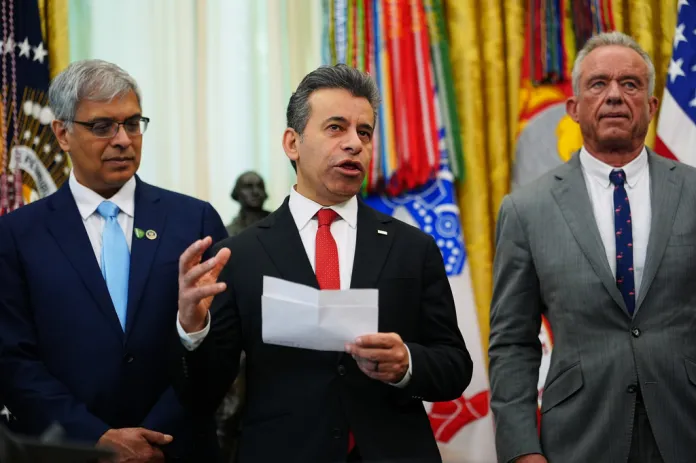
Four days after the new policy was announced, Trump’s FDA Commissioner and MAHA supporter, Dr. Marty Makary, resigned from his position, subsequently saying that he could not in good conscience defend the agency’s actions.
The vaping policy issue has only intensified the rift between the MAHA movement and the Trump administration in the wake of the administration’s embrace of the pesticide glyphosate, a bugbear of the MAHA movement.
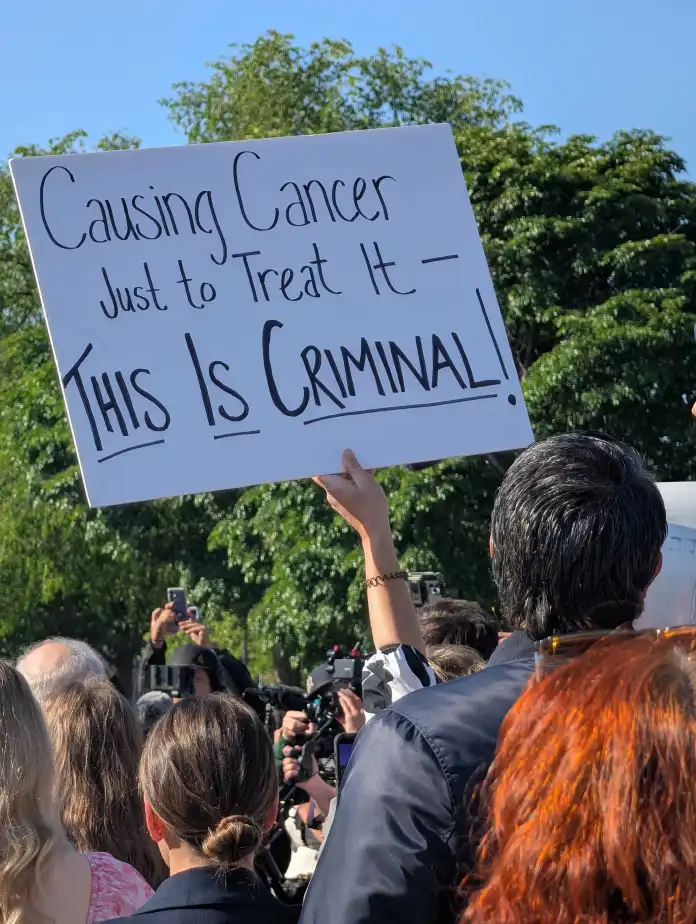
MAHA and MAGA have been on precarious footing since the Department of Justice decided to back pesticide manufacturer Bayer in its Supreme Court request for immunity from litigation over glyphosate, which has been found to cause cancer in farm workers.
Investigative reporting from US Right to Know uncovered multiple ties between senior White House and DOJ staff and Bayer, which grassroots players in the MAHA movement see as a betrayal of promises Trump and Health and Human Services Secretary Robert F. Kennedy Jr. made to fix the agriculture system during the 2024 presidential campaign.
Jennifer Galardi, senior wellness policy analyst for the Heritage Foundation, told the Washington Examiner that, despite outcry from MAHA influencers, the loss from Makary and the influence of the tobacco industry ought not to be the reason for the movement to abandon Trump or Kennedy.
“I don’t think it would be politically expedient to just flip flop,” Galardi said. “I do think this MAHA movement can become a permanent part of the Republican Party, of this new Republican Party that Trump has built.”
CORY BOOKER MAKES A PLAY FOR MAHA PARENTS
Disappointment from MAHA grassroots
MAHA grassroots activists, particularly the so-called “MAHA moms” at the epicenter of the movement, have expressed deep concerns not only with the approval of flavored vapes but more so with the influence of dark industry money.
Alex Clark, host of the wellness podcast Culture Apothecary from Turning Point USA, said at the time of the initial FDA announcement that the administration’s approval of new flavored vapes “adds more fuel to the fire when it comes to stoking fears that MAHA moms have that special interest groups are running the White House.”
But Clark ramped up her rhetoric in response to the report of industry interference in the decision to approve flavored vapes.
“How in the world are we supposed to make America healthy again if corporate interests are still running the show?!” Clark wrote.
Anna Matson, fellow MAHA activist and influencer, replied to Clark’s post on X, saying Trump “did not drain the swamp.”
On the contrary, Galardi said it is virtually impossible in high-level politics not to succumb to the pressure of money on one problem or another.
“Even someone like him who campaigned on wanting to drain the swamp, you get in the swamp and you’re subject to swamp,” Galardi said.
An April poll from Politico found that voters overwhelmingly see the GOP as more vulnerable to industry lobbying interests, including the food, pesticide, and pharmaceutical industries.
Several Democrats, including Sen. Cory Booker (D-NJ), have in recent weeks angled to gain favor among disaffected MAHA activists looking for a more stalwart ally, but Galardi said the other side of the aisle is no better.
“I still don’t think it would be a wise political move for MAHA to all of a sudden abandon ship and jump on a Democrat train, because it’s going to be no different there,” Galardi said.
Nicotine versus ‘big tobacco’
Despite the outcry about the Trump administration’s relationship to industry interests, tobacco-related issues are less of an issue for the MAHA movement than glyphosate or other food supply reforms.
Many within the MAHA movement have taken the quixotic position that nicotine as a substance is beneficial, while at the same time demonizing tobacco manufacturers.
A number of wellness and MAHA influencers have spoken about possible health benefits of nicotine, billing the substance as a natural substance that has been unfairly disparaged by the medical establishment.
Jillian Michaels, a celebrity fitness trainer who has appeared with Kennedy in his official capacity on several occasions, has spoken about the health benefits of nicotine on her podcast. In an interview, she said that she herself uses low doses of nicotine to sharpen her focus when affected by her ADHD symptoms.
Tucker Carlson, the conservative TV pundit and MAHA ally, sells his own brand of nicotine pouches and has said nicotine increases productivity and sexual performance. On the Theo Von show in December, Carlson said of nicotine, “This country has gotten far sadder and less healthy since it was discouraged.”
Others in the wellness influencer space outside of the MAHA movement, including neuroscientist Andrew Huberman and podcaster Liz Moody, have also discussed the possible health benefits of nicotine use in recent years.
But running parallel to MAHA’s embrace of nicotine, however, is the often-repeated comparison of major food corporations to tobacco companies, being that ultraprocessed food producers intentionally make their products addictive despite knowing the negative health consequences.
Kennedy, in a January radio interview, accused both RJ Reynolds and Philip Morris International of acquiring major food manufacturers, such as Kraft and Nabisco.
“They moved all of these thousands of scientists who were for years making tobacco more addictive, and they moved them to figure out ways to make food addictive,” Kennedy said, adding that Americans’ “minds were deliberately addicted to eat poison all day long.”
When it comes to Kennedy’s silence on the vaping issue, Galardi said she believes the health secretary is “fighting the good fight, and there’s only so much he can do.”
Galardi said transparency and data on whether nicotine and vaping are harmful are more important than policy nuances because people are responsible for their own decisions.
“Make different choices and it won’t kill you,” Galardi said. “Ultimately, individuals have to make decisions for themselves.”
