
There’s no spinning California’s disgraceful, third-world vote-counting mess

Published June 8, 2026 12:00pm ET | Updated June 8, 2026 12:00pm ET


Officials in California have been warning the public for days that counting the state’s primary election votes, and thus determining which candidates have qualified for general election runoffs, is a process that could drag on for weeks. This isn’t terribly new or unusual in the Golden State; in 2024, for instance, one congressional race wasn’t called until roughly one full month after election day. 

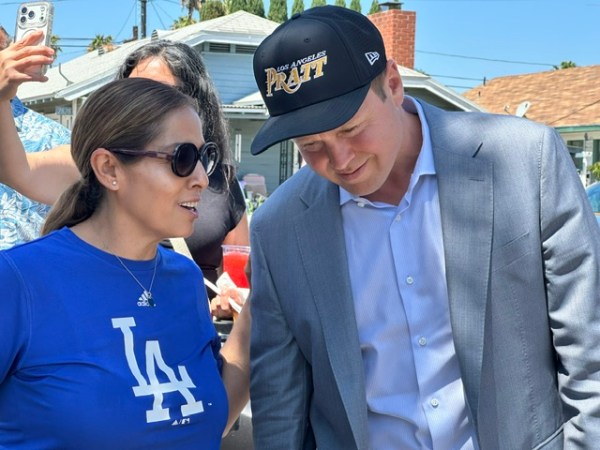
In Los Angeles, the leftist third-place finisher on election night has now stormed back to enter the top-two runoff, apparently leaving independent Spencer Pratt on the outside looking in. His sizable vote lead to qualify for the general election vanished over the course of the better part of a week, with one negative ballot drop after another relegating him to third place. Many people are understandably suspicious of this sequence of events. Whether one thinks this is entirely corrupt, partially corrupt, or fully legal under California’s procedures, it’s an indefensible way to administer an election.
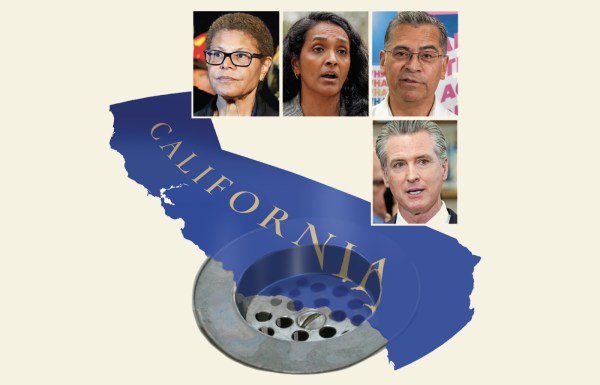
Los Angeles County Registrar-Recorder Dean Logan held a press conference last week in which he sought to discredit critics of the system: “You will likely hear from some big voices, some loud voices, that it’s crazy … that it takes this long for votes to be counted,” he said. “I want to emphasize that it’s not stupid. It’s not crazy. It’s actually the law in California.”  

Something being enshrined in California law does not preclude it from being crazy or stupid. At all.  

This vote-counting system very much qualifies as both. Former Obama political guru David Axelrod attempted to spin the state’s interminable, sclerotic, confidence-eroding process, summarizing, “the state values participation plus thorough scrutiny of ballots over speed.” But this is not an either/or proposition. Any number of foreign countries manage to count far more votes in their national elections, far more quickly than California does. Closer to home, virtually every other state does a better job of it than California does, though a few rival it in the dysfunction department.  

Setting aside partisan politics, Florida cleaned up its disastrous system after the embarrassing 2000 recount fiasco and has since implemented a best-in-class regime for tallying votes. It should be adopted nationwide. Florida’s program entails vast voter participation through a wide variety of ballot-casting methods, including robust early voting and vote-by-mail. Its officials deliver fast and reliable results on election night, generally boasting 99% of votes tabulated within a matter of hours.  

TRUMP’S DC BEAUTIFICATION SHOWS DEMOCRATIC DISARRAY IS A CHOICE

The Sunshine State, along with others that implement and execute similar best practices, does not sacrifice “participation” or “thorough scrutiny of ballots” in exchange for speed. They achieve all of the above. Replicating that success is not some impossible riddle. It is, in fact, standard operating procedure in many places.  

Keeping the stupid, crazy California system in place is a deliberate and affirmative choice. Why the party that dominates the lawmaking process in that state insists on making that choice in perpetuity — having seen the far better alternatives — is, at best, baffling. People are right to demand sensible reform and to wonder why an entrenched political machine would refuse to budge on a broken status quo.