

The Justice Department under the Trump administration is ramping up scrutiny of California‘s election system amid dramatic shifts in the outcomes of several closely watched races, even as the state’s election officials were still counting ballots nearly a week after voters cast their primary votes.
Federal prosecutors in Los Angeles have now opened multiple election fraud investigations, established a public tip line for reporting suspected election misconduct, renewed criticism of California’s voter registration and ballot collection policies, and sent a federal prosecutor into Los Angeles County’s ballot processing center for a second time on Monday to observe the counting process.
Recommended Stories


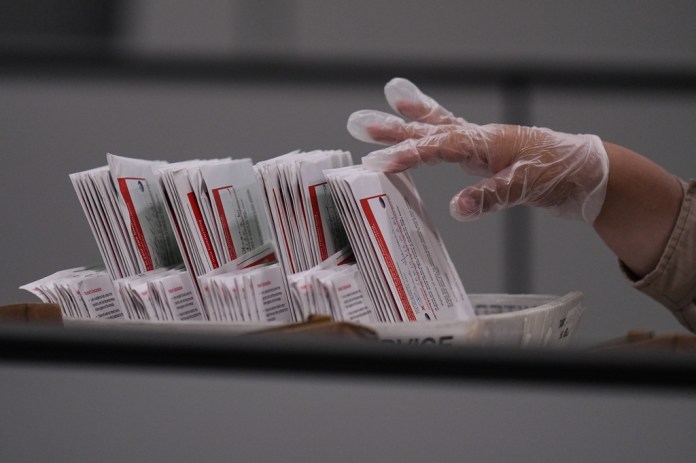
The heightened federal attention comes as late-counted ballots have reshaped several major contests. In the Los Angeles mayoral primary, former reality television star Spencer Pratt saw an Election Day lead of roughly 40,000 votes disappear as additional ballots were counted, allowing progressive City Councilwoman Nithya Raman to advance to the general election and fueling renewed debate over California’s lengthy vote counting process.
The DOJ’s involvement has steadily expanded since President Donald Trump said last week he was concerned about “rigging” occurring in the state’s primary election that took place last Tuesday.
First Assistant U.S. Attorney Bill Essayli, the senior federal prosecutor overseeing the Central District of California, confirmed Friday that his office had launched “multiple election fraud investigations” and argued that California’s election system contains “serious structural vulnerabilities.”
On Saturday, Essayli announced the creation of a dedicated election fraud tip line, encouraging Californians to submit direct evidence of possible misconduct.
The office asked voters to report incidents, including ballots arriving for individuals who never lived at a residence, voters being informed that someone had already cast a ballot in their name, or witnesses observing ballots being completed without a voter’s knowledge.
By Monday, federal scrutiny appeared to deepen further. Central District of California prosecutor Robert Renner returned to Los Angeles County’s central ballot counting center to observe election operations, according to a report from Fox News, after he initially made a visit to the facility on Friday.
Essayli also used social media over the weekend to outline broader concerns his office has with California’s election laws and voter registration procedures.
Essayli noted in a lengthy post on Sunday that California permits certain first-time voters who do not provide a Social Security number or driver’s license during registration to verify their identity using documents, including gym membership cards, employer identification cards, credit cards, insurance cards, and prescription drug labels.
“Our office believes this policy deserves a closer look,” Essayli wrote.
Essayli also questioned whether California is adequately maintaining its voter rolls by removing deceased voters, individuals who have moved away, and people convicted of disqualifying felonies. He criticized California’s permissive ballot collection laws, arguing that widespread third-party ballot collection can make it difficult to track the chain of custody for completed ballots.
Those concerns are tied to an ongoing legal battle between the DOJ and California over access to voter registration records. Federal officials have spent more than a year seeking to audit California’s voter rolls under federal authority designed to verify voter eligibility. California’s Democratic Attorney General Rob Bonta has resisted those requests, arguing that state privacy laws restrict disclosure of voter information. The dispute is currently before the 9th U.S. Circuit Court of Appeals.
Unlike the Los Angeles mayoral race, the governor’s contest has not generated the same level of scrutiny. As of Monday afternoon, Republican candidate Steve Hilton had received more than 1.79 million votes, trailing former Health and Human Services Secretary Xavier Becerra’s roughly 1.88 million votes while remaining ahead of businessman Tom Steyer’s approximately 1.49 million votes, according to the California Secretary of State’s Office.
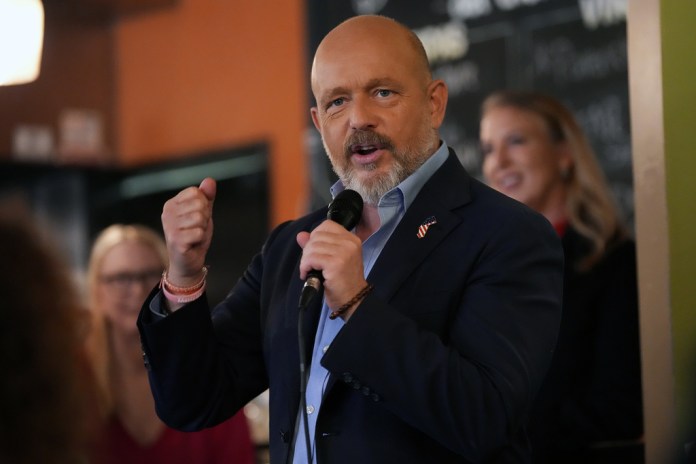
Hilton has not alleged widespread fraud in his own race and said last week that his campaign had not observed anything warranting legal action. However, he argued that California’s lengthy counting process undermines public confidence in election outcomes and should be streamlined before future elections.
The debate over California’s ballot receipt deadlines may soon reach the Supreme Court as well. The justices are expected to rule later this month in Watson v. Republican National Committee, a closely watched dispute over whether states may count mail ballots that are postmarked by election day but arrive days later. If the court issued a broad-scope ruling for the RNC, it would likely affect election procedures in dozens of states, including California, ahead of the November elections.
The administration’s election integrity push also received backing Monday from one of the lead federal prosecutors for the Southern District of New York, U.S. Attorney Jay Clayton, who argued during a CNBC Squawk Box appearance that election officials should focus on maintaining public confidence in election integrity.
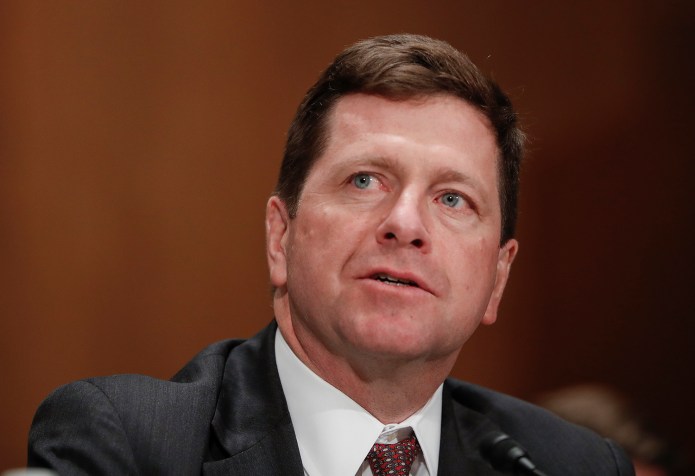
“We had race-based discrimination around voting,” Clayton said. “It was identified. We had the Voting Rights Act. It was all about access. There was a second element to it, which was election integrity, making sure that once everybody has access, that their vote actually counts.”
Clayton argued that while the country has largely succeeded in expanding voting access, officials have done “an absolutely terrible job” addressing public concerns about election integrity. Discussing California’s voting laws and extended ballot-counting process, Clayton said some policies create unnecessary “opportunity for fraud.”
MIKE JOHNSON SAYS LOS ANGELES MAYOR RESULTS ‘STINKS TO HIGH HEAVEN’
“What it is, is it makes the opportunity for fraud so much greater when that is not necessary,” Clayton said. “One of the things you do in designing law is reduce the opportunity for fraud while not adversely affecting access.”
The Washington Examiner did not immediately receive a response from the DOJ or the Central District of California.
