
The chief federal regulator in charge of licensing new facilities said the United States could see advanced reactors deployed and generating power by 2030, adding to the nuclear energy revival.
Nuclear Regulatory Commission Chairman Ho K. Nieh shared his optimism for advanced nuclear energy development during an exclusive interview with the Washington Examiner on Monday.
Recommended Stories

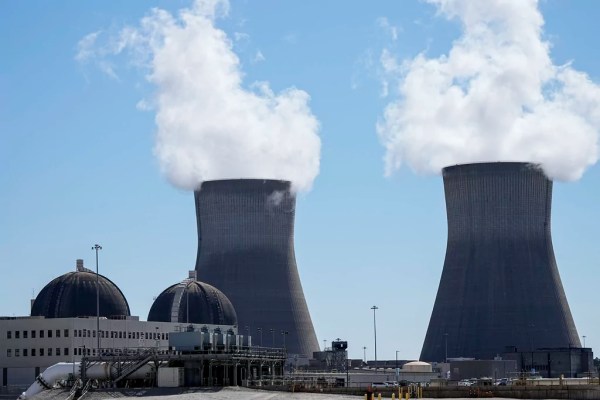
He pointed to the recent construction permit granted by the NRC in March for the Kemmerer Power Station Unit 1 in Wyoming, which will feature a 345-megawatt small modular reactor. One megawatt can usually produce enough electricity to power 400 to 900 homes.
“They’ve got a construction permit, they’re, you know, finalizing the design, working on the fuel,” Nieh said from his office in Rockville, Maryland. “Eventually, they’re going to apply for an operating license in the very near future.”

As to how soon an SMR could be operational in the U.S., Nieh said he believed it could happen by 2030.
The NRC chairman warned that a specific timeline will not just be up to regulators, as developers are also heavily dependent on factors tied to the commercial side of operations, such as supply chains for specific materials or fuels.
Regardless, Nieh said, the commission will have the regulatory framework in place for developers to get shovels in the ground.
Advanced reactors such as SMRs traditionally have a smaller footprint, allowing them to be built closer to local grids on an accelerated timeline.
Typically, they can generate around 300 megawatts of power. There are no SMRs operational in the U.S. and just a handful globally.
The Trump administration has taken a significant interest in these quick-to-power reactors as a solution to meeting soaring energy demand brought on by large-load facilities, such as data centers, as the U.S. looks to get ahead of China in the race for artificial intelligence.
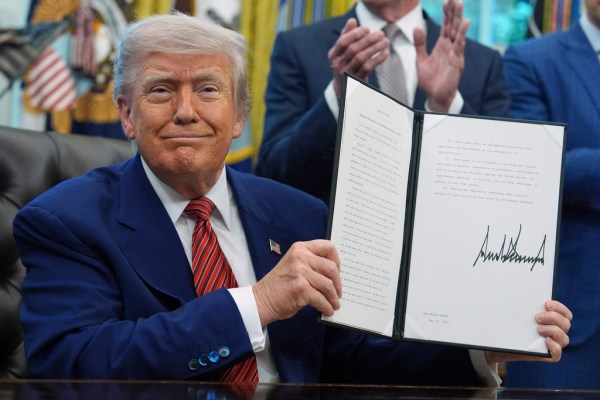
The Energy Department is specifically supporting innovation of the advanced nuclear technology through its Pilot Reactor Program. This program, established in a series of executive orders signed by President Donald Trump last year, was designed to accelerate the development and deployment of advanced reactors.
It was also created to serve as a fast-tracked bridge for commercial licensing under the NRC, providing federal regulators with critical operational data.

For example, one key metric the program is providing regulators with is proof of reactor criticality. This stage means that a reactor is perfectly stable and its nuclear chain reaction is self-sustaining and able to produce energy.
Antares Nuclear’s Mark-0 reactor was the first small modular reactor in the pilot program to hit this milestone last week.
Antares expects to produce electricity from its advanced reactors in 2027, then plans to deploy them at military installations in 2028. The company is also part of a next-generation program launched by the Army that aims to deploy small and microreactors at nine bases operated by the U.S. military.
Nieh acknowledged Monday that developers could have their projects become operational faster through pathways supported by the Energy and War departments, rather than solely as commercial endeavors.
FIRST REACTOR IN TRUMP PILOT PROGRAM HITS MILESTONE TO RAMP UP NUCLEAR NATIONWIDE
The Pentagon “is not trying to find the lowest-cost option — they want something that works, and they can pay for it,” Nieh said.
“But to commercialize it at scale, you’ve got to refine the design, you’ve got to be able to deliver it on schedule and lower cost,” he said. “That’s what brings down the cost curve, build it, see how it works, improve it, and then move it to the commercial side.”