

Energy Secretary Chris Wright said that nearly 100 vessels have used the Jones Act waiver granted by President Donald Trump, which allowed refiners to use foreign-flagged ships to transport fuel between United States ports.
The Jones Act waiver “has been used enormously,” Wright said in testimony Wednesday before the House Science Space and Technology committee. “I think close to 100 ships already have used that Jones Act waiver.”
Recommended Stories


The Jones Act is a law that requires goods shipped between U.S. ports to be carried only by American-built ships. The waiver is part of the Trump administration’s broader effort to lower oil prices, which have been elevated due to the war in Iran.
The Trump administration first issued a waiver in March and then extended it in April by 90 days, giving refiners until July.
As of June 8th, there have been 95 total voyages that have used the Jones Act waiver, according to a CATO Institute tracker. In particular, the waiver could help lower the cost of transporting oil from Gulf refineries to the East Coast and other parts of the country, such as California.
Wright said California imports much of its oil from the Persian Gulf, South America, and across the Pacific Ocean.
“Democrats have decided to make energy of all kinds expensive in California,” Wright said. “President Trump has thought that’s deeply unfair, and we need to do everything we can to lower the price of energy for all 340 [million] Americans, whatever state they live in.”
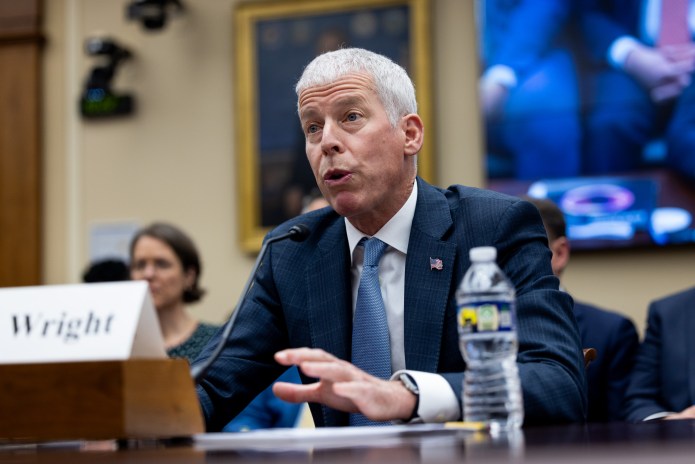
Rep. Randy Weber (R-TX), who asked Wright for an update on the Jones Act waiver, noted that the move was controversial, given its impact on domestic industries.
Weber said that it is essential “we get the Jones Act back in place as quickly as we can,” for the domestic maritime industry.
Wright earlier this week spoke at an Atlantic Council forum, where he said the Jones Act waiver has been “enormously helpful.”
The Jones Act, specifically, mandates that all goods transported between U.S. ports be moved by ships that are U.S.-built, -flagged, and -crewed. The suspension of the law allows foreign tankers to transport oil around the country.
Some economists believe that the Jones Act raises some prices for domestic consumers. A study by economists at the University of Chicago and Boston College published by the Journal of Law and Economics in 2025 found that eliminating the Jones Act would reduce fuel prices for the East Coast between $0.50 and $1 per barrel in 2018-19.
They also found that it would have raised gas prices on the Gulf Coast by about $0.30 a barrel.
The Trump administration has yet to reach a peace deal with Iran and the president said Wednesday he plans to resume attacks against Iran.
THE MAN LEADING TRUMP’S NUCLEAR RENAISSANCE
The war has effectively closed the Strait of Hormuz, a significant trading route that, before the war, saw the passage of 20 million barrels of crude oil daily, or about a fifth of global supply. The halt on trade going through the strait has caused energy prices to soar.
The administration has taken several steps to ease oil prices, including releasing stocks from the Strategic Petroleum Reserve, issuing an emergency waiver for summer fuel blends, and invoking the Defense Production Act to boost production of oil products.
