

When Ukrainian President Volodymyr Zelensky announced last week that his military would be undertaking a 40-day campaign to hammer Russian military and energy infrastructure deeper inland from the border, the concept did not feel materially different from his usual stream of war updates.
Now, a little over a week since the long-range missiles and drones began raining down, the successful disruption of enemy logistics is becoming difficult to ignore.
Recommended Stories



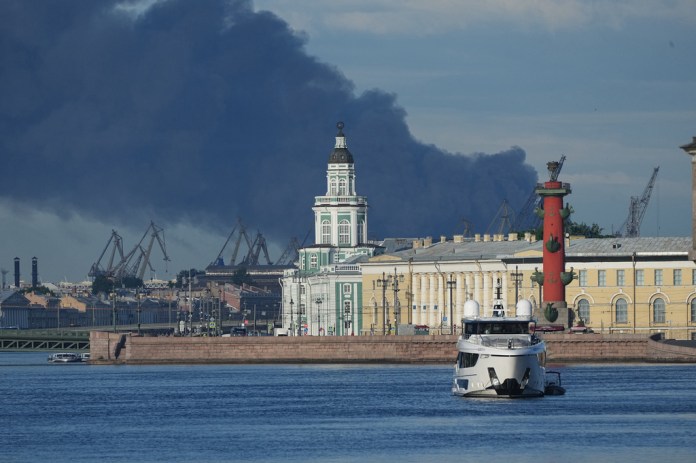
Zelensky announced on Wednesday a second successful strike on the Ufa oil facility, one of Russia’s largest producers of lubricants. Similar attacks have been carried out against the Slavyansk and the Yaroslavl refineries, among others. Crimea, the region of Ukraine occupied by Russia, has entered a state of emergency due to the attacks.
It has become clear that the operation is causing unprecedented pain for the Russian military and national economy. The only question is whether it will finally be enough to make President Vladimir Putin bend.
“They have a theory that if they can conduct a very sharp, concentrated effort against Russian energy that seeks to destroy Russia’s ability to process and transport and use energy, then that can change the Kremlin’s incentives and help bring Putin to come to the table to actually negotiate ending the war,” George Barros, an expert with the Institute for the Study of War, told the Washington Examiner.
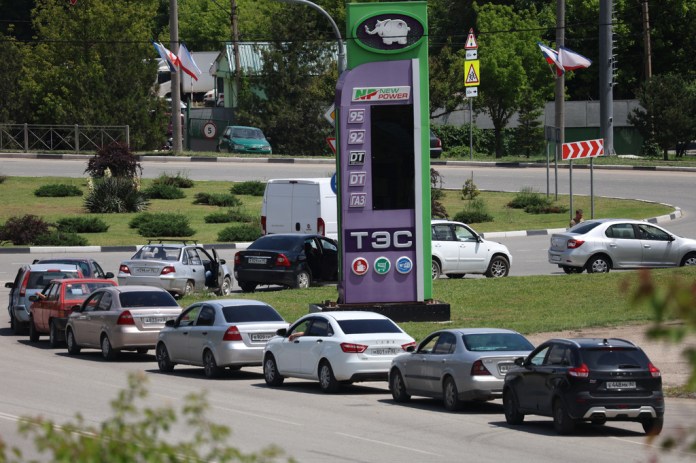
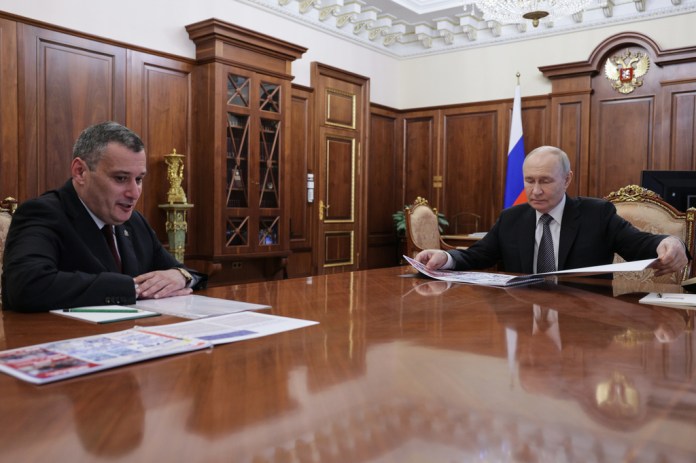
Putin acknowledged over the weekend that Ukrainian attacks were “obviously creating problems” that “persist for both motorists and businesses.” He also addressed the widespread “queues at petrol stations” that have dominated Russian media.
Russia’s fourth-largest oil refinery, Norsi, was forced to suspend operations last week after a Ukrainian strike. It is also the country’s second-largest producer of gasoline.
“We have to reduce to a minimum the impact of terrorist attacks on our civilian targets and infrastructure,” Putin said.
Photos and videos from inside Russia have shown winding lines of vehicles waiting for a chance to fuel up at gas stations across the country, including in the more insulated capital city.
Kremlin spokesman Dmitry Peskov said on Tuesday that “discussions are actively being held” with other countries to import gasoline and stabilize energy markets amid attacks on oil refineries.
Putin insists that Ukraine’s 40-day campaign is “not critical” and the strikes will have “absolutely no impact on the situation at the front line.” Zelensky chided his Russian counterpart on Wednesday for “completely refusing to end the war” despite pressure from Kyiv through “all possible official and unofficial channels – including through people close to him.”
With more than 30 days of the bombing campaign to go, there is still plenty of time for Ukraine to make the conflict maddening for the Russian public.
Barros noted he doesn’t believe it was “very productive” for Zelensky to specify a time frame for how long the campaign is meant to go on because it “allows for an adversary to plan around it.”
The current push has been months in the making, he said, noting that Ukraine started more aggressively targeting Russia’s ground-based air defense systems, radars, and electronic warfare systems, which he said are “crucial components for Russia’s integrated air defense network,” in mid-to-late 2025.
“We saw this Ukrainian campaign for suppression and destruction of air defenses really mature in the latter half of 2025,” Barros said. “It persisted throughout the first quarter of 2026. I think what we’re seeing now is the exploitation of that initial legwork.”
Using advanced strike drones with longer ranges, Ukraine has been more effective at hitting Russian supply lines that it had previously not targeted as consistently, including in Russian-occupied Crimea, which was annexed in 2014.
Russian-backed Crimean leaders declared a state of emergency last month due to sustained Ukrainian strikes targeting the peninsula. Specifically, Ukraine has targeted the primary highway connecting Crimea and Russia, which has created new challenges for how Russia can get supplies to troops on the front line in southern Ukraine.
“Ukraine has also significantly expanded production and deployment of advanced strike drones, including new platforms such as the Hornet drone, which enables more effective mid-range strike operations into Russia,” Maria Snegovaya, senior fellow for Russia and Eurasia at the Center for Strategic and International Studies, said on a call with reporters.
“On top of that, Russia is entering a period of stagnation, perhaps even borderline recession, with Ukraine’s attacks on refineries further exacerbating these trends and threatening a gasoline crisis,” she said. “All of this is true. However, the conflict remains far from over. The Kremlin, and Putin in particular, show few signs of their willingness to end the war.”
Even with the Russian economy struggling, the Kremlin has not given any public indications that it would be willing to reduce its demands. But Ukraine’s successes, both before and during the current campaign, have raised eyebrows in Europe and the United States.
Kristjan Prikk, Estonian Ambassador to the U.S., told the Washington Examiner, “Ukraine’s intensified strikes on energy infrastructure targeting assets supporting Russia’s military operations are a significant tactical as well as strategical development.”
Prikk — who is set to transition from Washington to Brussels as the incoming Estonian ambassador to NATO — said that Ukraine, through these attacks, has “once again demonstrated that Russia’s narrative of inevitable success on the battlefield does not reflect reality.”
Asked last week whether he believed “Zelensky is currently winning” on the battlefield, President Donald Trump offered a heaping of praise.
“Listen, however you look at it, he’s doing quite well. At least, he’s holding up. A lot of people die on both sides, but I think he’s handling it fairly well,” Trump told White House reporters. “You have to admit that he’s brave. He’s got great technique, but he’s got great people, too. He has fighters.”
Ukraine’s recent successes will undoubtedly be discussed at the upcoming NATO summit in Ankara, Turkey, set to commence on July 7.
Matthew Whitaker, U.S. permanent representative to NATO, told a European Pravda reporter in Brussels that the “announcements” from the U.S. and European allies concerning Ukraine “are going to be substantial.”
