Restoring America

Conservative values, National renewal

Menu

The naturalization oath should be our North Star 

Published August 3, 2026 11:00am ET


When taking the Naturalization Oath of Allegiance, immigrants make a solemn vow to “renounce and abjure all allegiance and fidelity to any foreign prince, potentate, state, or sovereignty, of whom or which [they] have heretofore been a subject or citizen.” 

On its face, this is usually taken to mean that the immigrant will not commit treason. However, renouncing fidelity to whom, and what, one was subject to before, and espousing — as the oath goes on to say — faith and allegiance to the United States and its Constitution, means a change in mind and heart, not just outward action. 

READ RESTORING AMERICA’S THINK TANK SERIES, THE RIGHT WAY FORWARD: IMMIGRATION AND NATIONAL IDENTITY

What is that change of heart and mind but assimilation to the adoptive country, its culture, and its peoplehood? At the core of this assimilation is the rejection of foreign thinking and culture that pose a threat to the oath-taking and covenant-making. That is, when one takes that oath, one is swearing that the culture and religion they came in with will amend itself to that oath.

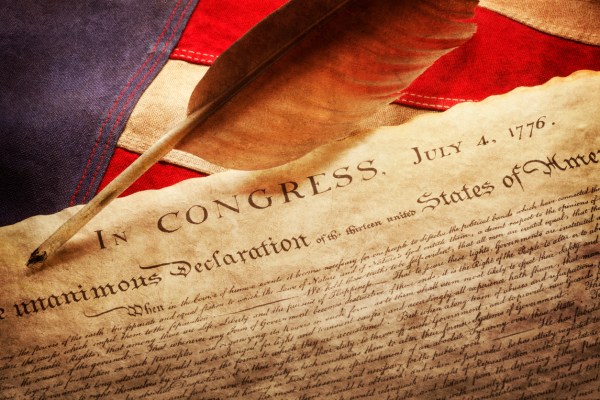
The oath of allegiance is a covenant between the immigrant and the U.S.; it is in line with the covenant nature of America, which began with the Mayflower Compact, gave birth to The Declaration of Independence and our nation, it saw this country through the civil war — it is, to use Lincoln’s words, “the electric cord,” that binds us together, and to our forefathers (physical or spiritual), the founders of our nation. It is this covenant nature of America that makes it possible to become fully American, even if one cannot trace their ancestors back to the American founding. 

Naturalization ceremony US citizenship immigration
(Getty Images)

It is also the covenant nature of America and her Christian heritage that makes pluralism possible.

How does an oath to one single nation make pluralism possible? Note that the renunciation with which it begins is forceful and complete: “I absolutely and entirely renounce and abjure all allegiance and fidelity to any foreign prince, potentate, state, or sovereignty. …” The subsequent affirmative portions of the oath do not use such totalizing language. There is freedom for pluralism within the pledged “true faith and allegiance” to the U.S. and its Constitution. 

When this oath is taken solemnly and seriously, the oath-taker is swearing that any and all freedoms of creed or culture they will exercise are compatible with the covenant they have entered, and that their pluralism is neither motivated by foreign powers, or toward the weakening of the Constitution or laws of this nation. This would all make for sane and sustainable policy if the oath-takers could be relied on to recognize and submit themselves to this covenant.

It may be an unfashionable claim to make, but it is true that throughout our history, the Christian peoples of the Western world have been particularly suited to taking this oath, meaning it, and keeping it, since its abjurations and affirmations are more naturally compatible with their cultures of origin. This is not to say others should be prevented from naturalization, but if the Oath continues to mean anything — if it represents entering into a covenant with its specific stipulations — the core culture of America will retain its Hebraic-Christian and more particularly Anglo-Saxon nature.

We currently have two problems in immigration and American identity. First, all those who are here illegally are completely cut off from this oath-taking; from the outset, they made themselves law-breakers. 

Second, many of those who have taken the oath have no plans to keep it. This happened because accommodation outpaced our absorption. We stopped requiring assimilation, giving in to the ideology of multiculturalism, where not only were all cultures set on equal footing but were given permission to compete and seek to dominate America’s Anglo-Saxon culture. 

The erasure of American identity and culture was taken as open season to naturalize without any intention of amending one’s original values, which in some cases are in opposition to those set forth in our Declaration of Independence. Beyond that, it became open season to naturalize with the intention of subversion — deconstruct and destroy from within. All of these are oath-breaking and covenant-breaking behaviors. 

If citizenship is to mean anything, the oath must mean something, and breaking it must be recognized as a breaking of the covenant and subject to sanctions, including denaturalization and deportation.

AMERICA TURNS 250. ARE WE STILL FORMING CITIZENS?

It will take more than policy to set things right, but our policies should be shaped by a reinvigoration of the notions of oath and covenant. 

The first place to start is by creating a filter for values. Only by filtering for the values that make immigrants ready and willing to take the naturalization oath with solemnity, and make the necessary changes, can we regain some cohesion and heal our social fractures.

Luma Simms is a fellow at the Ethics and Public Policy Center.