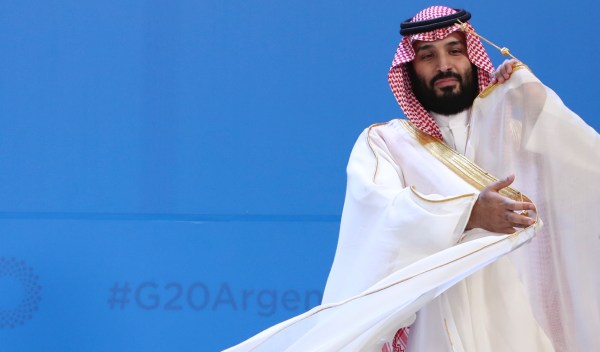
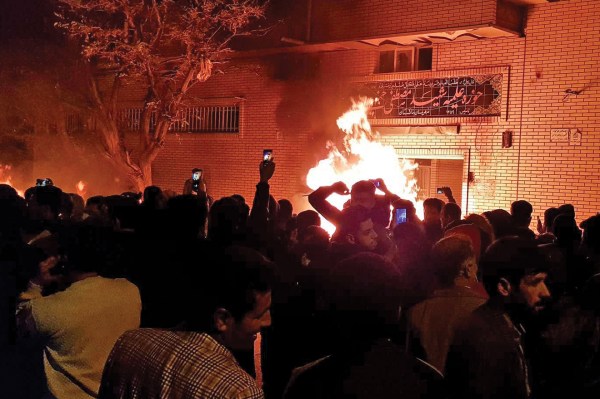
It’s increasingly clear that Saudi Crown Prince Mohammed bin Salman is the Middle Eastern leader with the most influence over President Donald Trump. The de facto ruler of Saudi Arabia, MBS is pushing Trump to seek a diplomatic resolution to the Iran war.
He’s succeeding. As a case in point, Trump suspended plans for major new strikes on Iran after a phone call with MBS over the weekend. A Saudi readout of the call observed that MBS had “stressed the need to give precedence to … de-escalate and the importance of exerting all possible efforts to achieve calm that paves the way for diplomatic solutions … and prevent being dragged into a wider conflict.”
Recommended Stories
MBS’s motives are simple. The Saudi leader wants to reestablish energy supplies through the Strait of Hormuz chokepoint and avoid further Iranian attacks on his energy infrastructure. While Riyadh and Tehran are Islamic nemeses, alongside the Obama and Biden administrations’ tolerance of Iranian aggression against Saudi Arabia, Trump’s flippant approach to foreign policy appears to have led MBS to believe that the United States is either unwilling or unable to restrain Iran. Hence, MBS has decided that appeasement is an acceptable price to pay to restore peace and protect his personal ambition of making Saudi Arabia an international tourism and business hot spot.
It helps MBS that Trump also wants peace. The president had assumed that a short, sharp military campaign would drive the Islamic Republic of Iran out of power and secure another foreign policy victory similar to the spectacular January 2026 Delta Force raid, which captured Venezuelan dictator Nicolas Maduro. Instead, the ultra-hardline Islamic Revolutionary Guard Corps officers now holding sway in Tehran have agreed to numerous ceasefires, only then to launch new attacks in blatant breach of their commitments. This has made Trump look weak. With energy prices high and the economy remaining fragile, Trump is desperate for a way out of the war. MBS’s push for peace fits with Trump’s own instincts.
The risk, of course, is that the U.S. now makes a deal that is so obviously deferential to Iran that it causes long-term damage to regional security and U.S. credibility with its allies. Trump should avoid that outcome by maintaining the oil blockade and targeted military strikes until the Iranian regime realizes it cannot steal the game. Still, a viable negotiated peace (one that Iran actually holds true to) would be beneficial. The costs and risks of a renewed regime change-focused operation far outweigh the far longer-term potential benefits. The war is also causing a catastrophic degradation of U.S. military readiness for what would be a 21st-century defining war with China.
All that said, it’s important to note that the primary source of MBS’s influence over Trump comes not from the logic of his arguments but from a carefully constructed personal relationship.
Unlike Israeli Prime Minister Benjamin Netanyahu, who has alienated Trump by offering an overly optimistic prediction of what would happen in the war, MBS has treated Trump more cautiously. But always like an equal. Which is to say, like an Arab king. Israel’s democratic character cannot tolerate this kind of cronyism toward a foreign leader, but much as Qatar gifted Trump an aircraft to replace the aging Air Force One airframes, MBS throws out a never-ending red carpet for Trump. In 2017, MBS even broadcast Trump’s face onto the Riyadh hotel where the president was staying. Trump stated that “I think it was one of the most incredible two-day meetings that I’ve ever seen — that anybody has ever seen. It was an amazing two-day period.” The Saudis have invested hundreds of billions of dollars in the U.S. economy (including a $600 billion commitment just last year). Crucially, billions of dollars in Saudi money have also ended up with Trump himself (via events at his golf courses and hotels) or with close family members such as Jared Kushner.
TRUMP ARCH COULD TAKE UP TO THREE YEARS AND 20 HOURS OF CONSTRUCTION PER DAY
Patronage is a fundamental underpinning of the Saudi political system, and Trump has both received — and has been made to feel like — he is the most special recipient of this beneficence. And the cultivation of that understanding has paid major dividends for MBS in access to Trump’s open ear. In contrast, it is increasingly clear that Trump has little time for Netanyahu’s recommendations.
In short, Trump and MBS share an interest in ending the Iran war as soon as possible. But MBS has bolstered his sway over the president by leveraging the two things Trump cherishes most: those who stroke his ego, and those who spend big on Trump and America.