Isolationists are delusional — and maximalists are blind

Published August 20, 2026 6:00am ET | Updated August 20, 2026 10:16am ET


In Focus delivers deeper coverage of the political, cultural, and ideological issues shaping America. Published daily by senior writers and experts, these in-depth pieces go beyond the headlines to give readers the full picture. You can find our full list of In Focus pieces here.

The conservative foreign policy intelligentsia is largely split between those who seek a maximalist policy of global military engagement and those who believe the United States should refocus on defending a far narrower set of core interests.

Neither approach is right.

Isolationist-minded conservatives fail to recognize the massive economic and security benefits that people accrue from our alliances. As I noted recently, “In 2025, the total value of NATO member state imports of U.S. goods and foreign direct investments into the U.S. was a staggering $1.4 trillion. In 2021, the year before Russia’s war on Ukraine provoked major international sanctions on Moscow, the equivalent Russian figure was $18.1 billion.”

Isolationism would surrender these economic benefits by incentivizing direct challenges to U.S. power that would degrade our global influence. The isolationist ideology is detrimental to American security and prosperity — and historically defective.

WHY IRAN IS SO DESPERATE TO ASSASSINATE DONALD TRUMP

On the flip side, maximalists refuse to recognize the problem of scarcity: the challenge that global security demands must be balanced against limited resources. Maximalists also neglect the truth that while an increased defense budget would certainly help manage these various challenges, more money is not a silver bullet. By supporting overextensions of military power, they gut the primary U.S. security requirement: the restraint of Chinese Communist Party imperialism.

Instead, U.S. interests would best be served by charting a middle course between isolationism and maximalism. This approach would entail managing scarcity alongside valuable alliances such as those with NATO and Israel — sometimes with hard honesty and difficult reforms.

The scarcity concern is increasingly urgent amid the wars in Ukraine and Iran, and alarming contingencies related to China, Russia, and North Korea. Unfortunately, maximalists have long rejected the need for strategic adaptation.

In 2023, Elbridge Colby, the Pentagon’s current third-highest-ranking civilian as undersecretary of war for policy, debated Hudson Institute President John Walters. Colby called for the U.S. to limit some arms supplies, such as Patriot air defense munitions, to Ukraine to ensure maximal U.S. readiness for a war with China. Walters countered that “to the extent Ukraine and Taiwan come into competition over military goods, the U.S. should, as it is doing, shore up its defense industrial base rather than hoarding resources in a strategic crisis with long-term significance.”

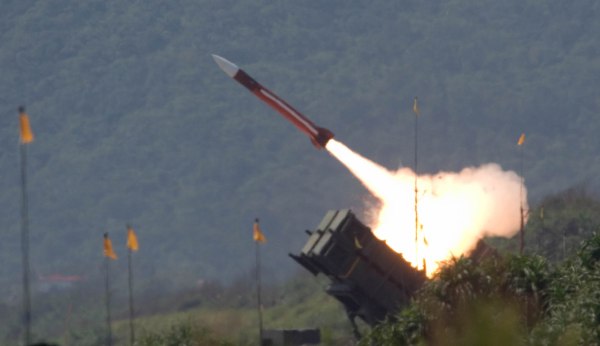
US missile launch
In this image provided by the Navy, the guided-missile destroyer USS Porter (DDG 78) launches a Tomahawk land attack missile on Friday, April 7, 2017, in the Mediterranean Sea. (Mass Communication Specialist 3rd Class Ford Williams/U.S. Navy via AP)

I disagreed with the extent of Colby’s stockpile caution. Nevertheless, the war in Iran proves the high costs of Walters’s reluctance to recognize real-world trade-offs.

Others have made the same error. In a Commentary magazine discussion earlier this month, Abe Greenwald and John Podhoretz agreed that had they known about U.S. missile defense shortages, they would not have supported military action. The problem?

Shortages of these munitions were extensively documented prior to the war. Indeed, others and I referenced these deficits as an explicit reason to avoid regime-change-focused military action. Arguments to the contrary skirted the reality of the operative trade-offs.

The Wall Street Journal editorial board, for example, rejected these scarcity concerns by suggesting that innovations in bomb production meant that missile interceptor inventory alarms were misplaced. But just because you can surge production of calculators, that doesn’t mean you can surge production of self-driving vehicles. Patriot and Terminal High Altitude Area Defense interceptors are very advanced, very complex pieces of machinery.

None of this is to say that the isolationists deserve new deference.

A centerpiece of the isolationist worldview is the assumption that adversaries will cooperate more with U.S. interests, or at least not fundamentally undermine them, if only the U.S. yields to their core geographic agendas. But this is head-in-the-sand thinking. As proven by Russia’s devoted aggression toward U.S. interests and by China’s relentless pursuit of global trade, intellectual property, and political dominance, adversaries only take advantage of U.S. self-restraint. Even if they offer short-term rewards for American self-restraint, adversaries will ultimately move against core U.S. interests. And this is to say nothing about broader American concerns over democracy and human rights.

Isolationism often flirts with antagonism toward free trade. But free trade is cause enough to preserve America’s alliance structures.

Yes, unfair trade practices, including those of China and even allies such as the European Union, warrant tariff retaliation. Economic dislocation in some sectors has also too often been handled callously by politicians. Similarly, affordable skills-based education remains inadequately funded and socially prioritized.

Still, free trade creates vast new marketplaces for American goods and jobs. It also offers the public a far greater range of more affordable consumer choices. This is especially beneficial for those at lower rungs of the economic ladder. Free trade has also centered private investment in areas of American comparative advantage, such as high-tech research and development. Amid the artificial intelligence revolution, this puts the U.S. in a strong position for continued economic dominance.

Albeit in a different form from isolationists, maximalists have an equal misunderstanding of the world.

A big issue is how maximalists often replicate former President George W. Bush’s “Axis of Evil,” a co-identification of generally disparate threats. In Bush’s case, it was Iraq, Iran, and North Korea. Today, the maximalists identify an axis between China, Russia, and Iran.

But they make the same mistake as Bush in simplifying complex threats. Iran and Saddam Hussein’s Iraqi regime were mortal enemies, for example. And while North Korea had and has a highly cooperative relationship with Iran, Pyongyang had a negligible relationship with Saddam. In turn, while China, Russia, and Iran today cooperate closely in varied areas of U.S. concern, they do not pose a unitary threat. They have independent strategic interests.

This maximalist disregard for trade-offs remains relevant as the Trump administration considers how to proceed in its stalemate with Iran. My view is that the U.S. should maintain the crippling economic blockade of Iran until its leadership seriously pursues a diplomatic accord to end the war. In contrast, maximalists such as Mark Levin insist that the U.S. return to regime-change-focused military action.

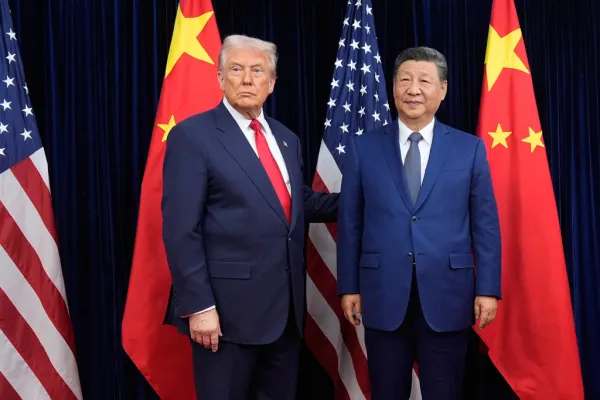
The problem is that a regime-change strategy and resource prioritization are incompatible. That’s certainly the case if you consider China the preeminent American threat concern. Maximalists argue that China would view U.S. deterrence with greater credibility were the U.S. to expend the effort to remove the Iranian regime. This is true on its face. Yet, because Chinese President Xi Jinping views the subjugation of Taiwan as the defining test of his and the CCP’s destiny, America’s policy toward Iran ultimately has a limited effect on Xi’s calculations. What does have a significant impact on his calculations, however, is the U.S. military’s ability to resist a Chinese attack on Taiwan. Scarcity matters greatly in this regard.

After all, the U.S. has now had to relocate its only Pacific-based aircraft carrier to the Middle East. And even under the Trump administration’s now surging procurement strategy, stockpiles of air defense munitions won’t be restored for at least three years. Factory space, skilled labor, and spare parts can’t be secured overnight.

Until then, the war with Iran has meant that China can overwhelm the air defenses of U.S. bases on Guam and Okinawa. This problem might be tolerable for maximalists, but it causes U.S. military insomnia right to the top.

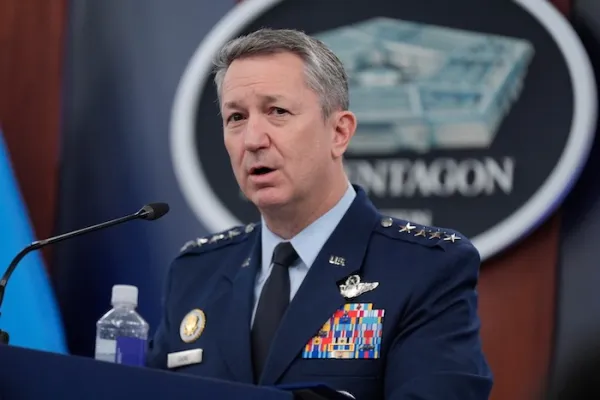
One year following Colby and Walters’s debate, the commander of U.S. Pacific forces, Adm. Sam Paparo, issued a stark warning about the impact of air defense supplies to Ukraine. As he put it, “With some of the Patriots [air defense munitions] that have been employed, some of the air-to-air missiles that have been employed, it’s now eating into stocks, you know, and to say otherwise would be dishonest. … Inherently, it imposes costs on the readiness of America to respond in the Indo-Pacific region, which is the most stressing theater for the quantity and quality of munitions, because [China] is the most capable potential adversary in the world.”

A MULTIPOLAR WORLD WOULD BE DISASTROUS FOR INTERNATIONAL SECURITY

That problem is far, far worse today. It demands honesty from anyone who claims to be serious about foreign policy.

So also, of course, must the isolationists answer how their American bunker dream could survive hypersonic weapons, AI-enabled cyberwarfare, and adversaries determined to consume the ingredients of an unprecedented era of American and global peace and prosperity.