RFK Jr. disbands Kentucky organ donation group for coerced harvesting

Published August 5, 2026 4:46pm ET | Updated August 5, 2026 4:55pm ET


The nonprofit organization coordinating organ donation in Kentucky and counties in neighboring states was decertified Wednesday after the federal government concluded, following a yearlong investigation, that it violated patient rights and safety by pursuing organs without confirming that the donor had died.

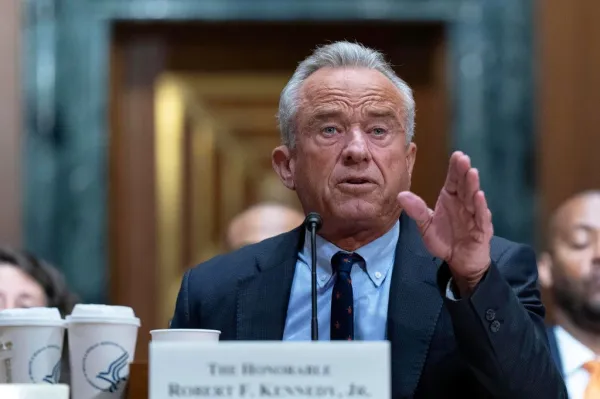
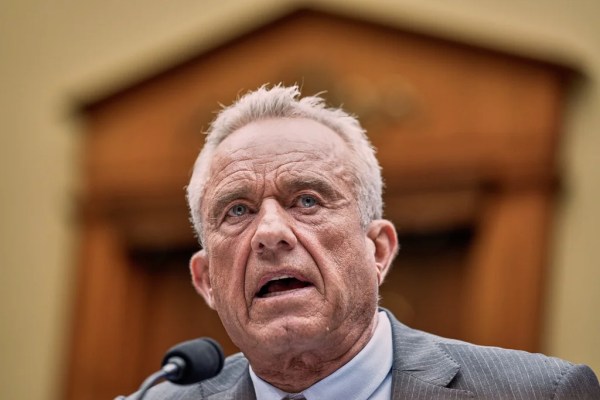
Health and Human Services Secretary Robert F. Kennedy Jr. announced on Wednesday his department would decertify the Network for Hope, the organ procurement organization servicing Kentucky and several counties in Ohio, West Virginia, and Indiana.

Kennedy said at a press conference in Kentucky that federal reviewers investigating Network for Hope found “persistent patient safety failures despite repeated oversights, repeated warnings, corrective action plans, and multiple opportunities to improve.”

“We will not tolerate organizations that compromise patient safety or betray the trust of donors or their families,” Kennedy said.

But the number of registered organ donors has declined in recent years following disturbing news stories of organ transplant coordinators being hasty to retrieve organs and jeopardizing the safety of patients who have the potential to recover.

A congressional investigation, led by House Energy and Commerce Committee Chairman Brett Guthrie (R-KY), began nearly a year ago when the committee heard testimony regarding the case of Anthony Thomas “TJ” Hoover II, who nearly died of a drug overdose in 2021. Hoover’s family members consented to organ donation after they were told that he would not recover, but he regained consciousness in the moments before the organ retrieval surgery.

Donna Rohrer, Hoover’s sister, spoke at the press conference on Wednesday and said her brother “was thrashing, crying, and grabbing the doctor’s hands to stop him” during the start of the organ retrieval surgery.

Although representatives from the Network for Hope wanted to continue with the procedure, the physicians in the operating room refused to carry out the organ retrieval.

“My brother almost died that day,” Rohrer said. “That should never happen to anyone. Laws and standards were clearly violated. Those responsible must be held accountable.”

A federal investigation last year determined that the group similarly ignored signs of alertness in more than 70 other patients, and there were more than 100 cases that had “concerning features.”

In September 2025, HHS decertified the organ procurement organization that operated from the University of Miami Health System after an investigation uncovered years of unsafe practices and underperformance.

There have also been a slew of congressional investigations into organ procurement organizations since the Hoover case was uncovered.

In November, whistleblowers from New Jersey came forward to the House Ways and Means Committee describing similar behavior of organ transplant coordinators coercing organ harvesting and attempting to remove organs from a patient showing signs of life.

The House Ways and Means Committee in January also launched an investigation into so-called “transplant tourism,” or prioritizing organ transplants for wealthy foreign recipients who can afford to jump the wait list lines to receive a donated organ.

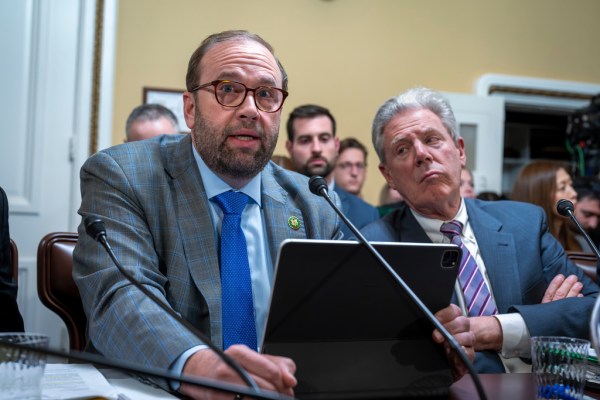
Rep. Jason Smith (R-MO), the chairman of the Ways and Means Committee, praised HHS for decertifying Network for Hope.

“This decision to decertify a second OPO shows a seriousness of purpose in our efforts to establish a greater degree of accountability within this sector of our health care system so that organ donors, recipients, and their families can have greater faith in the system,” Smith said. “Without that trust and confidence, more Americans will lose out on the life-saving benefits of organ donation.”

John Engels, the administrator of the Health Services and Resources Administration, which oversees organ donation policy, said during the press conference that the job of his agency is to protect public trust in the organ donation system.

“Organ, eye, and tissue donation are extraordinary gifts,” Engels said. “Our responsibility is to honor those gifts by maintaining a system that patients, donor families, and the public can trust.”

Engels said his organization, along with the Center for Medicare and Medicaid Services, “will closely monitor” the situation until a replacement nonprofit organization can take over for patients in Kentucky and surrounding areas.

“I want to emphasize, even though the action that the secretary is announcing today, care will still be offered to the patients that are served by this organization,” Engels said. “That will not stop.”

During the press conference, Kennedy shared the experience of his nephew, Michael Hines, who at 20 years old made 11 organ contributions at the end of his life, including two life-saving contributions.

KIDNEY PATIENT’S ‘PART-TIME JOB’ DONOR SEARCH SHOWS URGENCY FACING TRUMP OFFICIALS

He described the honor and dignity that hospital staff gave his nephew and family, saying that all donors and donor families deserve this level of respect.

“Unfortunately, this organization was neglecting that bond of trust,” Kennedy said of Network for Hope. “We owe that standard to every donor, we owe it to every family, and we owe it to every patient waiting for a chance to live.”