The Federal Reserve and Chairman Kevin Warsh are expected to tighten monetary policy in the months ahead to combat inflation, even if the labor market shows more weakness.
The government reported Friday that the economy lost 23,000 jobs in July, a major surprise to the downside. Typically, declining payrolls would suggest the Fed is likely to ease monetary policy by cutting rates to spur more economic activity. But inflation is high enough that the central bank is instead likely to implement at least one rate hike before the end of the year. That is true even if the next jobs report, scheduled for the Friday before Labor Day, shows further deterioration. The next Fed monetary policy meeting is scheduled for Sept. 15 to 16.
Recommended Stories
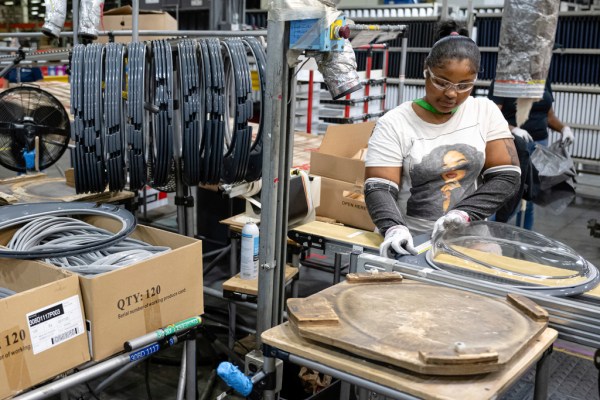
Friday’s report marked the first negative jobs report since February, and it followed a trend of increasingly weaker reports since a recent peak in March.
‘SUBSIDIES ON TOP OF SUBSIDIES’: SUPPLY-SIDERS PUSH BACK ON PAXTON TAX PLAN
Still, the labor market picture is not dire enough for the Fed to avoid rate hikes, given high inflation.
One of the most notable aspects of the Friday report was that the unemployment rate fell to 4.1%. That is very low by historical standards and suggests underlying strength in the jobs market.
“If you view this from the Fed’s perspective, their preferred metric of ‘a good jobs market’ is the unemployment rate, and the unemployment rate has barely budged in months — if anything, it’s actually come down,” Jai Kedia, an economist at the Cato Institute, told the Washington Examiner.
So as long as the unemployment rate doesn’t spike in the forthcoming August jobs report, the Fed’s monetary policy committee will focus instead on the fact that inflation is above its target. The Fed has a dual mandate to pursue full employment and keep inflation in check.
“On the dual mandate side of things, Warsh has been pretty clear that he’s prioritizing the inflation side of it, so even a pretty harsh jobs report might not dissuade him from prioritizing inflation control,” Ryan Young, a senior economist at the Competitive Enterprise Institute, told the Washington Examiner.
Inflation clocked in at 3.7% in June, according to the personal consumption expenditures index, the most recent month of available data. That is approaching double the 2% level the Fed considers to be healthy.
That is likely to outweigh the jobs report in the Fed’s consideration of its next steps.
“Assuming the Fed operates the way it’s always operated, which is viewing the unemployment rate as their metric of success in the jobs market, the jobs market plays no factor in their decision-making at all,” Kedia said.
Despite the loss of jobs in July, Mark Hamrick, chief economic analyst for the Hamrick Brief, told the Washington Examiner that the economy is still “broadly producing enough jobs to keep the unemployment rate steady.”
Hamrick noted that three members of the Fed’s monetary policy committee dissented at the last meeting and said they would have preferred to hike rates then.
Bond market prices indicate that, as of Monday, traders see about even odds on whether the central bank will hike rates at its next meeting, but see it as highly likely that it will raise its interest rate target sometime this year. Warsh has faced some criticism from Fed watchers for declining to spell out how he will address the market expectations for rate hikes.
Still, a lot could change between now and the Sept. 16 Fed decision. Specifically, an August jobs report showing major losses could sway members of the Fed.
“You need another negative print in this report for the Fed to say, ‘Stop, we’re not doing the September hike,’” Dan North, a senior economist with Allianz Trade Americas, told the Washington Examiner.
But even if there is another negative jobs report and it causes the Fed to once again hold interest rates steady, North said that his group still thinks there will be a rate increase this year — despite President Donald Trump and his allies calling for the opposite, a rate reduction.
The implied odds of at least one interest rate hike by the end of the year are still over 80%, according to CME Group’s FedWatch tool, which calculates the probability of rate changes using futures contract prices for rates in the short-term market targeted by the Fed. And many investors are betting there will be two rate hikes this year.
Investors also see a rate cut as essentially off the table at this point.
BIDEN ALUMS WATCH AS TRUMP TRIPS OVER SAME INFLATION PROBLEM THAT DOOMED THEM
Hamrick said the coming inflation reports ahead of the next meeting will likely be more important in informing the Fed’s decision on whether to hike than this past jobs report and the one for August.
“I think that there are all kinds of reasons to be concerned about, you know, going on 64 months of persistently overshooting inflation, and there’s insufficient reason to be alarmed about the job market,” he said.