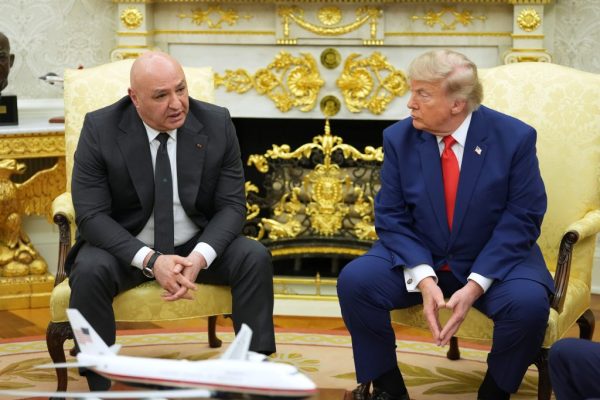
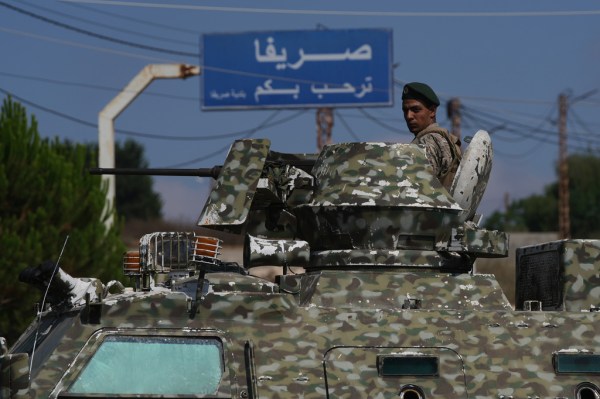
On Sept. 1, 1920, French High Commissioner Henri Gouraud signed a decree that ripped Tripoli from Faisal’s short-lived Syrian Arab Kingdom, only days after the Battle of Maysalun. More than 200 Sunni merchants from Tripoli submitted formal petitions demanding reunion with Damascus. Gouraud ignored every signature to create a Maronite-majority Greater Lebanon and deny Syria its natural Mediterranean outlet.
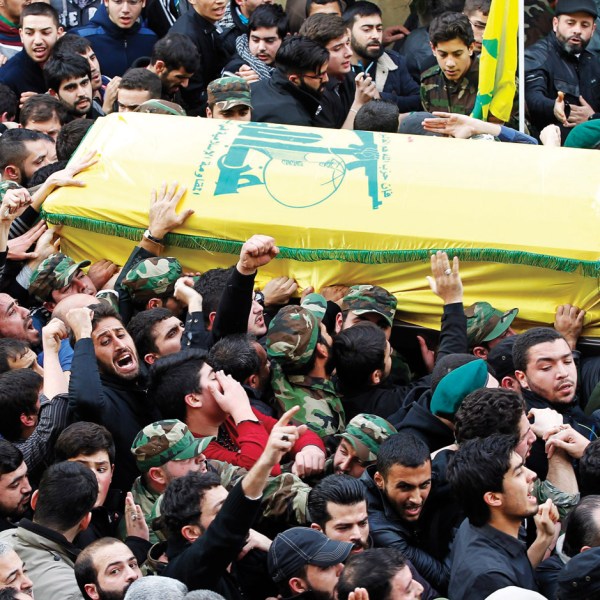
For more than a century, Western policymakers have defended this artificial map and repeatedly snatched defeat from the jaws of victory. That colonial amputation created a lasting corridor of instability that Iranian terrorist masters and Hezbollah later turned into a highway for weapons and cash.
Recommended Stories
The Trump administration now has a rare opportunity to correct that mistake. Wishful thinking will not rebuild Syria, nor will state-building fantasies stabilize a fracturing Lebanon. Independent assessments put the cost of reconstructing Syria at more than $400 billion. Skeptics will argue that al Sharaa, a former jihadi, cannot be trusted. They are right. Taking his promises at face value instead of demanding concrete, verifiable action would be a historic error. That is precisely why Washington needs a realist transaction.
Contemporary Lebanon sees 40% of its informal trade pass through Tripoli, a stark shift from the pre-2011 era when the city routinely processed more than 1.2 million tons of cargo bound for Syria. Granting Damascus administrative control over the city would restore the economic lung Syria lost a century ago, sever residual Hezbollah smuggling networks, and give the new government an asset it could present domestically as a historic recovery rather than a surrender.
The agreement should not stop at Lebanon’s border. Washington must abandon its bureaucratic habit of treating each Levantine crisis as a separate file to be handled in sequence. A durable settlement must pair the Tripoli transfer with a carefully defined territorial parcel inside the original U.N. Disengagement Observer Force footprint — approximately 50 square kilometers of the former 235-square-kilometer zone. In this context, Syria should receive territory that it could publicly present as a partial recovery of the Golan Heights and, in return, abandon its maximalist claims to the remainder.
From Israel’s perspective, the full Golan Heights must remain a non-negotiable strategic depth. Perpetual Syrian demands, therefore, serve only to prolong a conflict already decided on the ground. Hence, a limited territorial handover would close that dispute while simultaneously preserving every core Israeli security requirement.
To achieve this, Jerusalem should endorse a strategic package that transforms a permanent friction zone into a lasting asset. Following the Assad regime’s collapse, the Israeli military secured roughly 480 square kilometers of elevated Syrian terrain. Those Israeli units, in turn, should withdraw under a formal security protocol brokered by Washington. In exchange, Israel must assume an explicit protection guarantee for Syria’s 700,000 Druze concentrated in Suwayda and the southern marches. A newly established Druze Continuum Authority would allow vetted locals to live, work, and receive medical care in Israel, while Israeli trainers simultaneously equip and advise self-defense units across the border. Accordingly, the arrangement would transform a vulnerable minority into a shared early-warning network.
SYRIA’S NEW RULERS WANT A DEAL. MAKE THEM LOCK IRAN OUT
Locking this agreement in place requires three concrete steps. First, the White House must appoint a special envoy with exclusive authority to negotiate Tripoli, the UNDOF parcel, and the security protocol as one indivisible package. Second, Congress must authorize a conditioned, five-year reconstruction facility for Tripoli port upgrades, requiring absolute customs transparency and the permanent exclusion of every Hezbollah-linked entity. Finally, the Continuum Authority must begin operations in Majdal Shams within 90 days of signature.
Such measures, consequently, correct a colonial error, pave Syria’s path toward the Abraham Accords, and permanently deny regional adversaries the port, strategic corridor, and pretext they have long exploited.
Jose Lev Alvarez is an American–Israeli scholar specializing in international security policy. A multilingual veteran of the IDF special forces and the U.S. Army, he holds three master’s degrees and is completing a Ph.D. in intelligence and global security in the Washington, D.C., area.