National parks are a gold mine. Congress has a chance to save them from crumbling

Published August 13, 2026 7:00am ET


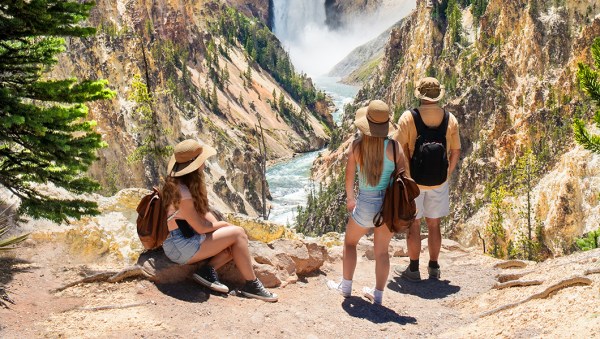
Millions of Americans are flocking to national parks this summer, enriching their lives and fueling local economies. In 2024 alone, national parks welcomed 332 million visits, and visitor spending in nearby communities generated $56.3 billion in economic output and supported more than 340,000 jobs nationwide.

But national parks and other public lands will suffer unless Congress passes the America the Beautiful Act before the end of this year.

The infrastructure that visitors rely on is aging — roads have deteriorated; trails have eroded; campgrounds, marinas, and housing have fallen into disrepair; and water, sewage, and electrical systems need updating. For decades, the combined pressure of hundreds of millions of annual visitors, older infrastructure, and chronic underfunding led to the deterioration of many of the approximately 250,000 assets within the National Park System, Bureau of Land Management lands, national forests, wildlife refuges, and Bureau of Indian Education schools that serve over 43,000 students.

Thanks to public pressure around the centennial of the National Park Service — including broad public support for investing in park repairs and advocacy from thousands of organizations — Congress passed the bipartisan Great American Outdoors Act, and President Donald Trump signed it into law in 2020. The statute established the National Parks and Public Lands Legacy Restoration Fund, directing more than $9 billion in nontaxpayer funds over five years to address priority repairs within parks and other public lands.

The Legacy Restoration Fund has been an undeniable success. The program has funded more than 1,600 projects across all 50 states. These projects have repaired and upgraded roads, trails, water systems, visitor facilities, employee housing, and other infrastructure that make parks safer, more accessible, and more resilient.

Beyond protecting historic landscapes and improving visitor access and safety, LRF-funded projects serve as an economic lifeline for communities adjacent to public lands. According to the Department of the Interior, LRF investments have supported more than 17,000 jobs and contributed approximately $2 billion to the national economy each year. National Park Service projects alone, since 2020, have supported the equivalent of 72,600 yearlong jobs and generated $8 billion in gross domestic product. LRF projects within national forest lands have generated 3,200 jobs and $360 million in GDP.

Maintaining infrastructure within U.S. public lands and BIE schools makes good economic sense. Just as routine oil changes protect a vehicle and prevent catastrophic repair bills later, investing in public lands keeps long-term maintenance costs down while protecting the economic foundations of nearby communities.

Unfortunately, the LRF expired in September 2025. And despite significant progress in tackling repairs throughout the country, infrastructure on America’s public lands still needs major work. In fact, the decades of combined deferred maintenance backlog across federal land agencies is currently estimated at over $35 billion. That is essentially $35 billion in debt that will be a burden on taxpayers unless Congress passes the America the Beautiful Act to extend the LRF. 

The legislation to extend the LRF has strong bipartisan support. One of us, Sen. Steve Daines (R-MT), is leading the effort in the Senate, working alongside Sens. Angus King (I-ME), Kevin Cramer (R-ND), and Mark Warner (D-VA). The America the Beautiful Act, with nearly three-quarters of the Senate as cosponsors, recently cleared the Senate Energy and Natural Resources Committee with support from Chairman Mike Lee (R-UT) and ranking member Martin Heinrich (D-NM). 

CONGRESS MUST STOP LETTING AMERICA’S NATIONAL PARKS FALL APART

In the House, similar legislation led by Chairman Bruce Westerman (R-AR) and ranking member Jared Huffman (D-CA) of the House Committee on Natural Resources was unanimously approved by that committee and is nearing 250 bipartisan cosponsors. 

As the United States celebrates its 250th anniversary, Congress has a chance to secure America’s parks and public lands as a proud reflection of our national heritage. Reauthorizing the Legacy Restoration Fund will help to ensure these places will continue to welcome visitors, honor our country’s history, and anchor strong local economies for decades to come.

Sen. Steve Daines (R-MT) of Montana is a lead sponsor of the America the Beautiful Act and Marcia Argust leads The Pew Charitable Trusts’ work to restore U.S. national parks.