The World Health Organization warned Wednesday that an Ebola outbreak in the Democratic Republic of Congo is rapidly accelerating, with officials cautioning that it could surpass the devastating West African outbreak a decade ago.
The WHO said the outbreak in eastern Congo has killed more than 2,000 people among more than 4,300 reported cases. Officials said the outbreak, initially declared on May 15, began months earlier in February, according to genetic sequencing.
Recommended Stories
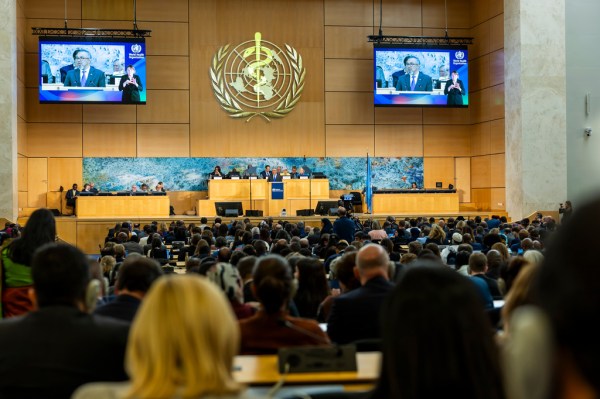
“At its current pace, it’s on track to eclipse the West African Ebola outbreak of 2014 to 2016,” WHO Director-General Tedros Adhanom Ghebreyesus told reporters Wednesday. That outbreak killed more than 11,000 people and spread across seven countries, underscoring the potential for Ebola to become an international crisis without early intervention.
The virus circulating in Congo is a genetically distinct variant of the rare Bundibugyo ebolavirus. The outbreak is currently doubling in size roughly every 20 days, according to Tom Fletcher, the U.N.’s under-secretary-general for humanitarian affairs and emergency relief coordinator.
“Ebola epidemic is doubling every 20 days — fastest in history,” Fletcher said.
Abdirahman Mahamud, the WHO’s director of health emergency alert and response operations, said the agency expects the outbreak to reach its peak within six months under a moderate scenario.
“But … that’s the moderate scenario,” Mahamud said. “There is a worst-case scenario where this outbreak may last nine months to 12 months.”
The response has been complicated by a range of challenges in eastern Congo, including limited health infrastructure and access to medical care, diagnostic and laboratory services, and infection-prevention supplies, according to the Centers for Disease Control and Prevention.
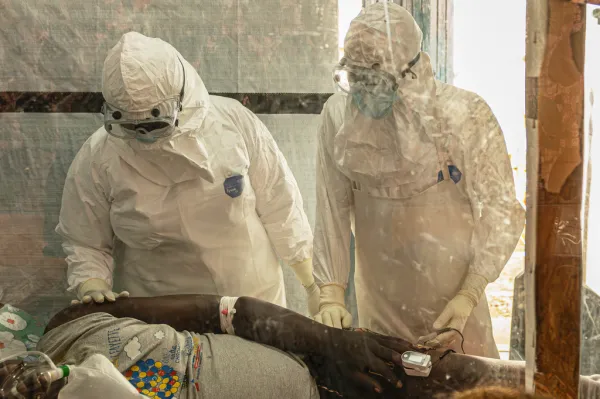
Ongoing conflict has created additional security concerns and made contact tracing and infection-control efforts more difficult. Violence against healthcare workers and shortages of personal protective equipment have also contributed to infections among medical staff treating patients.
ONE YEAR LATER, SOME DC RESIDENTS PRAISE TRUMP’S NATIONAL GUARD DEPLOYMENT
Frequent population movement and cross-border travel have raised concerns about the virus spreading to neighboring Uganda, South Sudan, and Rwanda. Mistrust of government authorities and misinformation have further complicated efforts to communicate with communities and contain the outbreak, health officials said.
The outbreak has also prompted measures aimed at limiting the risk of Ebola reaching the United States. Travelers who have recently been in the Congo are temporarily restricted from boarding commercial flights to U.S. destinations if they were in the country within 21 days of their flight, including U.S. citizens.