New Colombian president authorized joint military operations with US targeting cartels: Hegseth

Published August 12, 2026 5:47pm ET | Updated August 12, 2026 5:47pm ET


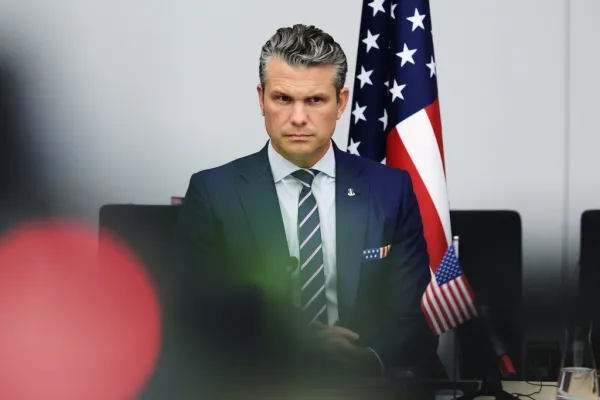
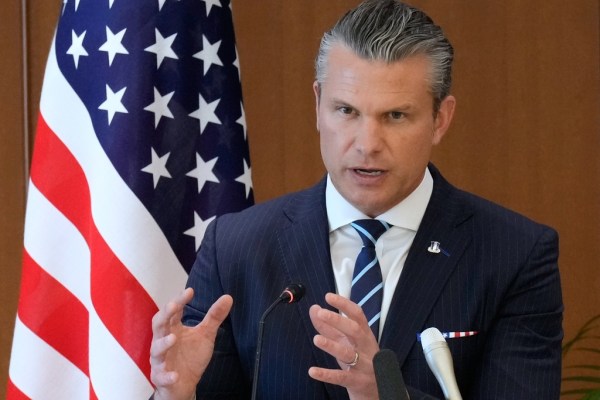
War Secretary Pete Hegseth announced that newly inaugurated Colombian President Abelardo de la Espriella has authorized joint military operations with the United States to target drug cartels in the country.

Colombia, he said, became the 19th member of the recently established Americas Counter-Cartel Coalition, which met on Wednesday in Panama.

“Colombia has already requested that the Department of War join Colombia in its fight against narco-terrorism, authorizing joint military operations to destroy terrorist and terror networks,” he said. “Thank you very much. Aggressive and concrete steps like these exemplify the types of active participation operational.”

De la Espriella’s willingness to work with the U.S. is a change from his predecessor, former Colombian President Gustavo Petro, who clashed with President Donald Trump

Hegseth also singled out Jamaica to thank them “for working with the Department of War to create a new military partnership to cripple narco terrorists that transit through the Caribbean. This partnership will forever change the security environment of the Caribbean.”

The Pentagon, under the Trump administration, has taken a much more aggressive policy stance toward drug and criminal cartels in Central and South America. That overarching policy stance has included strengthening the U.S. southern border, the lethal targeting of alleged drug smugglers, and joint military operations targeting cartels.

In March, there was a joint U.S.-Ecuadorian military operation targeting a training camp used by the Comandos de la Frontera.

“I want to commend Ecuador for its regional leadership to become the first A3C member to partner with the United States in combined kinetic operation against narco-terrorists in Ecuador,” Hegseth said. “I also want to commend Honduras and Guatemala for inviting the United States to partake in combined operations against narco terrorists in their countries.”

The U.S. military also carried out an airstrike in June in coordination with Venezuela, targeting Hector Rusthenfold Guerrero Flores, the leader of Tren de Aragua, a U.S.-designated terrorist organization.

Almost a year ago, the U.S. military began targeting alleged drug smuggling vessels heading from Central and South American countries heading north in what became Operation Southern Spear. Earlier this month, the mission was transferred to the newly established Joint Task Force Western Hemisphere, the action arm of U.S. Southern Command.

The first U.S. strike was on Sept. 2, 2025, and in total, U.S. forces have targeted 66 vessels, killed 218 mariners, and rescued four stranded survivors. Of the 66 strikes, 47 of them took place in the eastern Pacific, 17 were in the Caribbean, and two of the locations remain unknown. The strikes have been controversial, with critics accusing them of being illegal.

A Pentagon inspector general report released at the end of July said operations under Southern Spear have cost roughly $820 million.

OPERATION SOUTHERN SPEAR LATEST PRICE TAG IS UP TO $820 MILLION

The Pentagon sent its annual report to the Senate Armed Services Committee this week on civilian casualties, a copy of which was obtained by the Washington Examiner. It said that as of Feb. 1, 2026, it had no instances in which “civilian casualties more likely than not resulted from U.S. military operations in the USSOUTHCOM area of responsibility in 2025.”

Hegseth said, “Operation Southern Spear is a model that can be and should be followed across our hemisphere by each of you to degrade, dismantle, and destroy narco terrorist networks.”