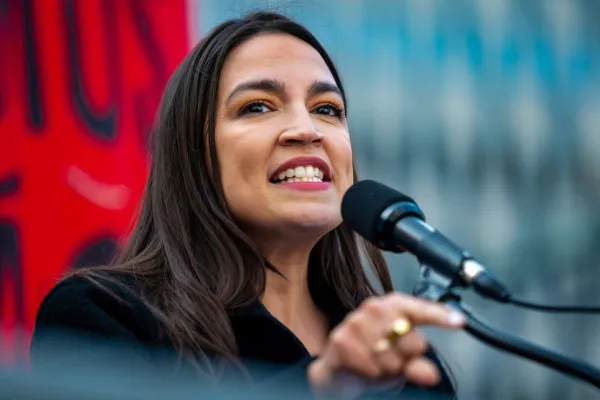
We do not know why Rep. Alexandria Ocasio-Cortez (D-NY) and her longtime partner, Riley Roberts, reportedly ended their engagement. She has not explained it, and there is no evidence that politics, race, or her ambitions for higher office caused the breakup.
So let me be clear from the beginning: what follows is speculation.
Recommended Stories
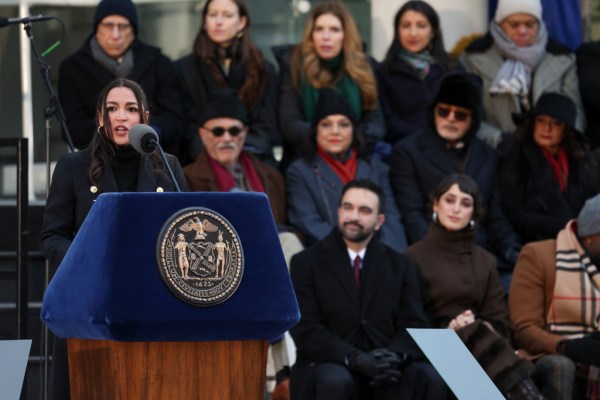
This week, multiple reports said Ocasio-Cortez and Roberts ended their engagement roughly two years ago. When asked directly about the relationship, Ocasio-Cortez declined to discuss it. The two had known each other since college and became engaged in 2022.
What makes the breakup politically interesting is what else has happened since then.
Ocasio-Cortez is now widely discussed as a possible 2028 presidential candidate. Reuters includes her among Democrats who could compete for the nomination. Axios has reported that she and her team are positioning her for either a presidential or Senate run. The Associated Press reported last year that she was working to broaden her appeal beyond the progressive, antiestablishment movement that first made her a national figure.
This week brought another sign of change. Axios reported that Ocasio-Cortez has begun putting some distance between herself and portions of the progressive rhetoric associated with 2020, presenting a version of so-called “democratic socialism” that may be easier to sell to voters beyond the activist Left.
None of that tells us why her engagement ended.
But it raises a question worth asking: Did the future Ocasio-Cortez was beginning to imagine for herself affect the future she imagined with Roberts?
There is another reason the question is not as outrageous as it might initially sound.
Ocasio-Cortez herself has talked publicly about race in her relationship with Roberts, who is white. In a 2022 interview with GQ, she discussed questions of identity and belonging and acknowledged that she had wondered whether an interracial, intercultural relationship was right for her.
That does not mean she eventually ended the relationship because Roberts is white. There is no evidence that she did.
But it does mean that questions of race and culture within this particular relationship did not originate with political opponents or gossip columnists. Ocasio-Cortez herself discussed them publicly.
Now add the possibility of a presidential campaign.
The spouse or serious partner of a presidential candidate does not remain entirely private. Americans learn who that person is. Spouses appear at conventions, rallies, and campaign events. They give interviews. Their careers, backgrounds, and beliefs receive attention. Fairly or not, voters form impressions of candidates partly from the people closest to them.
For Ocasio-Cortez, that could carry particular significance.
This is not important because voters are entitled to know why Ocasio-Cortez ended a relationship. They are not. It is important because presidential politics increasingly involves the deliberate construction of a public identity. Candidates reconsider positions, language, appearances, and the constituencies they need to reach. If that calculation can extend even to questions about who fits beside a candidate, then the issue is larger than one politician’s private life. It becomes a question of how much of the person voters see during a presidential campaign is personal and how much has been shaped by political ambition.
Her political identity has been closely connected to being a young Latina from New York, to questions of race and class, and to a progressive movement that places considerable importance on representation.
So here is the uncomfortable question.
If Ocasio-Cortez is seriously considering a run for president, could she have wondered whether Roberts was the person she wanted beside her during that next stage of her life?
And could race have been one part of that calculation?
I don’t know.
It is entirely possible that two people who had known each other since college simply grew apart. That happens every day. Roberts may have wanted a different life. Ocasio-Cortez may have wanted a different life. Their breakup may have had nothing whatsoever to do with electoral politics.
But a serious presidential campaign changes a person’s life in ways few other ambitions do. It changes schedules, privacy, relationships, and the amount of public attention directed at everyone around the candidate.
In this case, Ocasio-Cortez had already publicly acknowledged thinking about the racial and cultural differences between herself and the man she later allegedly ended her engagement with.
That is why what happens next could be interesting.
Suppose Ocasio-Cortez eventually enters another serious relationship and that person is Latino, black, Asian or otherwise a person of color. Suppose that person also comes from the progressive political, activist or cultural world in which Ocasio-Cortez has built her career.
Would that prove she ended her engagement with Roberts for political or racial reasons?
No.
People choose partners for personal reasons that outsiders usually cannot know.
But such a relationship would make the possibility raised by the Roberts breakup harder to dismiss, especially if Ocasio-Cortez is simultaneously preparing to ask Democratic voters to make her their presidential nominee.
The opposite is also true. If her next serious relationship is with someone whose background is much like Roberts’s, this theory becomes considerably less convincing.
That is what makes this a prediction rather than an accusation.
Maybe none of this played any role in their breakup. Ocasio-Cortez may never run for president. Her next relationship, if there is one, may tell us nothing about her politics.
But if she does run, and if the person eventually standing beside her is very different from Roberts in ways that closely match the political identity Ocasio-Cortez has built, it will be reasonable to look at the breakup again.
Did Ocasio-Cortez simply outgrow a relationship that began when she was young?
Or did the political future she increasingly appears to want influence the personal future she chose?
AOC REPORTEDLY SPLITS FROM LONGTIME FIANCE
We cannot answer that today.
But if future events make the question more relevant, it will be worth remembering that it was reasonable to ask it now.
David W. Falls is a retired Microsoft engineering program manager who spent 33 years leading large-scale engineering and technology programs through major industry transitions, including the rise of personal computing, the internet, and mobile systems. He now writes about technology, science, politics, and culture. His work has appeared in RealClearScience, The Humanist, The Space Review, Interalia Magazine, and other publications. He is the author of God’s AI Reckoning: The Final Revelation and The Great Silence: What Remains After Belief. His forthcoming book is Who Owns You? AI, Identity, and the Fight to Control the Digital Self.