Restoring America

Conservative values, National renewal

Menu

Sports give Americans a reason to gather

Published August 16, 2026 6:00am ET


Last week, I took a train from New York City to Philadelphia, switched to local transit for the trip to the Main Line, and made my way to the storied Merion Golf Club, home of this year’s U.S. Amateur Championship. 

For $39, I spent the day walking one of America’s great golf courses and watched some of the best amateur golfers in the world compete for one of the oldest and most prestigious championships in the game.

I enjoy golf and try to attend as many tournaments as possible. What really struck me almost immediately at Merion was just how close I could get to the players and the game itself. 

Of course, there were other spectators, ropes, volunteers, scoreboards, and all the things necessary to stage a national championship, but there weren’t enormous crowds, tents, or grandstands everywhere. In fact, there wasn’t the constant feeling that I had entered a giant entertainment production. Instead, I could simply watch golf.

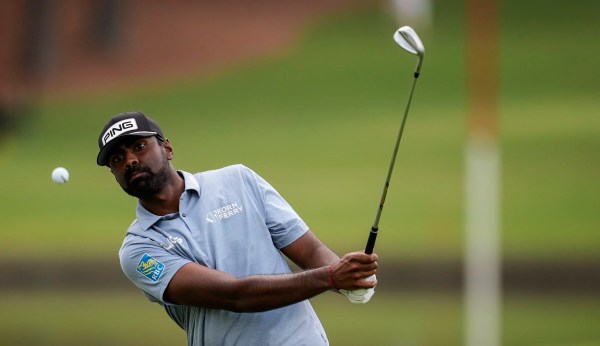
Throughout the day, I found myself only a few feet from players as they studied a lie, talked with their caddies, checked a yardage and reconsidered a club, and worked through what they were about to do. What was unique at Merion was watching them solve problems in real time. Seeing a player figure out how to read a putt or choose the right club for a second shot may seem insignificant, but it isn’t.

We’ve become accustomed to experiencing elite sports as spectacle. Go to an NFL or NBA game, and there is an enormous entertainment apparatus surrounding the competition itself — music blares during breaks, video boards tell us where to look and offer unending distraction, advertising is everywhere, and there are luxury suites, premium clubs, elaborate food offerings, and an almost endless stream of stimulation. Even golf, a sport whose scale and pace should offer some resistance to all this, has embraced some of this spectacle. Major professional tournaments regularly draw enormous crowds and extensive corporate hospitality that puts up tents that look like cities, while the best players have become celebrities surrounded by security, sponsors, television crews, and thousands of spectators trying to get close to them.

Some of that is fun. Like most Americans, I love a show. But at Merion, with far less spectacle, I found myself noticing things I normally wouldn’t. I could see the lie and slope a player was confronting and hear the conversation with his caddie. I watched players react to poor shots and try to put them aside before taking the next one. Television and projections on large screens during tournaments can make extraordinary golf look strangely routine; standing 10 feet away from a player does the opposite.

There was another part of the experience I hadn’t anticipated. Many of these players are college students. They are extraordinary golfers, certainly, and many play for some of the finest college golf programs in the country — watch them strike a golf ball, and it is easy to forget just how young many of them are.

I am a college professor and spend much of my time with students their age. I also happen to know some of the programs represented at the championship, so I had no trouble striking up conversations with a few of the players. We talked about their schools and their rounds, about how things were going and what they were seeing on the course. After a difficult stretch — and there were plenty for some — I could offer a supportive word or two, much as I might with one of my own students after a hard day.

Argentina’s Lionel Messi takes a free kick during a World Cup match. (Odd ANDERSEN/AFP via Getty Images)

Those conversations were necessarily brief, but they changed the way I experienced the tournament. A leaderboard looks different up close. A name and a score belong to a young person trying to manage the pressure of a national championship. You watch someone work through frustration after a mistake, solve the next problem, and try to keep his emotions from interfering with what he knows how to do.

As a professor, I spend much of my life watching students attempt difficult things and push themselves. Some thrive immediately out of the gate, while others take longer. I hadn’t expected that part of my professional life to follow me onto a golf course, but I was glad it did. It reminded me that, for all the extraordinary talent on display at Merion, I wasn’t simply watching future professionals. I was watching students trying to do something extraordinarily difficult under enormous pressure.

The setting made all of this even more remarkable. Merion Golf Club is one of the storied places in American golf. Bobby Jones completed his Grand Slam there in 1930, and Ben Hogan hit his famous 1-iron on the 18th hole during the final round of the 1950 U.S. Open. Generations of great players have walked these fairways. 

Under ordinary circumstances, the Club is a famously private place. Yet last week, I didn’t need to know a member or have a formal invitation. I took public transportation from New York, bought a ticket, and walked onto the grounds of one of America’s great sporting venues to watch a national championship from just a few feet away.

The day reminded me that community is often built by simply having a reason to engage with one another. Sporting events give us a reason to leave the house, spend time with people we don’t know, strike up conversations with strangers, cheer for someone else’s kid, and, almost without realizing it, become part of something larger than ourselves.

I had a lengthy conversation with a tournament volunteer beside one green who left New York for Philadelphia two years ago and we connected over our shared pandemic experiences. I ended up spending some time with a family from Atlanta who flew up to watch their nephew play in the tournament; we talked about mid-life, higher education, and our children. Neither conversation would have happened had I stayed home. As I walked the course, I saw those same kinds of connections forming all along Merion’s fairways and greens among fans.  

Sports have long provided Americans with places to connect. At their best, they aren’t simply products we consume; they give us a reason to gather on a golf course, in a stadium, or even at a festival setting like a tennis tournament. Walking around Merion, I saw volunteers giving their time and families following players from hole to hole. The course wasn’t so crowded that you couldn’t move around and because there were pauses as groups came through, spectators were talking with one another and strangers began applauding and encouraging young men most of us had never heard of when the day began. 

TOY STORY 5 FINDS THE TOYS REPLACED BY TABLETS

A golf tournament isn’t going to solve America’s civic problems. But civic life has always depended on more than politics — a healthy society really depends on having places to go, having things to care about together, and reasons to spend time around people we don’t already know.

I came to Merion expecting to see some of the best amateur golfers in the country. What I hadn’t expected was the pleasure of seeing them so closely: watching them think and work, talking with a few of them, and seeing not simply elite athletes but young people doing something extraordinarily difficult. American sports have become very good at making athletes larger than life. At the U.S. Amateur, I got to see them at life size. And I was reminded that, at their best, sports don’t simply produce champions; they still give Americans a reason to gather.