Why the polls got it so wrong in two major Democratic primaries

Published August 15, 2026 6:00am ET


Polling misses across Democratic primaries in Wisconsin and Michigan have exposed a mix of challenges for the industry, from late-breaking voters and unexpected turnout to a harder-to-solve problem of reaching the voters who ultimately decide elections.

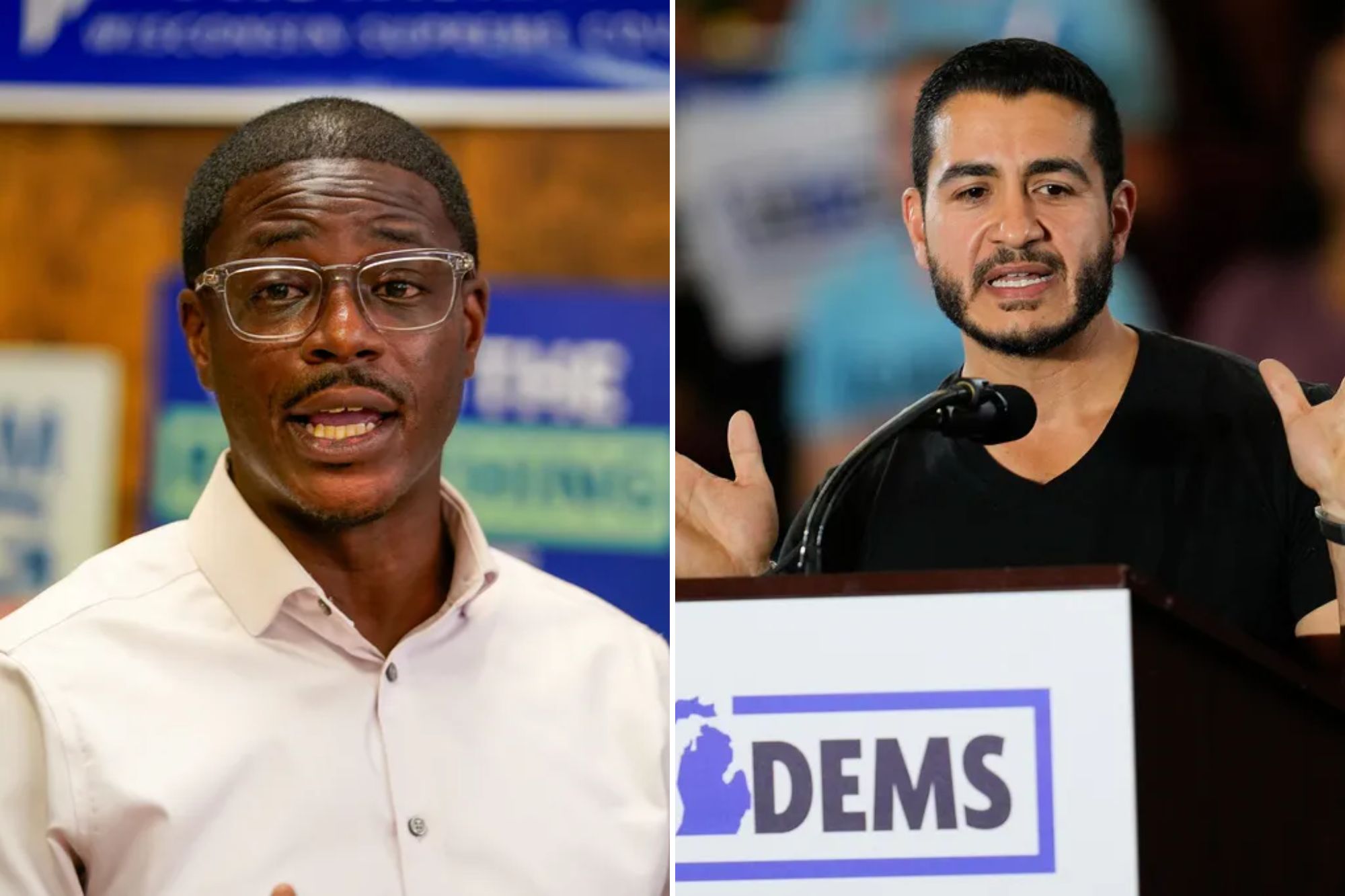
The discrepancies were striking. State Rep. Francesca Hong entered Tuesday’s Wisconsin Democratic gubernatorial primary as the clear favorite, with the latest public polling showing the socialist ahead by roughly 20 percentage points. Instead, Milwaukee County Executive David Crowley edged her by less than half a percentage point.

A week earlier in Michigan, Abdul el Sayed narrowly defeated Rep. Haley Stevens by roughly 1 percentage point after surveys had shown him holding a double-digit advantage.

Republican pollster Frank Luntz captured the reaction with a tongue-in-cheek post Wednesday calling for “a total and complete shutdown of primary polling in the Midwestern United States until we can figure out what the hell is going on.”

But interviews with pollsters involved in the races suggest there is no single explanation. Instead, they point to a combination of unusually high turnout, late-deciding voters, rapidly changing races, and a potentially deeper problem: Some Democratic primary voters may simply be less likely to answer polls in the first place.

“It’s a little more complicated than that,” Democratic pollster Adam Carlson said of the perception that the polling was simply wrong. “I think we have to be honest that it was off.”

But, he added, polling is “not fundamentally broken.”

Wisconsin’s undecided voters break hard for Crowley

Wisconsin may offer the clearest example of how a poll can accurately measure support for one candidate and still appear wildly wrong on Election Day.

Hong received 38% in the final Marquette Law School poll, conducted between July 22 and July 27. She ultimately won 39.37% of the vote. The miss was David Crowley. Marquette had Crowley at just 7%. He ultimately won with 39.78%, defeating Hong by less than half a percentage point. Critically, 34% of voters in the final poll remained undecided.

“We did a good job of capturing Hong’s actual support,” Marquette Law School Poll Director Charles Franklin said. “But that actual support turned out to be basically her ceiling. And so she didn’t add anything to that support in those last two weeks.”

Crowley, meanwhile, consolidated much of the remaining electorate. The race had been extraordinarily fluid. Crowley dropped out July 8 before reversing course 10 days later after securing the backing of Democratic Gov. Tony Evers. Three candidates dropped out during the final month, including former Lt. Gov. Mandela Barnes, who ended his campaign after Marquette’s final survey had already been conducted.

Hong also faced growing scrutiny over past social media posts, while Crowley and Evers increasingly framed the contest around electability, arguing she could jeopardize Democrats’ chances against Rep. Tom Tiffany (R-WI) in November.

Franklin said the polling showed Evers’s intervention had the potential to matter. Thirty-six percent of Democratic primary voters said the governor’s endorsement made them more likely to support Crowley, while Evers’s approval among Democrats stood above 85%. The voters most resistant to Hong were also among the least decided.

Older voters were less supportive of Hong and were the most likely age group to remain undecided. They also reported being more likely to vote, potentially giving Crowley a pool of high-propensity voters who were undecided when pollsters contacted them.

Among voters 60 and older in Marquette’s final survey, Hong received just 14%, while 46% were unsure. Among voters ages 18 to 29, Hong commanded 66%, with only 22% undecided.

Ideology showed a similar divide. Hong had 74% support among voters identifying as very liberal, compared with 19% among moderate and conservative Democrats and 42% who remained undecided.

Turnout then surged. About 787,000 people participated in the Democratic primary, according to Franklin, compared with roughly 640,000 in the 2024 Senate primary and 539,000 in the 2018 gubernatorial primary.

Franklin said the ideological makeup of Marquette’s samples did not suggest young or very liberal Hong supporters were disproportionately represented. Instead, many moderate and older voters simply had not decided which candidate to support when the polls were conducted.

Carlson, who founded Zenith Research, said that illustrates a limitation polling cannot completely eliminate.

“Unless you’re polling up to the very, very last second, which is basically impossible, you’re going to miss kind of not just undecideds breaking for someone, but I think soft supporters of either candidate switching,” Carlson said.

Candidates can drop out, endorsements can arrive, and scandals or major advertising campaigns can reshape a race after the final survey is completed.

“That’s something that polling can’t really solve for,” Carlson said.

Michigan exposes a deeper problem

Michigan presented pollsters with a somewhat different problem. Unlike Wisconsin, where Hong’s polling number nearly matched her eventual vote share, surveys appeared to substantially overstate el Sayed’s advantage over Stevens.

Carlson, who polled the race, said the problem persisted even after adjusting samples for age, race, education, region, and other demographic factors. The raw respondents themselves were simply much more favorable to el Sayed than the electorate that ultimately showed up.

“Even when you control for gender, age, race, region, education, whatever … you’re getting enough of people in each of those groups, but you’re not getting kind of like the representative sample of them,” Carlson said.

The largest discrepancy, he said, appeared among “rural, non-college, low-engagement white voters.”

“For whatever reason, the folks that I got to take the survey from those regions … were much more pro-Abdul than the people who actually turned out to vote,” he said.

That creates a challenge weighting cannot necessarily fix. A pollster can ensure a survey contains the correct percentage of older or rural voters, but if the people within those groups who agree to take a poll are politically different from those who refuse, the sample can still be off.

Carlson said even when he weighted his Michigan survey to create what he described as the most Stevens-friendly electorate possible, el Sayed still led by double digits.

“There is a kind of a silent group,” Carlson said. “I don’t know why they’re not answering. Maybe they’re not enthused. Maybe they’re more skeptical of institutions. Maybe just the contact data is bad for them.”

“But there is a group of people out there who don’t take polls but do vote in Democratic primaries, particularly in open primary states,” he added.

Michigan pollster Steve Mitchell, whose firm also missed the Democratic contest, pointed to another difficulty: Pollsters were trying to model an electorate unlike anything Michigan had previously seen.

“First of all, it’s our job to get it right. We didn’t, and you can provide reasons, but I don’t want to call them excuses,” Mitchell said.

Mitchell said primary elections are inherently harder to model than general elections because there is less reliable historical data showing precisely who will participate.

That problem was magnified in Michigan, where he said turnout was roughly 40% larger than in any previous statewide Democratic primary in state history. Small errors estimating the age composition could produce large polling errors because el Sayed performed better among younger voters while Stevens drew stronger support from older voters.

The race also moved late. Gov. Gretchen Whitmer endorsed Stevens at the end of July, while Sens. Gary Peters (D-MI) and former Sen. Debbie Stabenow (D-MI) also became involved near the end of the race.

“A lot changed,” Mitchell said. “You had the entire establishment in that period of a week to 10 days before the election coming out in favor of Haley Stevens, and so that tightened it up as well.”

Carlson also pointed to extraordinarily low response rates as part of the broader challenge, estimating that a live-caller survey can be fortunate to receive responses from roughly 0.3% of attempted contacts.

He initially wondered whether his text-to-web methodology was partly responsible for the Michigan miss. But Wisconsin complicated that explanation because Marquette used live calling and still badly underestimated Crowley.

“So it was not really a modal issue either,” Carlson said. “I was hoping that would be because I’m like, oh, it’s an easier fix, but I think it’s a bit more complicated than that.”

A problem for 2028?

The broader concern for pollsters may therefore be less about November than what comes next.

Both Carlson and Mitchell said they do not view the primary results as evidence that general-election polling is destined for similar problems. General-election electorates are generally easier to predict and voters are more firmly anchored by party identification.

But Carlson said the warning signs could become significant in the 2028 Democratic presidential primary, where voters may again be choosing among multiple candidates they generally view favorably and preferences could remain fluid until shortly before voting.

“I do think it could be a major issue for 2028 early state polling,” Carlson said. “We have some time to figure it out.”

He also cautioned against assuming strong polling for progressive candidates necessarily means those voters will dominate the actual electorate.

“Just because people are more excited to take polls, and right now it’s for the progressive left candidates, doesn’t necessarily mean … they’re going to win in a blowout,” Carlson said.

Mitchell said pollsters will have to adapt.

“Polling is a science, and it’s also an art,” Mitchell said. “It’s difficult because you have to decide with all the information you have what that voter turnout is going to be. And if you get that right, your polling is going to be right.”

‘DIRECTLY RESPONSIBLE’: PROGRESSIVES BLAME AOC AND BERNIE SANDERS FOR FRANCESCA HONG’S WISCONSIN LOSS

For all the criticism following Wisconsin and Michigan, Carlson argued that polls were never designed simply to predict the precise Election Day result. Campaigns use them to understand voters, test messages, and decide where to allocate resources. Still, he acknowledged the industry cannot ignore what happened.

“There are issues that need to be solved,” Carlson said.

Mitchell put it more simply.

“We get paid to do it right,” he said. “We didn’t get it right, and we’ll get it right in the general election. Primaries are tough, but that’s no excuse.”
